Seeing Light Play Tricks
Imagine you’re driving on a sun-baked road and spot a puddle ahead. But as you get closer, it disappears. Or, in a desert setting, a distant lake shimmers on the horizon, only to vanish as you approach. These aren’t man-made illusions; they’re mirages. They’re caused by the bending of light through layers of air at different temperatures. For example, warm air near the ground, cooler air above. These subtle differences affect their appearance and our perception of them.
What a Mirage Really Is
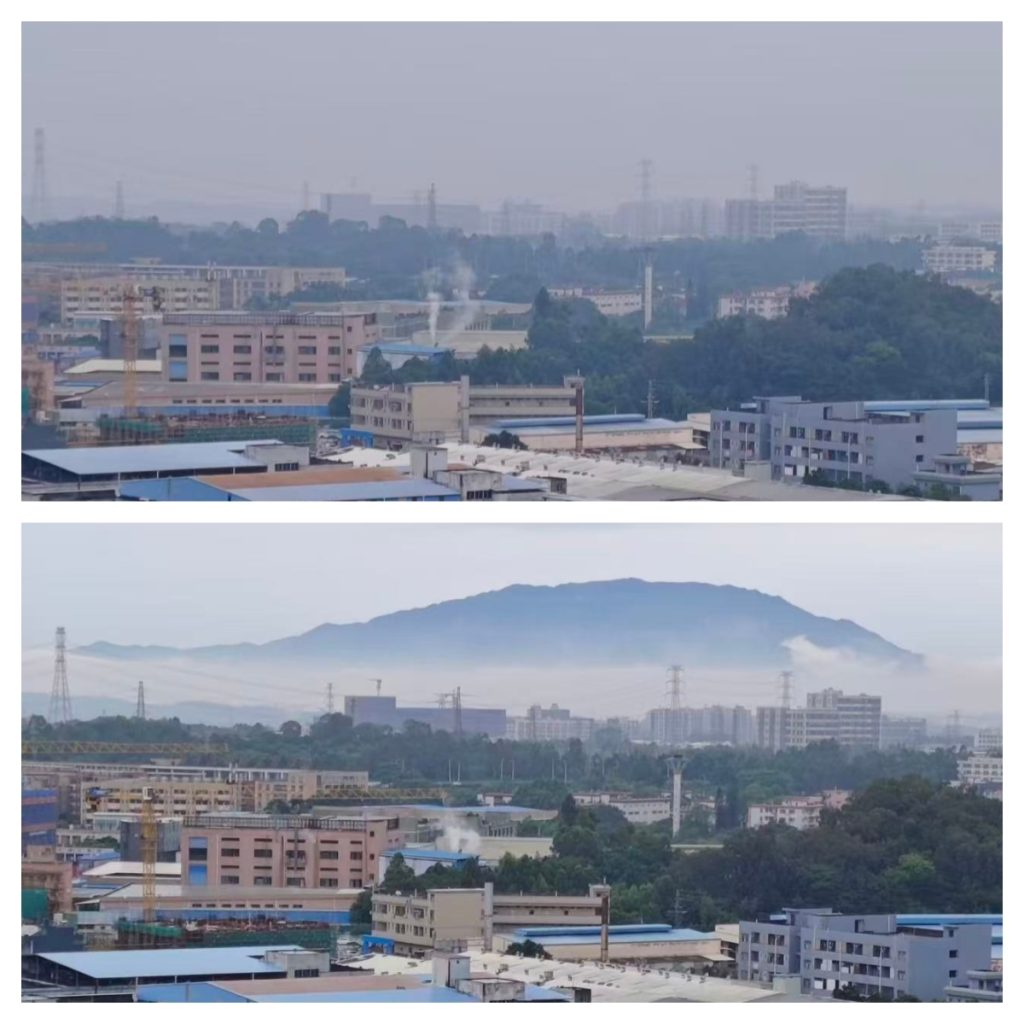
Mirages occur when light travels through uneven layers of air. When warm air is less dense and cold air is more dense, sunlight gradually bends as it passes through these layers. The result: distant objects appear to move, invert, or even float. This is why scenes like a patch of “water” on an asphalt road or a ship “floating” in cold ocean water appear real but disappear when you get closer.
Why They Happen
Light bends because its speed changes with air density. Even a small temperature difference—a few degrees over a meter—can make a puddle appear on a road or stretch a distant image. Factors like wind, humidity, sun angle, and surface texture also play a role. Observing carefully, you’ll notice subtle differences: the shimmer might be sharper in direct sunlight, or slightly blue-tinted when the sky is clear, because shorter wavelengths scatter more.
Where and When
Inferior mirages are common on hot surfaces, like asphalt in summer or desert sands at midday. Light bends upward, reflecting distant objects onto the ground. The classic “water on the road” effect comes from this.
Superior mirages occur when cold air lies beneath warmer air, typically over icy seas or snow fields. Light bends downward, making ships appear to float or mountains stretch. Observers in polar regions often notice this in the early morning or late afternoon when temperature layers are stable.
How Our Eyes Are Fooled
Our brains assume light travels in straight lines. When it doesn’t, perception is tricked. The floating ship isn’t defying gravity, and the puddle isn’t real. Recognizing a mirage requires understanding these visual cues: inverted shapes, exaggerated reflections, or colors that seem off. Observing carefully can train your eye to distinguish illusions from reality.
Practical Observations
If you spot a mirage, step back or change your viewpoint. Distance and angle affect what you see. In photography, adjusting lens height or focus can either capture the effect dramatically or minimize distortion. For navigation, especially in deserts or polar regions, knowing that mirages occur helps avoid misjudging distances or chasing non-existent water. Even in everyday life, understanding mirages illustrates how light behaves in non-uniform media—a principle directly relevant to optics, fiber design, and laser alignment.
Why They Matter in Optics
Mirages provide a natural demonstration of light refraction in graded media. The same principles apply in lenses, optical fibers, and atmospheric measurements. Observing them reminds us that optical effects aren’t confined to labs: tiny gradients in temperature, density, or material properties can produce noticeable deviations in light paths. It’s a simple, real-world lesson in how precision optics must account for environmental variations.
Mirages aren’t hallucinations—they are light behaving exactly as physics predicts, guided by subtle environmental differences. That disappearing puddle, floating ship, or shimmering desert lake shows us how careful observation can reveal underlying laws. Next time you notice one, don’t just marvel; take a closer look. Understanding the patterns behind illusions can deepen your understanding of nature and optics.