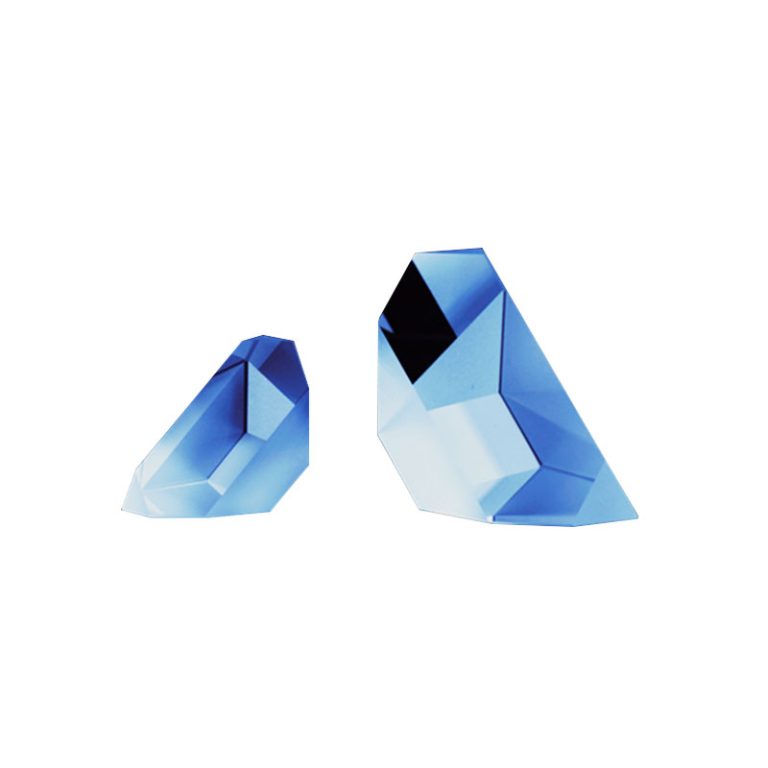
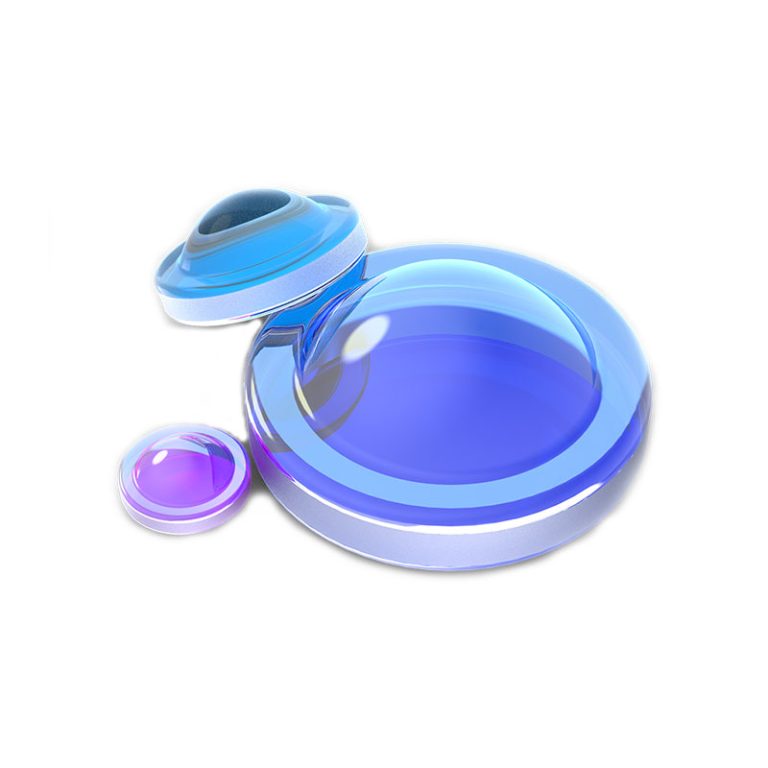
Working principle and structure
The Brewster window is based on polarized reflection characteristics: when light enters the interface of the Brewster angle incident medium, the reflectivity of the P-polarized light is zero, and the S-polarized light is partially reflected, resulting in natural polarization separation. This structure is usually a parallel plane optical window with double-sided polishing, which is installed in the laser cavity at a precise inclination angle, so that the output beam is automatically locked in the P polarization state, improving the stability and optical efficiency of the system.

Materials & Manufacturing
Hobbite manufactures Brewster windows using high-purity optical materials, including fused silica, BK7, and calcium fluoride (CaF₂). Ultra-precision polishing and angle control technology are used in the manufacturing process to ensure a Brewster angular deviation of ≤±0.2° and a flatness of better than λ/10. The surface is treated with a low-absorption medium film system, which significantly improves the transmittance and thermal stability. The edges are designed with safety chamfers and anti-chipping ports to ensure long-term reliability in high-power, high-temperature, and vibration environments.
Core optical properties
- P light transmittance ≥8%, reflection loss is almost zero.
- S light reflectance is maintained at 10–20%, providing natural polarization separation.
- Wide spectral response: covers 266–2000 nm (can be customized in the UV, VIS, NIR bands).
- Optical surface wavefront distortion < λ/10, suitable for precision imaging and interference
Applications:
- Laser resonator and polarization selection module
- Optical amplifiers, modulators, and isolators
- Polarization measurement and analysis system
- High power Nd: YAG, Ti: Sapphire, Fiber lasers
- Precision spectrometer and interference testing equipment
Design considerations
- Angle of incidence accuracy: The Brewster window must be installed at a precise angle, otherwise the polarization performance will be reduced.
- Material selection: Choose the appropriate material according to the wavelength and power (e.g. quartz for high power, CaF₂ for UV band).
- Surface cleanliness: Contamination or scratches can cause scattering and power loss.
- Coating Options: Single-sided or double-sided AR coatings are available to optimize the transmittance of different bands.
- Thermal stability: In high-energy applications, the material’s expansion coefficient and optical stability need to be considered.