Ever noticed how some postcards or posters seem to change images or appear 3D as you tilt them? The trick behind this effect is a lenticular array—a precise arrangement of tiny lenses that guides light in specific directions. These arrays allow professionals to manipulate light in ways that a single lens cannot, creating depth, movement, or evenly distributed lighting.
Unlike conventional lenses, which rely on a single curved surface, a lenticular array splits and redirects light through multiple lenslets, each contributing to the final visual effect. This design enables optical illusions, projection solutions, and light-shaping applications in a compact form.
How Lenticular Arrays Work
At its core, a lenticular array controls light by directing it through numerous small lenses called lenslets:
- Lenslet arrangement: Each lenslet is angled to refract light precisely. When combined, these subtle changes guide light to create 3D or dynamic effects.
- Array types: Linear arrays spread light along one axis, ideal for backlighting or illumination panels. Radial arrays focus light toward a center point, commonly used in mini projectors or concentrated light setups.
- Micro-lenticular arrays: Extremely small lenslets can form detailed 3D images or interact with sensors, allowing precision light modulation at micro-scales.
The interplay of all these lenslets ensures sharp 3D images, controlled light distribution, and even illumination, depending on the application.

Applications in Daily Life and Technology
Lenticular arrays have found practical and engaging applications across different fields:
- 3D displays and novelty postcards: Lenslets encode multiple images, producing a dynamic or depth effect.
- Projection and illumination systems: Arrays spread light uniformly across surfaces, enhancing clarity and brightness.
- Solar concentrators: Lenslets focus sunlight onto a specific area, improving energy collection.
- Educational kits and experiments: Arrays allow hands-on exploration of light behavior and optical principles.
Each application benefits from the array’s precision, as even small misalignments can affect image sharpness or light distribution.
Materials and Manufacturing
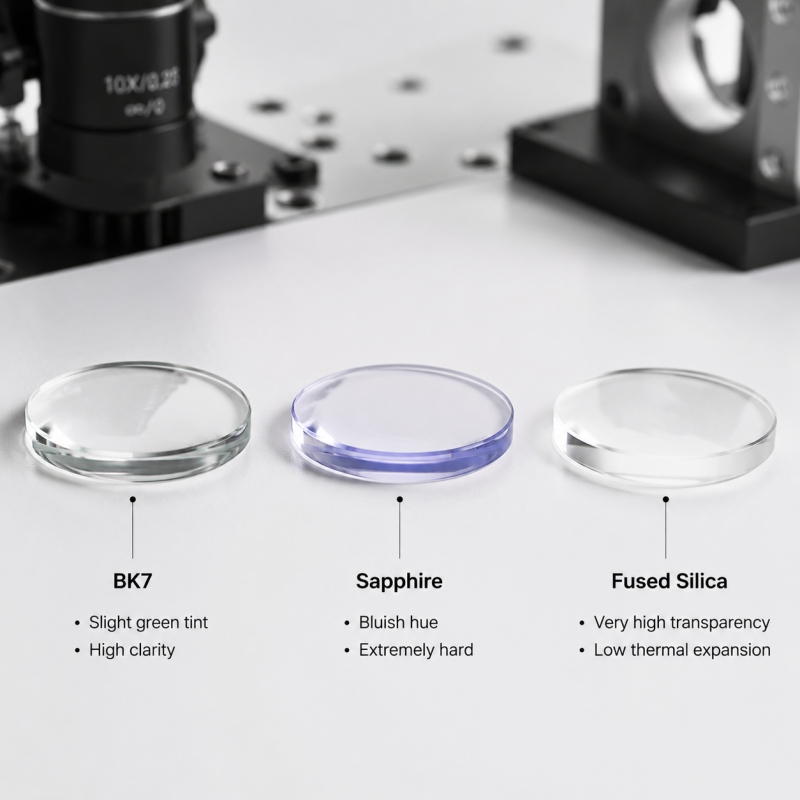
Lenticular arrays are usually made from plastics such as PMMA or polycarbonate, offering transparency, light weight, and manufacturability. Glass arrays, though heavier, provide higher optical quality for precision applications.
Critical to performance lies in the precision of microlens geometry, spacing, and alignment. These parameters are meticulously controlled during production of our lens arrays, ensuring the lowest possible tolerances.
Advantages and Versatility
The main benefits of lenticular arrays include:
- Creation of 3D or dynamic visual effects from flat images
- Precise control of light direction and distribution
- Compact design compared to traditional lens systems
- Applicability in both technical and educational contexts
This versatility makes lenticular arrays useful not only in professional optical systems but also for teaching and hobbyist projects, offering an accessible way to explore optical principles.
Conclusion
Lenticular array offers a whole new way to observe and interact with light in the world of microlenses. Tilt a lens, and a flat image appears to shift or pop. Focus a beam, and it scatters or converges precisely where you need it. From educational experiments to visual effects, lens arrays make ideas possible.