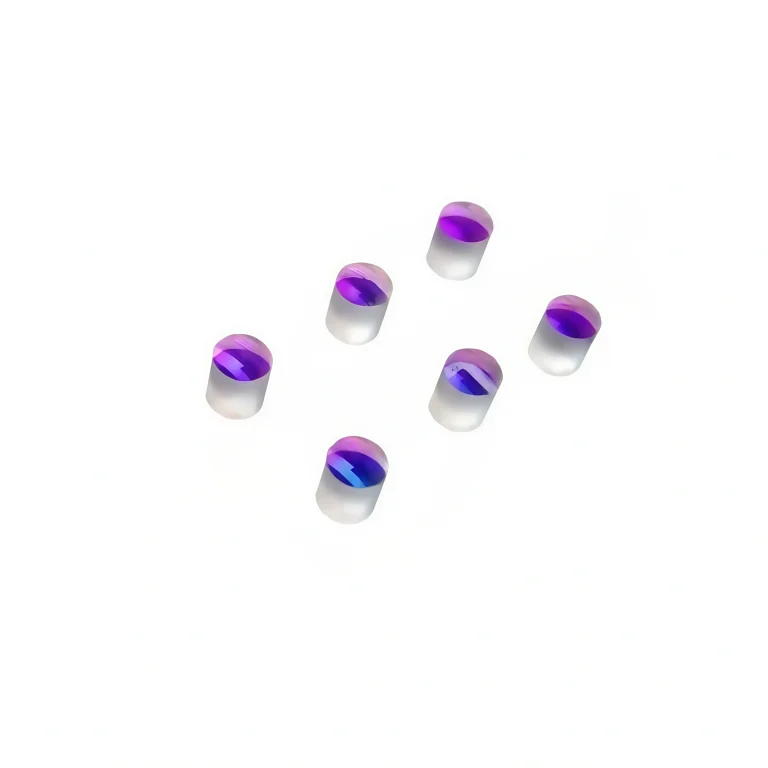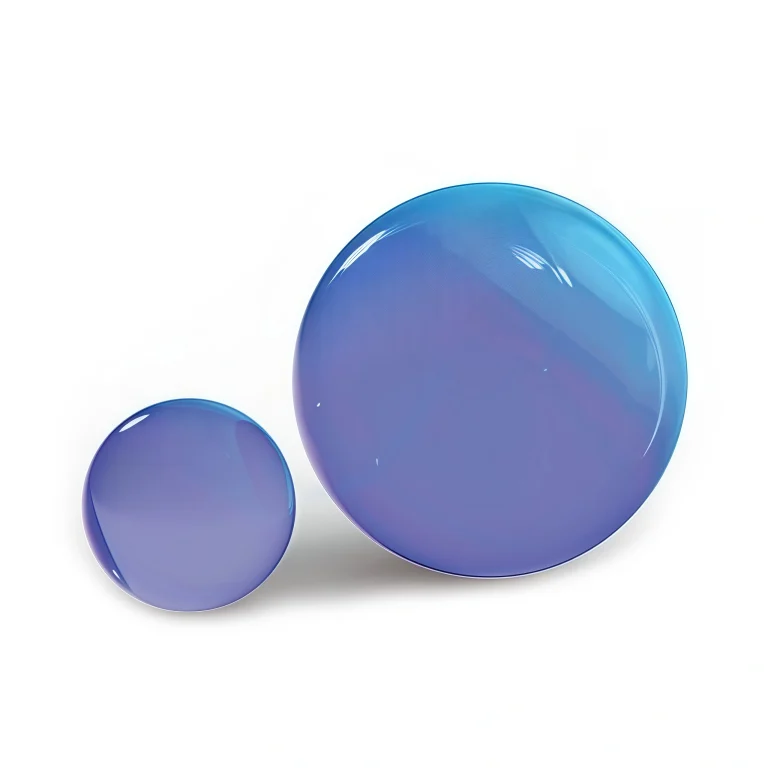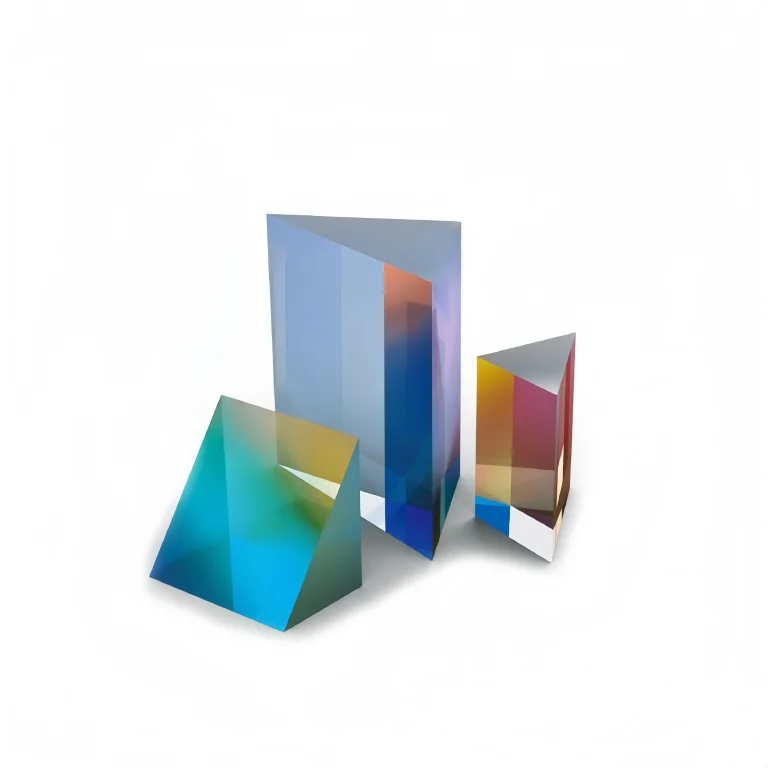
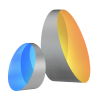



Precision Wedge Prisms for Stable, Low-Distortion Beam Control
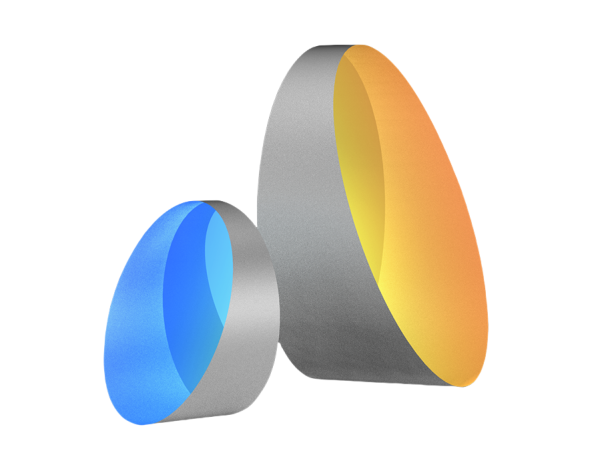
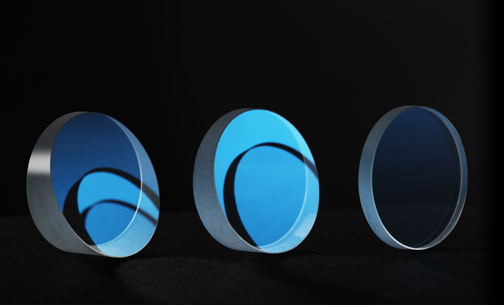
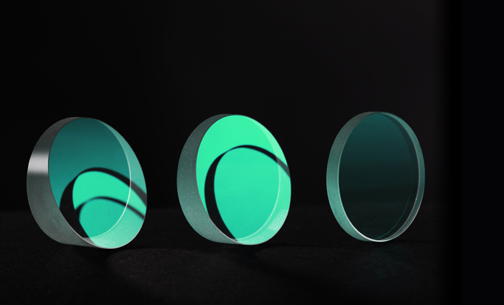
Wedge Prisms are optical components designed with a slight angular deviation, allowing precise control of beam direction, dispersion, or beam steering in compact optical systems. Their versatility makes them ideal for applications requiring stability and accuracy.
Feature:
- Fabricated from high-transmission optical glass ensuring clarity and durability
- Precise angular deviation for controlled beam deflection and alignment
- Low wavefront distortion achieved through advanced polishing and surface accuracy
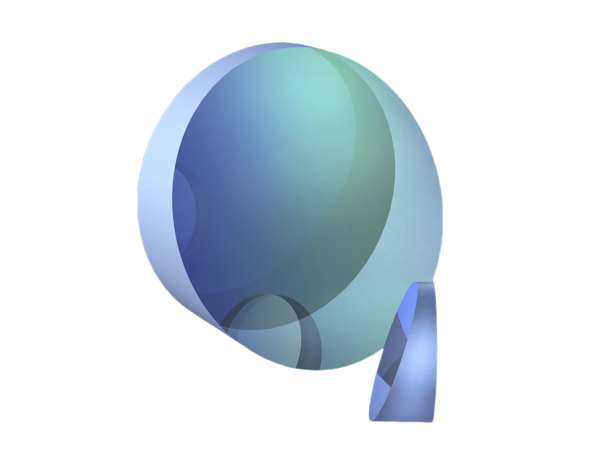
- Available in single or paired configurations for tunable beam adjustment
- Custom sizes, geometries, and coating options to meet diverse optical system requirements
Application: Beam steering and alignment, laser tuning, optical metrology, spectroscopy, and imaging systems requiring precise beam control.
Share to:
Key Features
Wedge prisms are optical parts with two slanted, non-parallel surfaces. They’re mainly used to shift light beams by a small angle gently. Here’s what makes them useful:
- Controllable Beam Shifting: They can shift light by a specific angle (usually 0.5° to 10°) with high precision (down to ±0.1°). You can even stack two prisms to adjust the shift angle—twisting one against the other lets you fine-tune the direction.
- No Image Distortion: Unlike some prisms that flip or rotate images, wedge prisms only shift the beam sideways. The image stays upright and unchanged, which is great for devices where you need to keep the view natural.
- Simple and Stable: Made of solid glass or crystal (like BK7, fused silica, or sapphire), they’re tough and don’t easily break. They work without extra coatings (using total internal reflection) and handle vibrations, temperature changes, and humidity well.
- Wide Light Compatibility: They work with light from ultraviolet (200nm) to infrared (12μm) and can handle low to medium laser power (from milliwatts to watts), making them versatile for many tools.
Applications
Optical Alignment and Adjustment
- Laser Tools: In laser cutting or welding machines, Wedge prisms slightly shift the laser beam to align it with the target (like a weld seam), ensuring precise cuts or joins.
- Microscopes and Telescopes: correct small misalignments in the light path, making sure the image stays sharp even if the tool is slightly tilted.
Measurement and Sensing
- Interferometers: Wedge prisms create small shifts in reference light beams, helping measure tiny surface flaws or thickness differences in materials by analyzing interference patterns.
- Leveling Tools: In surveying equipment (like laser levels), they adjust the laser beam’s angle to make sure it’s perfectly horizontal or vertical, keeping construction measurements accurate.
Imaging and Display Systems
- Projectors and Cameras: They shift the light path to avoid shadows from internal parts (like lenses or mirrors), making projected images brighter and clearer.
- 3D Scanners: Wedge prisms adjust the angle of structured light beams, expanding the scanning area while keeping the light pattern sharp for accurate 3D models.
Laser Communication and Sensing
- Fiber Optic Alignment: They slightly shift laser beams to couple them into fibers more efficiently, reducing signal loss in communication networks.
- LiDAR Systems: Wedge prisms adjust the laser’s angle to widen the detection range, helping the sensor “see” more of the surrounding environment (like in self-driving cars).
How to Choose
Know Your Shift Angle Needs: Select a prism with a shift angle that matches your requirements (e.g., 1° for small adjustments, 5° for larger shifts). For precise work (like laser alignment), choose high-precision specs (±0.1° accuracy).
Match the Light Type: Use BK7 glass for visible light (cheap and works well). For ultraviolet light or hot environments, choose fused silica (it handles UV rays and heat better). For infrared light, use materials like germanium or zinc selenide.
Check Surface Quality: If you need sharp, clear light (like in microscopes), go for smooth surfaces (Ra≤0.5nm) and good flatness (λ/20). Add an anti-reflective coating if light passes through the prism at a shallow angle to reduce glare.
Fit Your Environment: Make sure the size fits your tool, leaving 2-3mm for adjustments. For vibrating tools (like construction lasers) or wet conditions, pick tough materials like sapphire and add anti-corrosion coatings.
| Category | Specs | Regular Range | High-Precision Range |
| Material | Base material | BK7 glass, fused silica | Sapphire, calcium fluoride |
| Light range it works with | 400-2000nm (visible/near-infrared) | 200nm-12μm (ultraviolet to infrared) | |
| Optical Performance | Beam shift angle | 0.5°-10° | 0.1°-15° (±0.1° accuracy) |
| Angle precision | ±0.5° | ±0.1° | |
| Surface smoothness | λ/4 (at 632.8nm light) | λ/20 (at 632.8nm light) | |
| Surface roughness | Ra≤2nm | Ra≤0.5nm | |
| Light transmittance | ≥90% (visible light) | ≥95% (with anti-reflective coating) | |
| Mechanical Specs | Size tolerance | ±0.1mm | ±0.01mm |
| Edge quality | 60-40 scratch-dig standard | 40-20 scratch-dig standard | |
| Environmental Resistance | Operating temperature | -20℃~+70℃ | -40℃~+120℃ |
| Vibration resistance | No damage at 10-2000Hz | No performance loss at 20-5000Hz |