

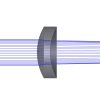
1. Unique Curvature Profile for Enhanced Optical Control
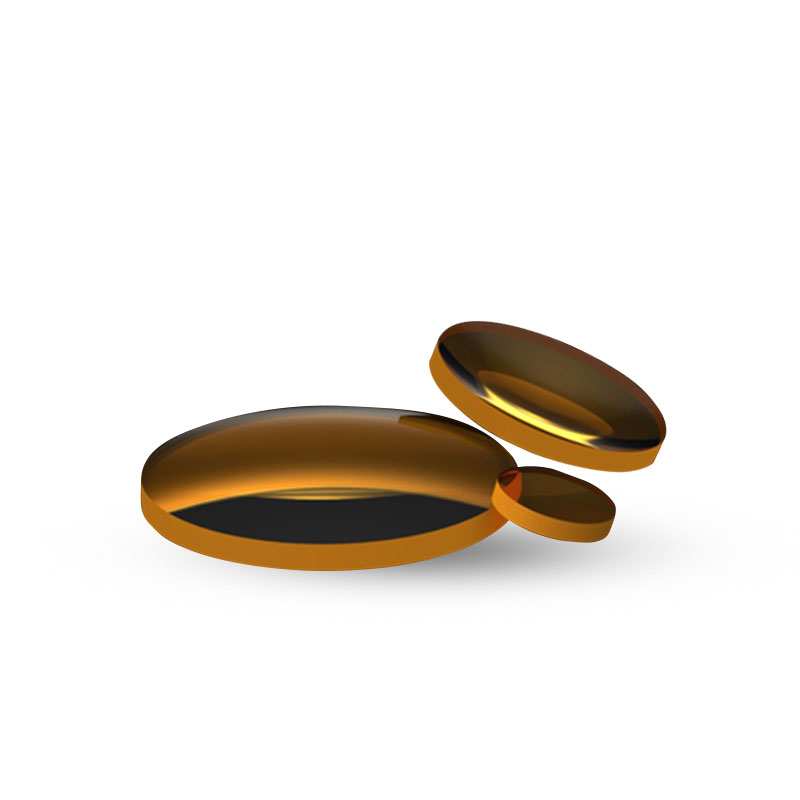
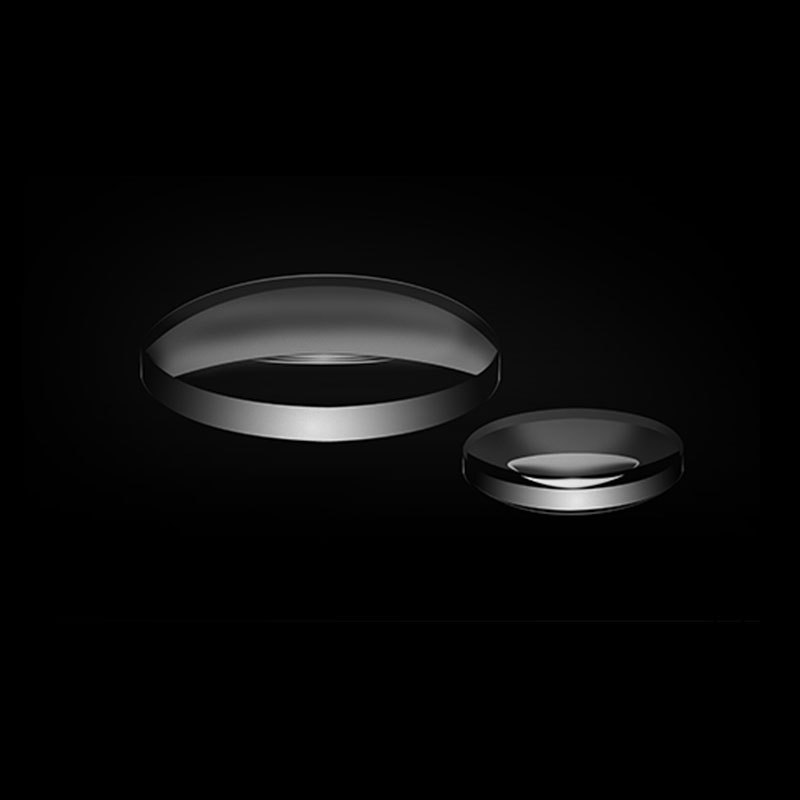
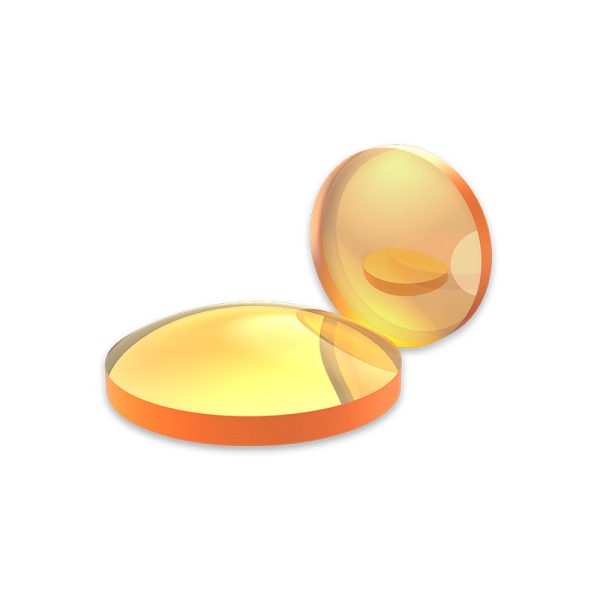
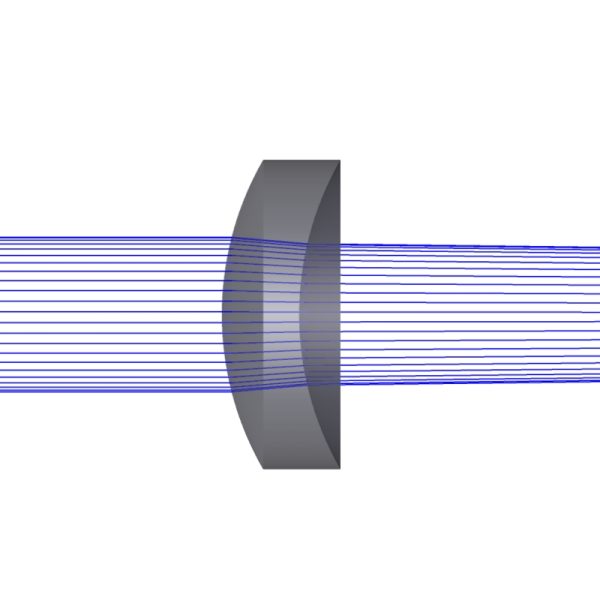
Meniscus lenses feature two spherical surfaces with unequal radii of curvature:
- Positive Meniscus: Both surfaces are convex, with one having a larger curvature, resulting in positive focal power, ideal for beam convergence.
- Negative Meniscus: One convex and one concave surface, with the concave side dominating; offers negative focal power, used for beam expansion and divergence.
Their compact crescent-like shape allows high optical efficiency while minimizing thickness.
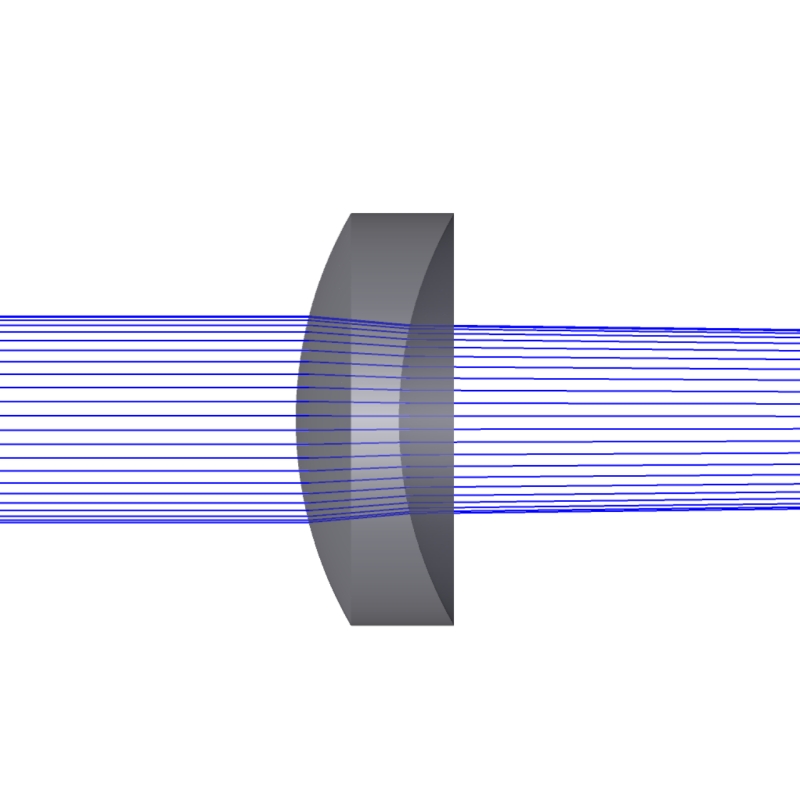
2. Optical Performance Advantages
- Spherical Aberration Correction: Dual-surface curvature enables effective reduction of spherical aberrations, improving image clarity.
- Compact Focal Tuning: Compared to single-curvature lenses, meniscus lenses achieve desired focal lengths with thinner profiles, suitable for space-constrained systems.
- Chromatic Aberration Compensation: When used in material combinations (e.g., achromatic pairs), meniscus lenses assist in minimizing chromatic dispersion.
3. Material Versatility and Compatibility
- Glass Options: K9, B270, fused quartz for visible and UV wavelengths.
- Plastics: PMMA, PC for lightweight or cost-effective applications.
- Infrared Materials: Germanium or silicon for IR systems.
Surface precision and coating compatibility are tailored based on usage in laser optics or imaging systems.
4. Application Scenarios
(1)Photography and Imaging
Telescope Eyepieces & Microscopes: Serve as auxiliary focusing elements to enhance contrast and resolution.
(2)Laser Systems & Optical Communication
Beam Shaping: Adjust laser spot size in cutting, marking, and engraving systems.
Fiber Coupling: Improve coupling efficiency between laser sources and optical fibers.
(3)Measurement & Projection Equipment
Collimation Systems: Used in spectrometers and laser rangefinders to ensure beam parallelism.
Projection Optics: Reduce geometric distortion in projector lenses for uniform image output.
(4)Scientific Instruments & Optical Labs
Meniscus lenses are foundational in interferometers, spectrometers, and research setups for beam shaping, alignment, or analysis.
5. Lens Type Comparison
| Type | Structural Features | Focal Power | Function |
| Positive Meniscus | Double convex surfaces (one stronger) | Positive | Converging light, aberration correction |
| Negative Meniscus | Convex and stronger concave surface | Negative | Beam divergence, system expansion |
Optical Lens Specifications
| Parameter | Specification |
|---|---|
| Lens Type | Positive or Negative Meniscus |
| Material | BK7, Fused Silica, CaF₂, K9, B270, PMMA, PC, Germanium, Silicon, or custom materials |
| Wavelength Range | 185 – 2100 nm (Material dependent) |
| Diameter Range | 3 mm – 100 mm |
| Dimension Tolerance | +0.0 / -0.1 mm |
| Center Thickness Tolerance | ±0.05 mm |
| Sag Tolerance | +0.05 mm |
| Clear Aperture | > 85% |
| Focal Length Tolerance | ±1% (High Precision) |
| Surface Figure | λ/4 PV |
| Surface Quality | 20/10 S/D |
| Centration | < 1 arc minute |
| Coating | AR Coating (UV, VIS, NIR), custom coatings available upon request |