In precision optical manufacturing, optical polishing and lapping are essential processes that define the quality and functionality of components such as lenses, windows, and specialized optical glasses. These finishing techniques are used to achieve extremely smooth surfaces, precise dimensions, and optical clarity. They are crucial across industries ranging from scientific research and medical imaging to aerospace, laser systems, and industrial optics.
Optical Polishing
Optical polishing is a highly controlled process designed to remove minute amounts of material from an optical surface, creating an ultra-smooth finish with minimal defects. A specialized tool applies pressure while moving over the surface, usually with a slurry of abrasive particles suspended in water or a lubricant. For harder materials such as fused quartz, diamond pastes or chemical agents may be employed to achieve the required finish.
The result is a surface that minimizes light scattering, enhances transmission, and ensures reliable performance in high-precision optical systems. Polished surfaces are often evaluated for scratch-dig tolerances, surface roughness, and flatness, which may reach λ/4 or even λ/10 in high-end applications. This makes optical polishing essential for devices that require the highest level of clarity and accuracy.

Lapping
Lapping is used when a greater volume of material needs to be removed to achieve dimensional accuracy or a specific shape. While the surface finish from lapping is slightly duller than that of polishing, it remains highly smooth and precise. Lapping often serves as a preparatory step before polishing, correcting unevenness or material inconsistencies across the optical component.
Both processes rely on abrasive slurries, but the type, concentration, and size of abrasive particles are adjusted depending on the component material and the desired final characteristics. The correct combination of abrasive, pressure, and motion ensures the surface meets both geometric and optical requirements.

Techniques and Workflow
The workflow in optical finishing usually begins with lapping to correct the surface geometry and achieve approximate flatness. Depending on the component size and application, this may involve double-sided planetary lapping machines, which ensure uniform material removal across both surfaces simultaneously, or single-sided lapping for specific geometries.
Once the lapping step establishes the proper dimensions, polishing follows to refine the surface to optical quality. Polishing techniques include double-sided planetary polishing for large-scale production, single-sided polishing for larger or more delicate components, and diamond polishing for hard materials like silicon or fused quartz. In some cases, chemical-mechanical polishing is applied, combining chemical action with mechanical abrasion to achieve extremely smooth, defect-free surfaces.
Materials Suitable for Polishing and Lapping
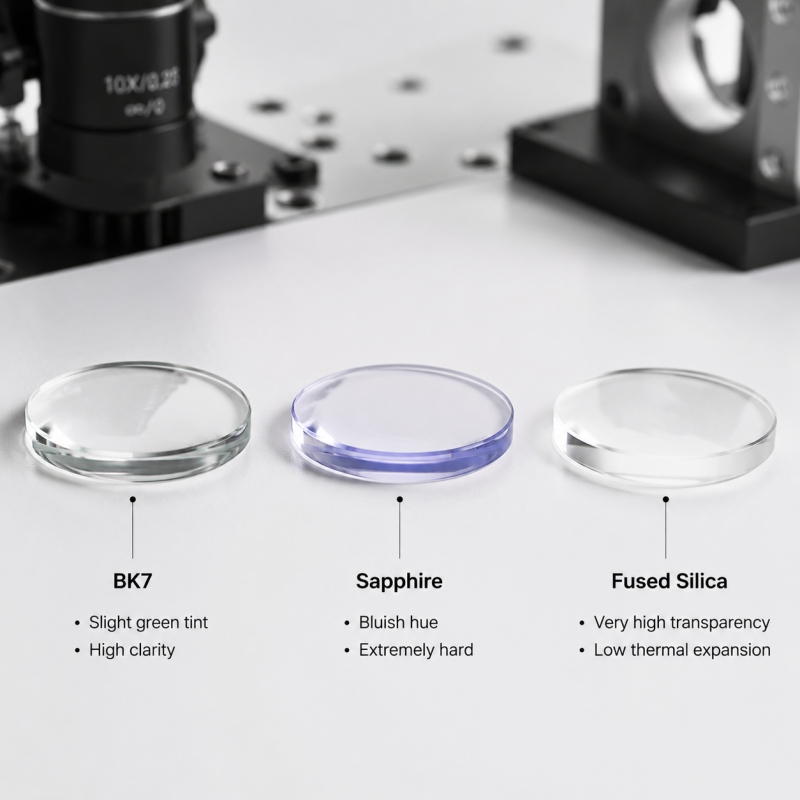
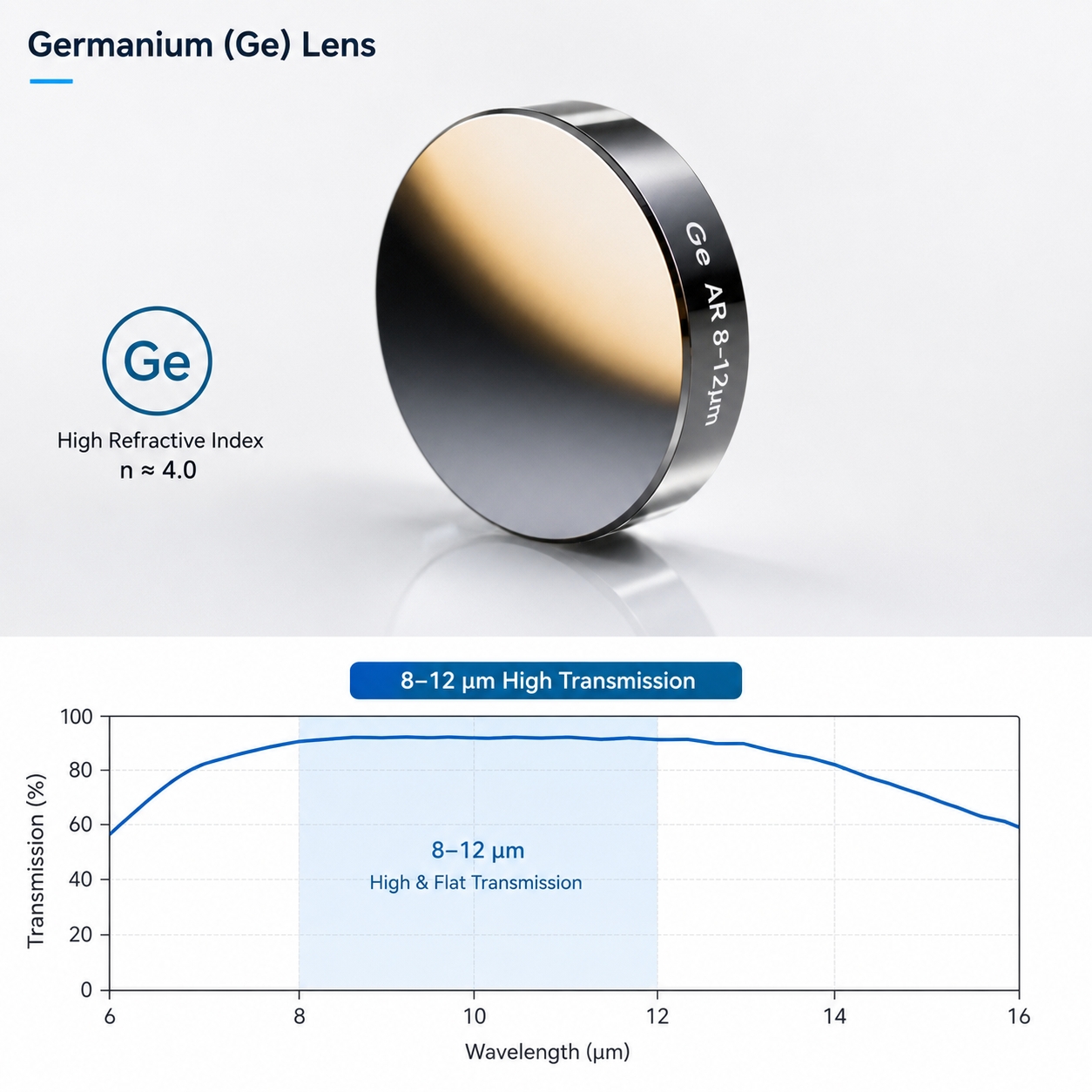
A wide variety of materials can undergo optical polishing and lapping, including optical glasses, fused quartz, fused silica, borosilicate, float glass, semiconductors such as silicon and germanium, as well as certain ceramics and ferrites. Each material responds differently to abrasives, and process parameters must be tailored accordingly.
Harder materials require more specialized abrasives, while softer materials may be polished using conventional slurries. Understanding the material properties is critical to selecting the right combination of polishing or lapping methods to achieve consistent optical performance.
Applications Across Industries
These finishing processes are widely applied in sectors where optical performance is critical. In scientific research, polished and lapped lenses, prisms, and optical components enable accurate measurements and high-quality imaging. Medical devices such as endoscopes and imaging systems rely on polished surfaces for clarity and precision during diagnostics and surgical procedures.
Laser systems demand low-scattering, high-transmission components, making polishing and lapping indispensable. Aerospace, automotive, and industrial OEMs also utilize these techniques to produce sensors, cameras, and other instruments that require precise, repeatable optical performance. By combining lapping with polishing, manufacturers can achieve both dimensional accuracy and optical surface quality, ensuring consistent results across entire production batches.
Working Principles
The underlying principles of optical polishing and lapping involve controlled material removal at a microscopic scale. Abrasive particles in the slurry act on the highest points of the optical surface, gradually smoothing irregularities through micro-cutting, friction, and shear forces. The size, shape, and hardness of these abrasive particles directly affect the rate of material removal and the surface finish quality.
Pressure control is critical. Too much pressure can create micro-cracks or uneven removal, while too little reduces efficiency and leads to inconsistent results. Rotational speed, tool geometry, and relative motion between the tool and component are carefully calibrated to maximize uniformity.
In chemical-mechanical polishing, reactive chemicals assist in softening or selectively etching the optical material, allowing finer abrasives to achieve superior smoothness without mechanical overworking. This combination of mechanical abrasion and chemical action is particularly effective for hard materials like fused quartz, where conventional polishing alone might be insufficient to achieve λ/10 flatness.
Temperature and slurry composition also play a role, as excessive heat can induce stress or micro-deformation, and the chemical concentration determines the etching rate and material compatibility. By balancing these parameters, manufacturers can produce components with optimal optical transmission, minimal surface scattering, and high durability.
Conclusion
Optical polishing and lapping are cornerstone processes in high-precision optics. Lapping corrects geometry and establishes flatness, while polishing delivers the ultra-smooth finishes necessary for accurate light transmission. A deep understanding of abrasive behavior, pressure control, and chemical-mechanical interactions enables manufacturers to achieve consistently high-quality optical surfaces.
From laboratory lenses and medical imaging devices to aerospace sensors and laser optics, these processes ensure that optical components perform reliably, meet strict tolerances, and maintain superior surface quality across large production volumes.