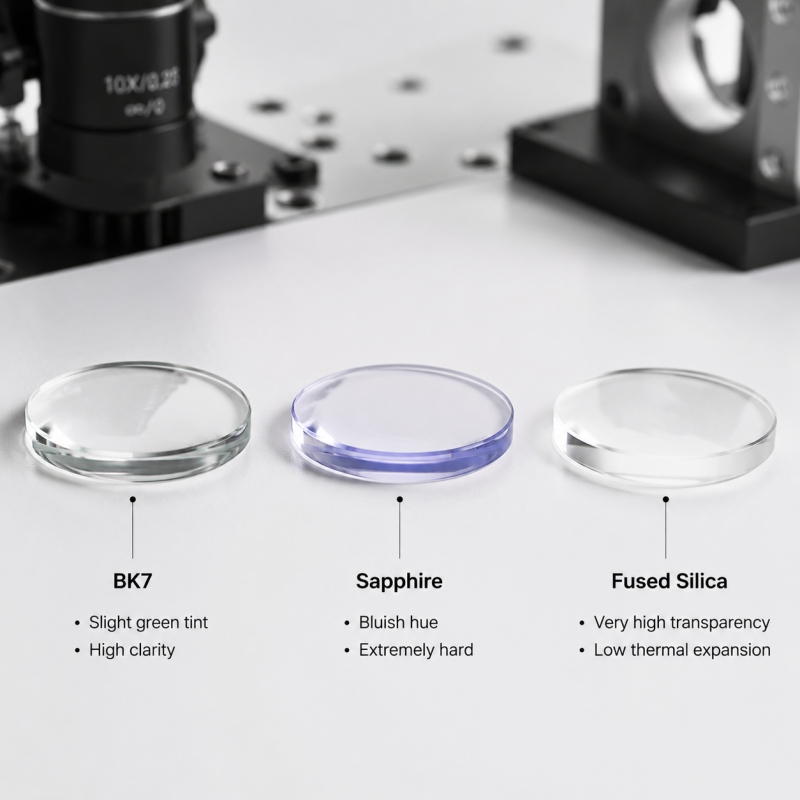
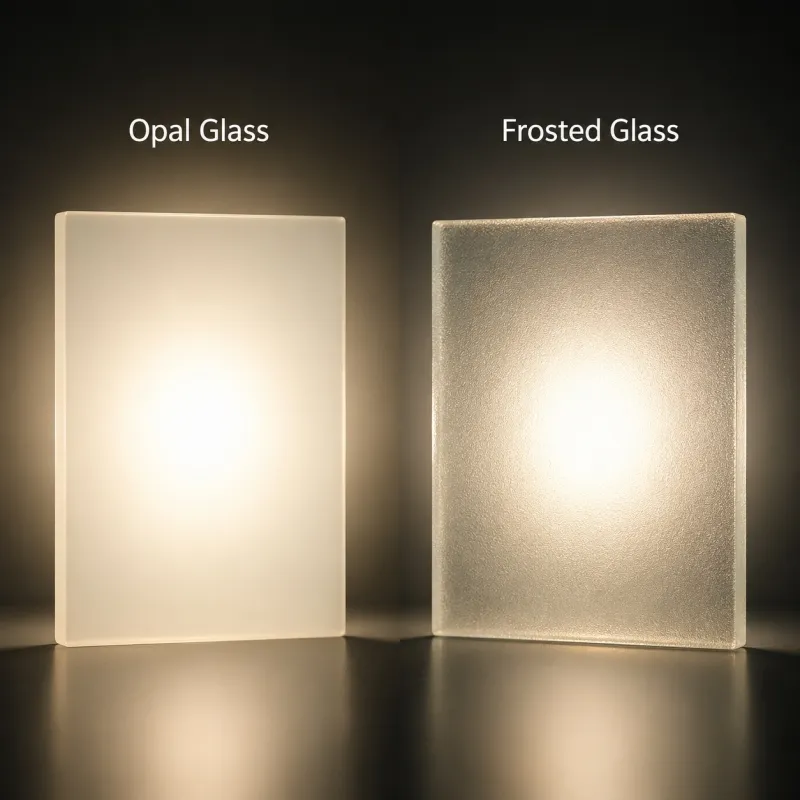
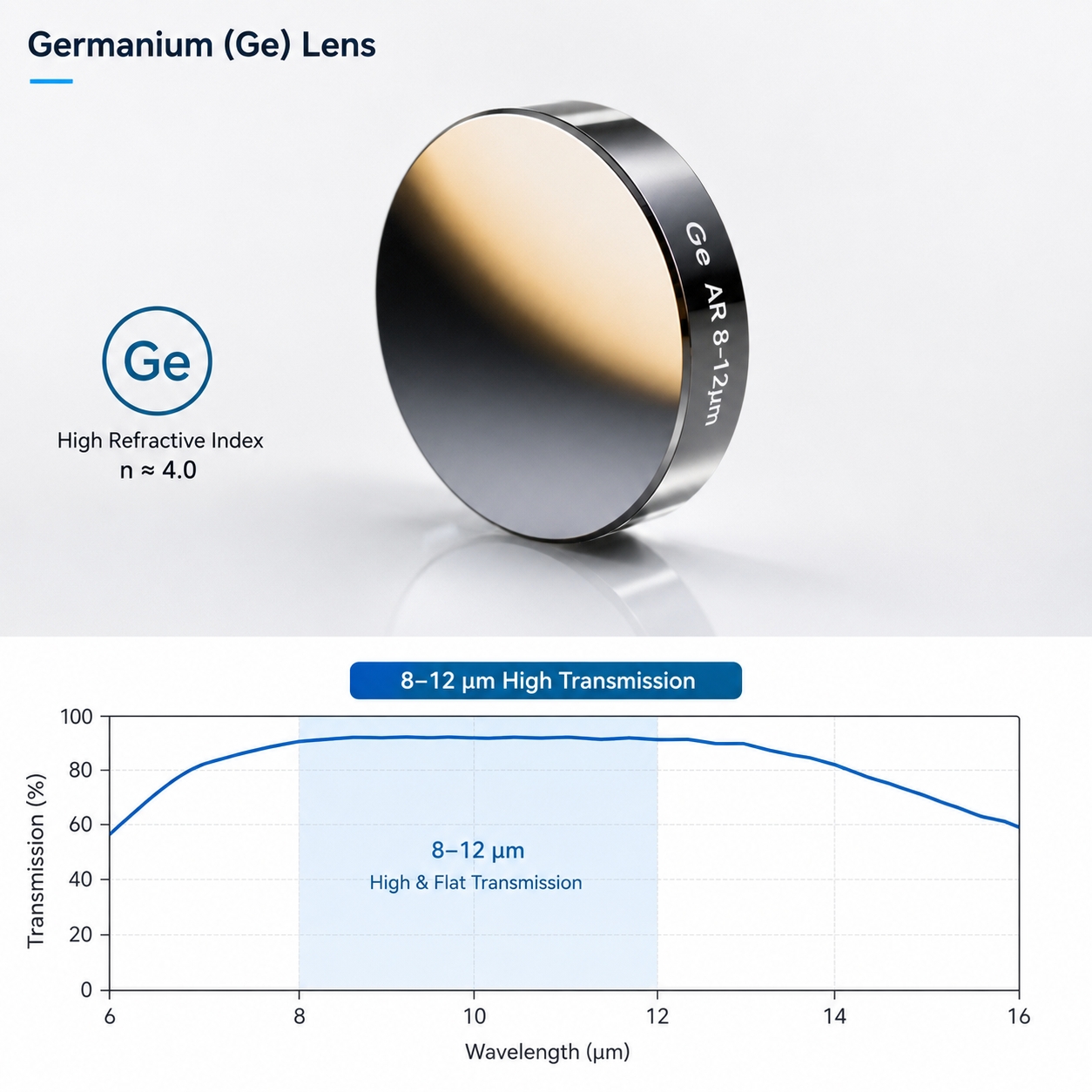
Optical mirrors are a component in the optics field that is often easily overlooked. They don’t have the noticeable curvature of lenses, nor are they as specially shaped to be impressively unique. However, almost any laser device, telescope, optical instrument, or even medical equipment might incorporate them into its design. What appears to be a simple piece of glass actually performs critical tasks like controlling light, regulating energy, and shaping image quality. In this blog post, Hobbite will take you through the roles of optical mirrors.
Why Are Optical Mirrors Important?
Unlike everyday mirrors, the requirements for optical mirrors are far more demanding. Their job isn’t just to provide a clear reflection, but to make light precise—maintaining its direction without deviation, its wavefront without distortion, and its energy without loss. To achieve this, their surfaces must be extremely smooth, with roughness often measured at the nanoscale. Their optical coatings must also boost reflectivity to 90%, 95%, or even over 99.5% at specific wavelength ranges. Any minor variation in the manufacturing process can degrade image quality or cause the light path to go completely astray.
In short: Their existence tames freely spreading light beams and allows complex optical paths to be folded, redirected, and reconfigured.
How Optical Mirrors Work
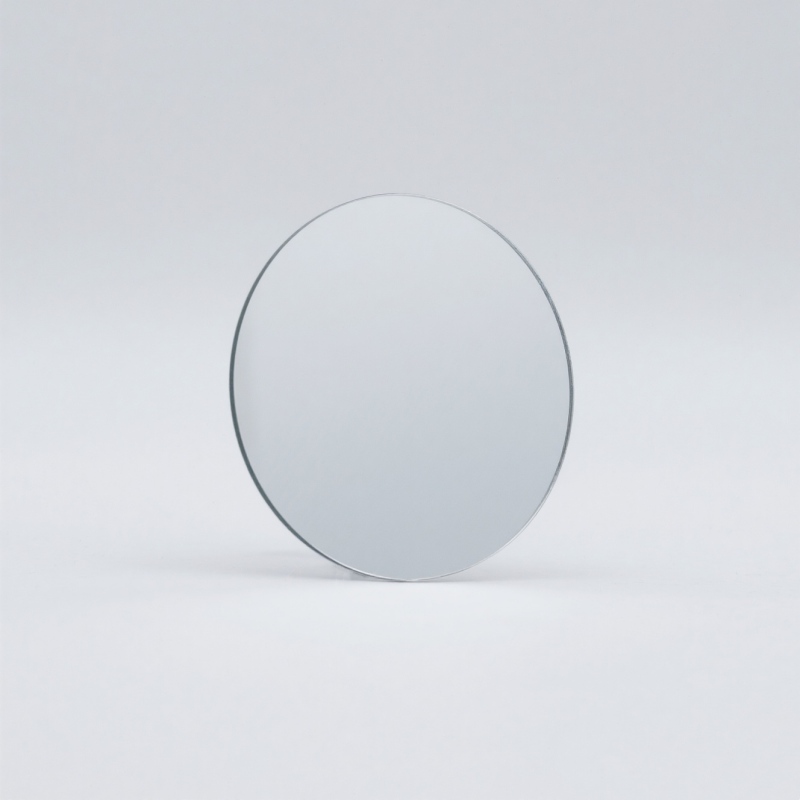
The ability of an optical mirror to change the path of light relies on the classic law of reflection (angle of incidence equals angle of reflection). While this physical principle seems simple, leveraging it accurately depends on the mirror’s exceptionally high surface quality and professionally applied coatings.
- Surface Roughness: An ordinary mirror surface may look flat but can actually be quite rough—like “hilly terrain” to a precise light beam. Light scatters due to surface imperfections, causing beam distortion and directional errors. Optical mirrors typically require nanoscale or better roughness. Such a smooth surface ensures light reflects as intended without corrupting the wavefront.
- Coatings Determine Reflectivity: A typical household mirror reflects about 80-90% of light. Professional optical mirrors can achieve 95-99.8%, approaching “zero loss” in specific bands. This is made possible by:
- Metallic Coatings (Al, Ag, Au): Broad spectral range, but generally lower reflectivity.
- Dielectric High-Reflection Coatings (multilayer nanostructures): Tailored for specific wavelengths, offering extremely high reflectivity and very low absorption—essential for laser applications.
In other words, the efficiency and stability of optical mirrors stem from their precisely engineered materials, structure, and coatings.
The Core Functions of Optical Mirrors
Function 1: Controlling the Direction of Light Propagation
This is the most fundamental and irreplaceable role. Mirrors enable versatile spatial layouts within systems.
By making light “bounce back” within a confined space or navigate around obstacles, optical paths can be flexibly shortened, lengthened, and equipment internals made more compact. Examples include the Z-shaped path in laser cutters or 45-degree deflections on optical benches—all achieved with mirrors. Without them, light would be a chaotic mess, making efficient systems impossible.
Function 2: Regulating Light Energy and Beam Distribution
Beyond changing direction, mirrors also dictate where light energy goes and how much is allocated.
For example:
- Interferometers need to split light into two identical beams, a task handled by mirrors and partial reflectors.
- Optical power monitoring systems use specialized mirrors to divert a small portion of light for detection.
- High-power laser systems rely on high-reflectivity mirrors to minimize energy loss and ensure stable transmission.
Function 3: Focusing, Shaping, and Controlling Beam Quality
This is often overlooked: “Mirrors don’t just steer light; they can change it.”
For example:
- Concave mirrors can focus diverging beams to a point.
- Parabolic mirrors focus parallel light perfectly without chromatic aberration, crucial for telescopes and laser shaping.
- Freeform mirrors can even reshape beams to improve spot quality.
Function 4: Ensuring Image Precision
Imaging isn’t exclusive to lenses. In many applications, mirrors directly determine image quality:
- The large primary mirror in a telescope collects and forms the image of celestial objects.
- Projectors use mirrors to bend the light path multiple times to create an image.
- Medical devices, like microscope illumination systems, use mirrors to improve lighting uniformity.
On scientific optical benches, mirrors adjust imaging paths and mechanical setups.
The more precise the imaging system, the higher the demands on the mirror’s shape accuracy and surface error. Therefore, mirrors are not merely auxiliary components; they are key elements that directly determine whether an image can be “seen clearly.”
What Do Optical Mirrors Actually Do in Applications?
Their most basic role is changing the light direction. But that’s just the beginning.
In laser processing, medical, or aesthetic lasers, mirrors must not only steer beams accurately but also remain stable under high power. Even slight energy absorption can cause local heating, leading to damage, deformation, or system failure. Hence, laser systems typically use dielectric high-reflector mirrors with minimal absorption for long-term reliability.
In telescopes, mirrors have a completely different task: collecting faint light from distant stars while preserving the original wavefront as much as possible. The curvature and surface precision of a large parabolic primary mirror directly determine the telescope’s imaging limits.
In optical communications and precision measurement, mirrors act as “light traffic controllers.” They split light into different paths, change propagation angles, and manage energy distribution. Their reflective properties, surface shape, and coating design make them perfect for this, enabling flexible, compact, and controllable optical layouts on experimental platforms.
There are also many “hidden” applications—medical endoscopes, industrial vision lighting, spectrometers, interferometers, solar concentrators… You might not see the mirror, but without it, light couldn’t reach its intended destination.
Not All Mirrors Are “Flat”
Most people picture a flat surface when they hear “mirror.” But in professional optics, mirror shapes are quite varied. Flat mirrors control direction. Concave mirrors focus light to a point for imaging or light collection. Parabolic mirrors perfectly focus parallel light without chromatic aberration, vital for astronomical telescopes and high-energy beam shaping. Convex mirrors expand fields of view or create reduced virtual images.
Besides shape, the coating determines a mirror’s character.. Metallic coatings (e.g., silver, gold, aluminum) suit broad-spectrum applications but usually offer lower reflectivity than dielectric coatings. Dielectric high-reflectors use nanoscale multilayer structures to achieve near-lossless” reflection at specific bands, making them ideal for laser equipment and high-precision imaging.
A mirror’s “personality” lies not in its appearance, but in its material, coating, and surface treatment.
How to Choose the “Right” Mirror?
A common mistake for beginners is focusing only on reflectivity. In practice, key questions are: Does it match your wavelength? Is the angle of incidence correct? Can it handle your laser’s power? Does the surface accuracy meet imaging requirements? Is the substrate material resistant to temperature, humidity, or chemicals?
A mirror designed for 45° incidence may lose performance at 0°. A mirror optimized for 532 nm will be inefficient at 1064 nm. The more precise the system, the more critical it is to check specifications thoroughly—you can’t just use “any mirror.”
If you’re selecting or purchasing optical components, always specify these conditions clearly to avoid receiving an unsuitable product.
Handle with Care
Optical surfaces are delicate. Even 1µm of dust can affect performance. Avoid touching the reflective surface directly. Store and transport mirrors in dry, dust-free conditions. For cleaning, first use clean, oil-free air to remove dust, then gently wipe with a professional lens cleaning solution. Never use tissues or alcohol swabs, which can scratch coatings.
For laser applications, regularly check reflectivity and surface condition, incorporating mirror inspection into routine maintenance. A sudden drop in laser output is often due to a contaminated or damaged mirror, not a faulty source.
Conclusion
An optical mirror is not just a simple piece of glass. It’s a key component that enables the core functions of optical applications. It establishes light paths, allows lasers to transmit safely, keeps imaging systems sharp, and makes experimental platforms controllable and organized. When you see an optical device operating stably, precisely, and logically, it’s almost certainly assisted by several—or even dozens—of carefully chosen mirrors working behind the scenes.