Ever wonder how we can probe the dark waters of oceans, lakes, or rivers without putting divers at risk? Enter the underwater ROV—the remotely operated underwater robot. These systems are controlled from a ship or shore and powered by advanced propulsion, articulated arms, and increasingly capable optics. They can inspect offshore infrastructure, monitor marine life, and carry out rescue and industrial tasks with a level of precision that’s hard to match.
ROVs come in everything from tiny units about the size of a basketball for shallow work to SUV-sized work-class ROVs that go down thousands of meters. Modern models often include integrated cameras, sonar, infrared sensing, and even laser rangefinding to deliver detailed views of the underwater world.

The Four Classes of ROV
1. Work-level ROV
Work-grade ROVs are heavy-duty machines for deep-sea missions, operating safely at depths of roughly 3,000 to 6,000 meters. They’re ideal when divers can’t go, offering mechanical arms for construction or salvage and relying on high-resolution optics for visual inspection, laser measurement, and 3D modeling. Their optical suites can monitor pipelines, offshore platforms, and deep-sea sites, providing essential data for engineering and science.
2. Light Duty ROV
Light-duty ROVs form a bridge between the big workhorses and the simpler observation units. They normally reach from 1,000 to 3,000 meters in depth, offering good maneuverability with moderate payloads. They may be fitted with multispectral cameras, laser scanners, and structured-light systems, and could also perform equipment checks, minor repairs, and environmental monitoring not involving divers.
3. Observation-class ROVs
The observation-class ROVs are compact and very maneuverable, suited for shallow to midrange depths of about 300–1,000 meters. They are used for lake, river, and coastal exploration, water-quality assessment, and pre-task inspections. With a high-resolution camera, LED lighting, and optional sonar or infrared modules, they deliver real-time imaging supportive of research, conservation, and safety work.
4. Micro/Mini ROV
Micro or mini ROVs are the smallest, perfect for tight spaces in shallow water, like underwater pipelines or wrecked infrastructures. They can normally reach 100–300 meters with a focus on optical clarity and agility. With a high-resolution camera and adjustable LEDs or a micro laser rangefinder, they can enable fine detection with minimum disturbance in the surroundings.
Development and Significance
ROVs trace their roots to the 1960s when the U.S. Navy tested cable-controlled systems to recover sunken gear. In 1966, CURV—the Cable-Controlled Underwater Recovery Vehicle—successfully retrieved a misplaced atomic device off the coast of Spain.
In 1973, the Pisces incident demonstrated ROVs’ rescue potential when a submersible sank off Ireland. Since then, ROV technology has grown rapidly, integrating better propulsion, control, and optics. Today, work-grade ROVs remain the standard for deep-sea work, while observation and micro versions focus on shallower, precision tasks. High-resolution imaging, structured optics, and infrared sensing are central to all classes.
Optical System in the ROV
1. Photography and Imaging
The camera is a centerpiece of the ROV’s optics. Real-time video from high- or ultra-high-definition cameras supports navigation, detection, and recording. Many ROVs use multi-angle cameras on gimbal mounts for thorough coverage of complex underwater structures.
2. Lighting and Illumination
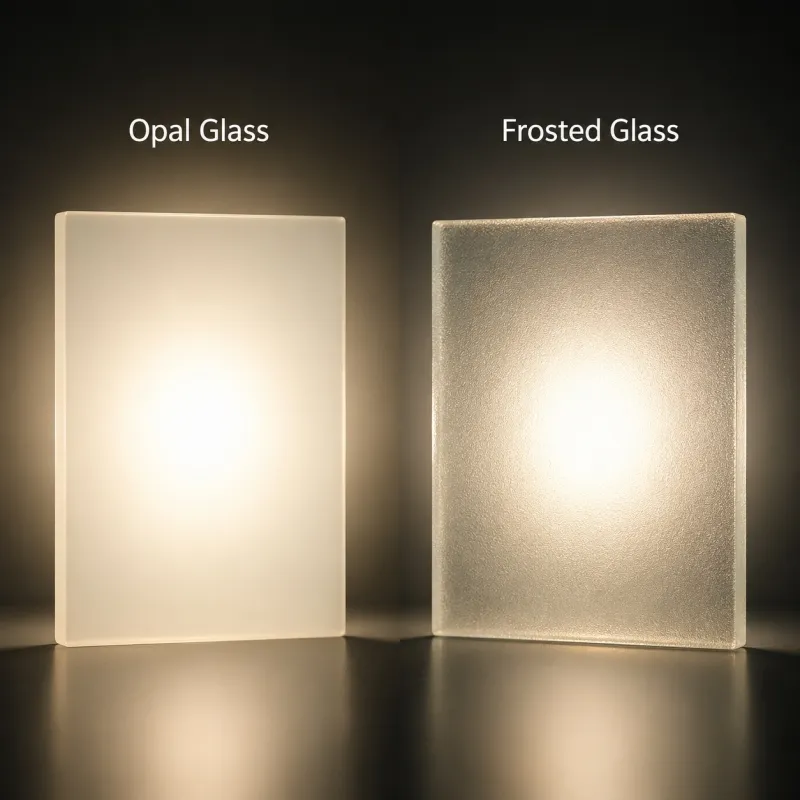
Dim light is bleached out underwater, so powerful illumination is necessary. ROVs use LED arrays or laser-based lights with various designs that disperse the light evenly while attempting to minimize backscatter and flare to provide better quality images.
3. Laser and Structured Light
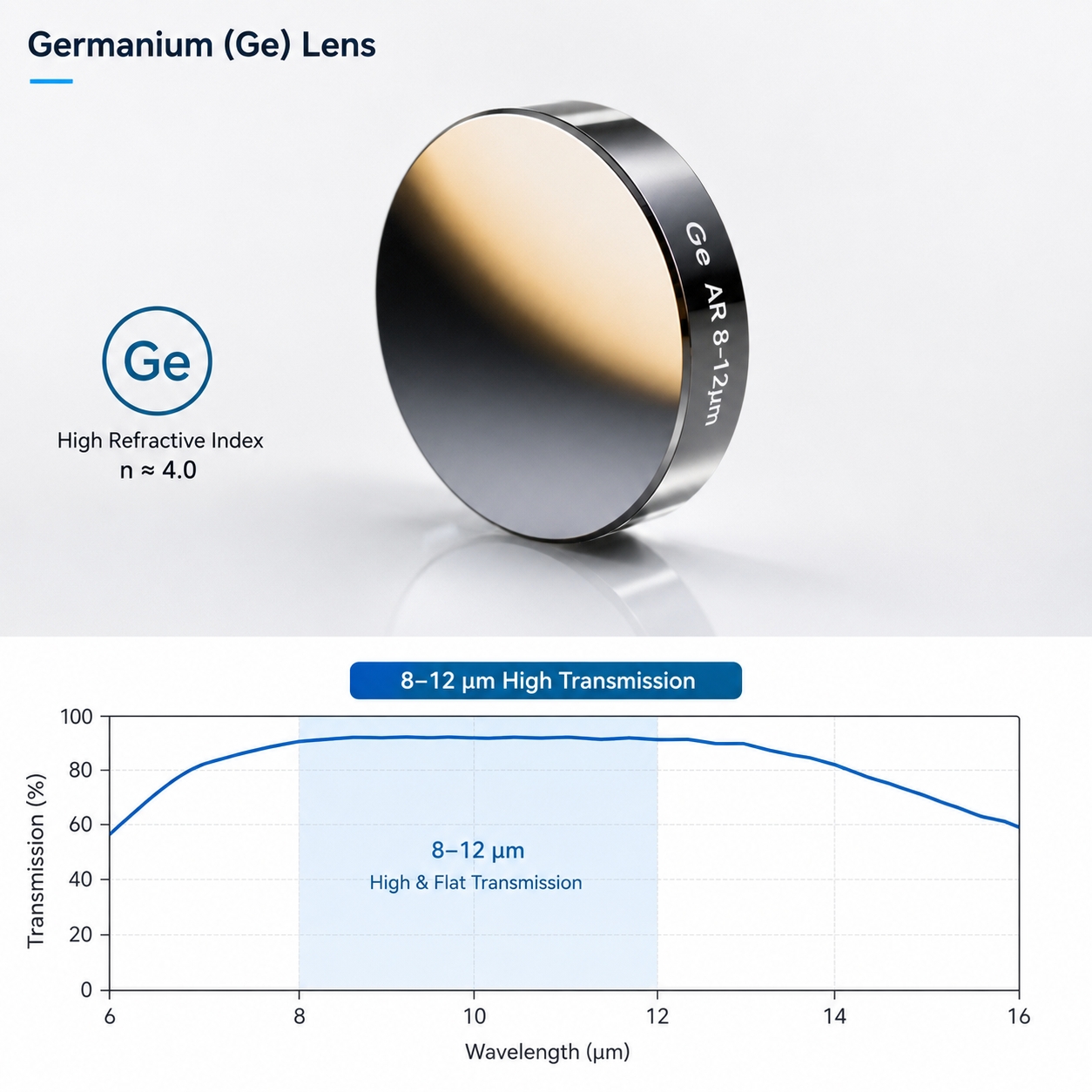
Some ROVs used for mapping and inspection projects use laser lines or use structured light for capturing accurate 3D shapes. These systems support ranging, deformation detection, and volume measurements for pipelines, ecological surveys, and similar tasks.
4. Sensor Integration
Advanced optical sensors, such as infrared cameras, multispectral modules, and photometric detectors, extend the ROV’s capability beyond visible light. Mated with sonar or acoustic data, operators gain a fuller picture of the underwater environment.
Application Scenarios
1. Offshore Energy and Subsea Infrastructure
ROVs conduct inspections of oil and gas platforms, pipelines, and subsea facilities, minimizing the necessity for divers. Optical systems support the evaluation of structural integrity, corrosion, and damage by making accurate measurements and modeling.
2. Marine Biology and Environmental Monitoring
Observation class ROVs study marine life, track water quality, and monitor ecological changes. Cameras, infrared, and multispectral sensors provide visual and environmental data that are crucial for research and conservation.
3. Search and Rescue
High-mobility ROVs help perform search-and-rescue operations, locate sunken vessels, equipment, or missing persons. The combination of sonar and optics allows operation even in low visibility.
4. Industrial and Testing Tasks
The micro and light-duty ROVs perform the inspection of underwater pipelines, dams, and other infrastructure. Laser and camera data are combined to provide accurate results for maintenance and safety inspections.
5. Exploration and Scientific Discovery
With advanced optics, ROVs study deep-sea ecosystems, hydrothermal vents, and wrecks. High-precision imaging and laser measurements support research while protecting delicate environments.
Materials and Manufacturing
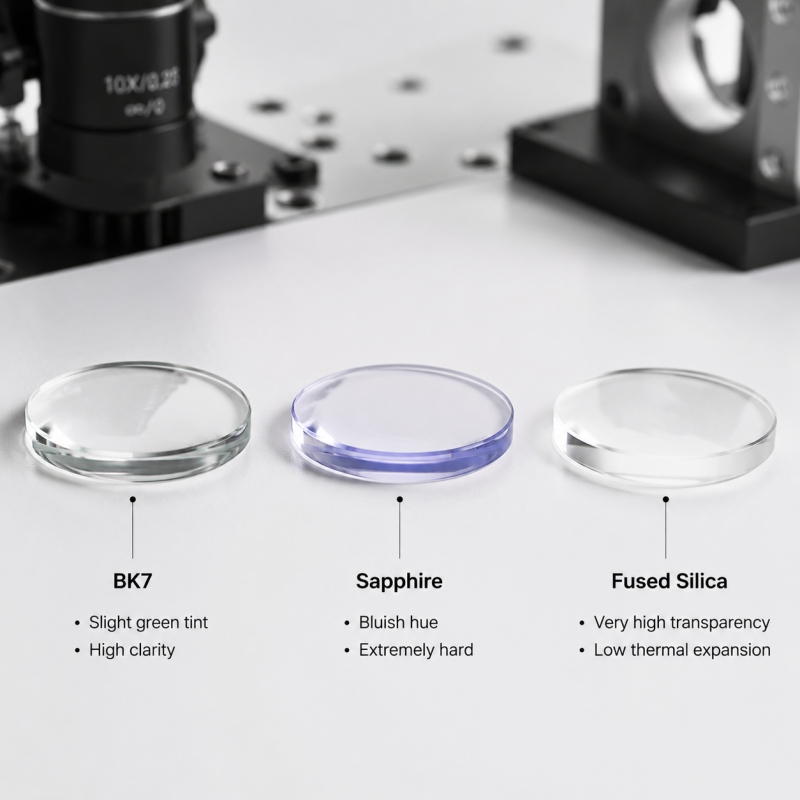
ROV bodies and optical enclosures are made from corrosion-resistant materials, such as titanium alloys, stainless steel, or special polymers. The transparent windows, usually of acrylic, polycarbonate, or sapphire, provide light transmission while withstanding pressure. Optical mounts contain shock absorption and temperature stability to maintain camera alignment under dynamic underwater conditions.
Optical Design Considerations
1. Depth and Pressure Tolerance
The optical systems need to operate under extreme pressures, whose cabin design neither deforms nor fails the seal.
2. Light Refraction and Scattering
Because underwater light behaves differently, designs make allowance for light absorption, scattering, and refraction in order to enhance illumination and imaging.
3. Sensor Collaboration
It is important that optical modules align with sonar and chemical sensors in order to keep the multimodal data synchronized and spatially consistent.
Advantages and Limitations
1. Advantages
ROVs enable improved safety, depth capability, and high-resolution observation; onboard cameras, laser ranging, and lighting provide operations unreachable for divers.
2. Limitations
Top-of-the-line ROVs suffer from turbidity, low light, and backscatter. Mechanical load limits payload, deep-water pressure can constrain optics, and maintenance and material wear affect long-term performance.
Conclusion
Contemporary underwater ROVs, combined with high-performance optics, have changed the way people conduct underwater exploration, detection, and science. From deep-sea archaeology to offshore energy and environmental monitoring, ROVs provide safety, precision, and adaptability. It is only when ratings, optical capabilities, and usage limits are well understood that engineers and operators can better select the appropriate system to improve mission efficiency, reliability, and longevity.