With the continuous advancement of autonomous driving technology, Advanced Driver-Assistance Systems (ADAS) have become crucial for enhancing road safety and the driving experience. Within the perception systems of autonomous vehicles, the integration of LiDAR (Light Detection and Ranging) with optical lenses is increasingly emerging as a key factor for improving perception accuracy and safety.
LiDAR and Optical Lenses
Advantages and Limitations of LiDAR
LiDAR is highly regarded in autonomous driving for its unique capabilities in distance measurement and 3D spatial mapping. By emitting laser beams and receiving reflected signals, it can provide accurate distance data and generate high-precision 3D maps across various environments, including low-light or adverse weather conditions. However, LiDAR faces limitations when dealing with complex backgrounds or detailed object recognition. Specifically in acquiring optical details, it often cannot match the performance of vision-based systems.
The Complementary Role of Optical Lenses
Optical lens systems are capable of capturing rich visual information. Under adequate lighting conditions, they excel at identifying complex features such as color and shape. Yet, in poor weather, optical systems are frequently compromised and cannot independently meet the comprehensive perception demands of autonomous driving. Therefore, relying solely on either optical lenses or LiDAR results in perceptual shortcomings.

Combining LiDAR with Optical Lenses
Optimizing LiDAR Performance with Optical Lenses
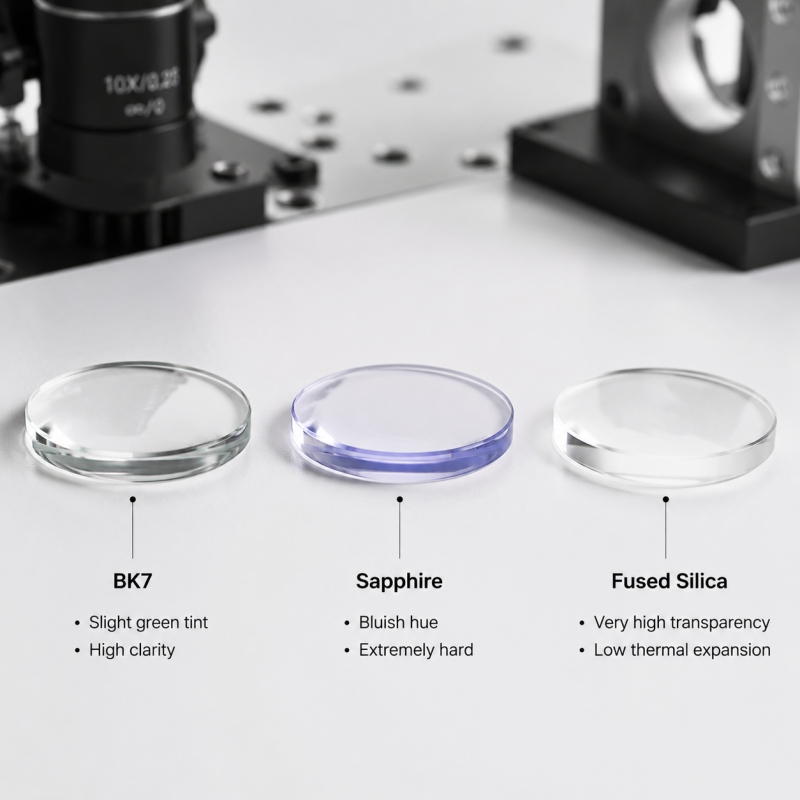
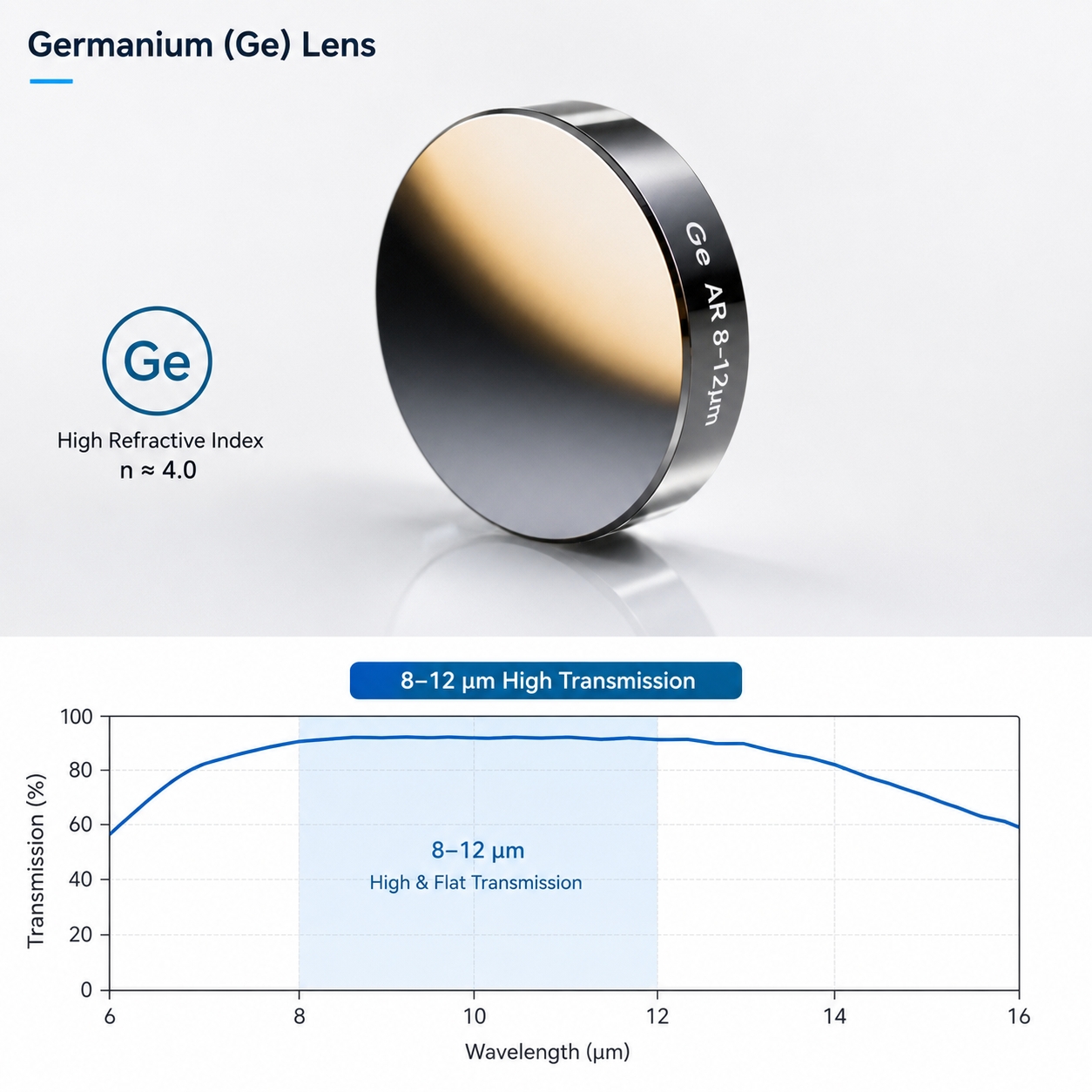
When combined, the strengths of optical lenses and LiDAR complement each other. LiDAR provides accurate spatial awareness and distance perception, while optical lenses enhance detail recognition—particularly for perceiving details like road signs, traffic signals, and pedestrians, where their contribution is significant. Through customized, high-precision optical lenses, the target detection capability of LiDAR can be effectively improved. Especially in scenarios with strong light reflections or excessive contrast, the optical system can supplement additional environmental information, thereby helping the LiDAR system deliver more comprehensive perceptual data.
Synergistic Effect of Optical Components and LiDAR
In an integrated system, LiDAR constructs a 3D environmental model through precise distance perception. Meanwhile, optical lenses complement this by adding detailed visual information that LiDAR cannot capture. For instance, in high-reflectivity or complex scenes, optical lenses can optimize focal length and light refraction angles, reducing optical distortion and enhancing the system’s adaptability to intricate environments.
Advancements and Market Outlook for LiDAR Technology
Despite LiDAR’s irreplaceable advantage in providing high-precision positioning for autonomous driving, its high cost and technical complexity remain industry challenges. Optical lenses serve as an effective complement to LiDAR by enhancing visual processing capabilities and providing support in detail capture, thus improving the overall performance of the autonomous driving system. As LiDAR technology gradually becomes more cost-effective and its integration with optical components matures, future autonomous driving systems will be equipped with more efficient perception systems capable of handling increasingly complex driving environments.
Conclusion
The perceptual capability of an autonomous driving system is core to ensuring its safety and efficiency. The integration of LiDAR and optical lenses represents a key optimization direction for these perception systems. Moving forward, with ongoing technological development, the synergistic operation of LiDAR and optical lenses will become a mainstream solution, offering higher precision and reliability for autonomous driving systems and paving the way for a more intelligent and safer future in transportation.