Fiber optics is critical in modern communication systems, high-power lasers, and precision optical instruments. However, the delicate fiber core is susceptible to damage, contamination, or optical degradation if not properly protected.
A fiber end cap (also called a fiber optic end cap) is a small yet precisely engineered optical element designed to safeguard the fiber tip, maintain beam quality, and ensure reliable performance under demanding conditions. So understanding the design and function of end caps is essential to prevent optical failures and enhance system longevity.
What Is a Fiber End Cap?
Definition
A fiber end cap is a micro-optical component mounted on the end of an optical fiber. Its primary functions include:
- Protecting the fiber tip from mechanical damage and contamination
- Reducing optical power density to prevent burn or melting at the fiber interface
- Enhancing the quality and uniformity of the emitted light
In practice, the end cap acts as a controlled interface between the fragile fiber core and the external environment, ensuring consistent optical performance even in high-power or precision applications.
Structure and Materials
Fiber end caps typically adopt one of several geometries:
- Flat end caps: simple protective interface for low-power applications
- Spherical or hemispherical end caps: optimize beam divergence, improve coupling efficiency, and reduce spherical aberration
Material selection is crucial:
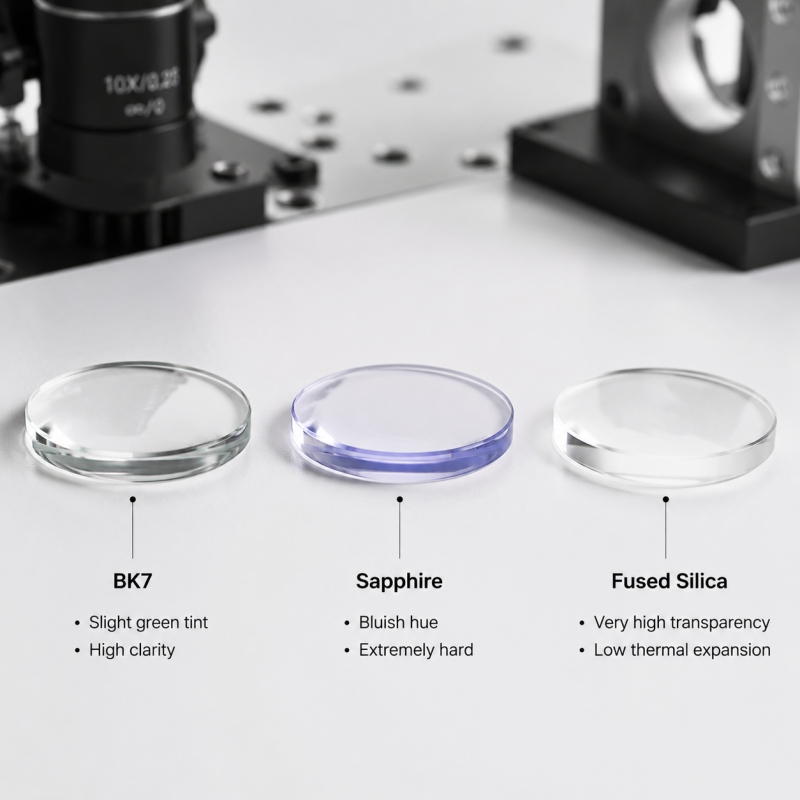
- Fused silica or optical glass provides high transmission (>99%) and low absorption
- Low thermal expansion materials prevent misalignment and stress under thermal cycling
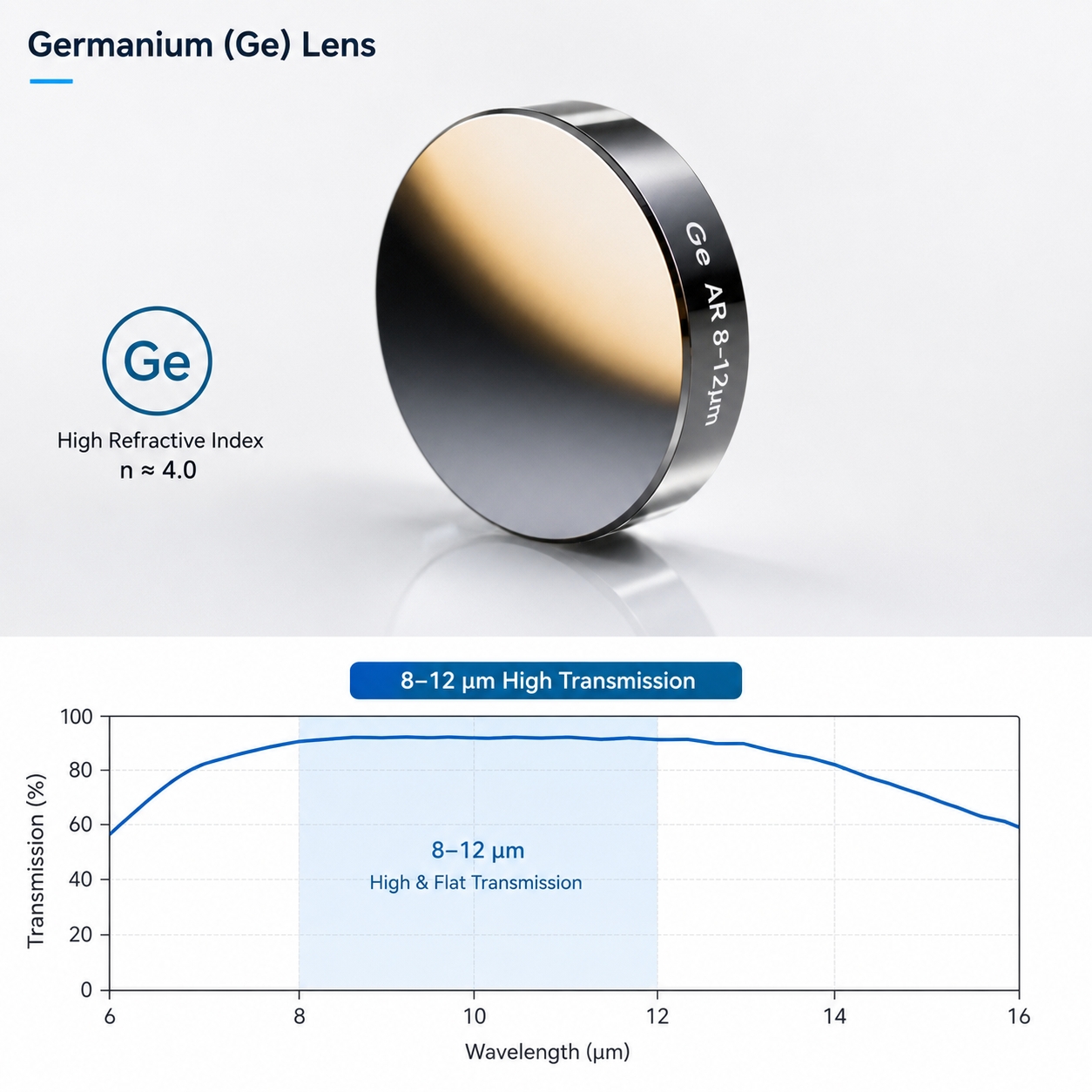
- Anti-reflection (AR) coatings reduce Fresnel reflections, minimizing feedback and power loss
Typical dimensions: end cap diameter 1–3 mm, length 2–5 mm; curvature radius is carefully matched to the fiber core diameter to optimize beam divergence.

Design Principles of Fiber End Caps
1. Optical Power Distribution
The primary role of a fiber end cap is to manage the distribution of light exiting the fiber core. For high-power fibers, the end cap reduces the peak power density at the fiber-air interface:
where I is the intensity, P is the optical power, and r is the beam radius at the end cap surface. By slightly diverging the beam, the end cap prevents localized overheating or damage.
2. Reflection Control
Uncontrolled reflections at the fiber-air interface can degrade performance or damage the fiber tip in laser systems. AR coatings, often MgF₂ or multilayer dielectric coatings, lower reflectivity below 0.5%, reducing feedback and improving optical efficiency.
3. Geometry and Curvature
The end cap geometry directly affects the emitted beam:
- Flat end caps provide basic protection but minimal beam shaping
- Spherical or hemispherical end caps reduce spherical aberration and improve mode matching
- Correct curvature ensures optimal beam divergence while minimizing thermal and optical stress
4. Material Selection
The material of the end cap impacts durability and optical performance:
- Fused silica or high-quality optical glass ensures minimal absorption (<0.1%)
- Low thermal expansion coefficient (α < 5 × 10⁻⁷ /K) maintains alignment under high-power operation
- Coatings and polishing quality determine surface reflection and contamination resistance
How Fiber End Caps Work
A fiber optic end cap modifies light emission in several ways:
- Refracting or slightly diverging the beam to reduce optical power density at the fiber tip
- Minimizing reflections and feedback to preserve beam quality
- Protecting the fiber tip from contamination, mechanical stress, and thermal damage
High-power laser applications may involve multi-kilowatt output; without proper end caps, the fiber tip can burn, fracture, or produce unstable beams. Well-designed end caps, with precise geometry and high-quality coatings, prevent these issues.
Advantages of Using Fiber End Caps
1. Extended Fiber Lifespan
A properly designed fiber end cap protects the delicate fiber tip from mechanical damage, contamination, and high-intensity optical stress.
Example: In a 200 W fiber laser, using a spherical end cap can reduce localized peak power at the fiber tip by approximately 25–30%, preventing tip burn and extending operational lifetime from hundreds of hours to several thousand hours under continuous operation.
2. Improved Optical Performance
End caps reduce Fresnel reflections and stabilize the emitted beam profile, which is critical for both laser systems and fiber communication.
Example: A 10-meter multimode fiber equipped with AR-coated end caps exhibits a reflection reduction from ~4% to less than 0.5%, maintaining consistent signal quality and minimizing interference in sensitive optical setups.
3. High-Power Compatibility
Fiber end caps are essential for high-power laser applications, where intensity at the fiber-air interface could otherwise damage the fiber.
Example: In industrial laser cutting systems with output powers exceeding 500 W, hemispherical end caps distribute the beam over a larger area, lowering the optical power density and preventing fiber tip degradation.
4. Versatility Across Applications
Fiber end caps are widely used in communication, sensing, spectroscopy, and precision laser systems, offering protection and performance optimization across multiple domains.
Example: Optical sensing devices in harsh environments use flat or spherical end caps to prevent contamination and maintain stable readings, even under high humidity or dust conditions.
Conclusion
A fiber end cap or fiber optic end cap is a precise optical element that:
- Safeguards the fiber tip from damage and contamination
- Optimizes beam quality and reduces optical losses
- Ensures reliable operation in high-power and precision applications
By selecting high-quality optical glass, precise geometry, and AR-coated surfaces, manufacturers ensure that fiber end caps provide both durability and performance, bridging the gap between fragile fiber cores and demanding real-world applications.