The Shift of Visible Light in Medicine
For a long time, the role of visible light in medicine was quite simple—mainly to illuminate the field of view. Whether in microscope observation or in surgical settings, it served as a lighting tool rather than part of the treatment itself. But this understanding began to change in the 1990s, when NASA started researching how LEDs affect wound healing. Light once again gained attention, not just for observation, but for its ability to actively influence the state of human tissue.
As research progressed, light was redefined as a controllable physical stimulus. Through specific wavelengths, energy densities, and exposure methods, it can interact with cells, affecting repair, inflammation, and even metabolic processes. It was at this stage that the medical field began to form a clearer consensus. In other words, whether visible light is effective depends on how it is designed, delivered, and applied to the target tissue.
The Emergence of LED Light Therapy
The widespread use of LED light therapy is no accident. LEDs can stably produce specific wavelengths of light at relatively low energy densities, making them well-suited for non-invasive treatment—especially in applications requiring long-term or repeated exposure, such as skin repair or inflammation control.
Compared to traditional light sources, the biggest advantage of LEDs is safety. Since they operate within the visible light range and do not involve UV radiation, the risk of tissue damage is lower. Additionally, LEDs can be arranged in arrays to cover large areas evenly, allowing visible light to act uniformly over a broader region. This is particularly important in dermatology, where uneven exposure often directly affects treatment outcomes.
From an optical perspective, LEDs and lasers represent two very different design philosophies. Lasers emphasize high coherence and high energy density, making them suitable for precise cutting or deep tissue effects. LEDs, on the other hand, lean toward low-intensity, broad-area applications, better suited for surface or general tissue regulation. Therefore, for most everyday treatment scenarios using visible light, LEDs have gradually become the more practical choice.

Comparison of Light Sources
| Feature | LED | Laser |
|---|---|---|
| Coherence | Low | High |
| Cost | Low | High |
| Coverage Area | Large | Small |
| Energy Density | Medium | High |
How Visible Light Interacts with Human Tissue
When we discuss the medical effects of visible light, we are essentially talking about how light energy is absorbed and converted by the human body. Not all light that enters the skin produces an effect—only the portion absorbed by specific molecules actually participates in biological responses.
At the cellular level, some visible light acts on key enzyme systems within the mitochondria, promoting ATP production. An increase in ATP means cells have more energy to carry out repair, division, and metabolic activities. This is the core mechanism behind photobiomodulation. In contrast, shorter wavelengths, such as blue light, are more easily absorbed by certain molecules (like porphyrins) and trigger photochemical reactions that produce reactive oxygen species with antibacterial effects.
In addition, light absorption can also cause slight temperature changes, which in turn affect cell membrane properties or nerve signal transmission. Although this thermal effect is relatively weak, it can still regulate tissue states in certain applications. From this perspective, visible light does not work through a single mechanism, but through multiple pathways that collectively influence biological systems.
Why Do Different Colors of Light Produce Different Effects?
Many people tend to understand light therapy by color—blue light, red light, etc. But from an engineering standpoint, this classification is essentially about wavelength differences. Different wavelengths propagate through tissue in completely different ways, which directly determines their depth of penetration and mode of action.
Shorter wavelengths, such as blue light (approximately 400–470 nm), are more easily absorbed and scattered, so they mainly remain in the superficial layers of the skin. This makes them more effective for controlling bacteria or regulating the condition of the epidermis. Yellow light (approximately 570–590 nm), which falls in the middle range, has moderate penetration and typically acts on superficial to mid-layer tissues, offering some value in improving local circulation or alleviating mild inflammation.
In contrast, longer wavelengths, such as red light (approximately 620–700 nm), experience lower scattering losses and can penetrate deeper into tissues, participating in inflammation regulation or promoting repair processes. Extending further into the near-infrared range (above 700 nm), penetration is even deeper, capable of affecting deeper structures, though the energy also becomes more spread out.

Because of this, different wavelengths of visible light must be selected based on the depth and characteristics of the target tissue. More importantly, light penetration is not determined solely by wavelength—it is also affected by tissue scattering and absorption properties. From an optical standpoint, this is essentially a propagation problem. Therefore, in designing relevant systems, wavelength selection and control of light and energy distribution are critical.

Wavelength and Biological Effects
| Wavelength (nm) | Color | Function / Effect |
|---|---|---|
| 400–470 | Blue | Antibacterial, oil control |
| 570–590 | Yellow | Improve circulation |
| 620–700 | Red | Anti-inflammatory, anti-aging |
| 700+ | Near-Infrared | Deep tissue repair |
How Visible Light Is Applied in Medical Practice
In practical applications, light is more often used as a regulating tool rather than a direct replacement for traditional treatments. In dermatology, it is commonly used to improve acne, promote collagen production, alleviate sun damage, and address issues such as redness, fine lines, enlarged pores, and mild hyperpigmentation. Typically, these light therapies need to be combined with medications, skincare products, or other treatments to achieve optimal results.
In wound healing and tissue repair, visible light has been found to promote cell migration, angiogenesis, and local metabolism, thereby accelerating wound healing and helping to reduce mild scar formation after surgery. For chronic skin conditions such as eczema, psoriasis, rosacea, chronic inflammatory skin diseases, and even mild radiation dermatitis, light therapy serves more as a long-term regulating method, improving symptoms through continuous exposure rather than solving the problem in a single session.
In more complex scenarios, such as photodynamic therapy (PDT), visible light can even be involved in tumor-related treatments, such as superficial basal cell carcinoma (BCC) or photosensitizer-assisted early-stage skin cancer lesion management. However, these applications typically require the use of a photosensitizer and impose higher demands on dosage, wavelength, and light distribution, as well as requiring professional optical systems and operating protocols to ensure safety and effectiveness.
The Role of Internal Optical Components
If wavelength determines whether light can reach the target, then the optical system determines whether it can act effectively. In a device, the light source is only the starting point—what truly affects treatment outcomes is how the light is distributed.
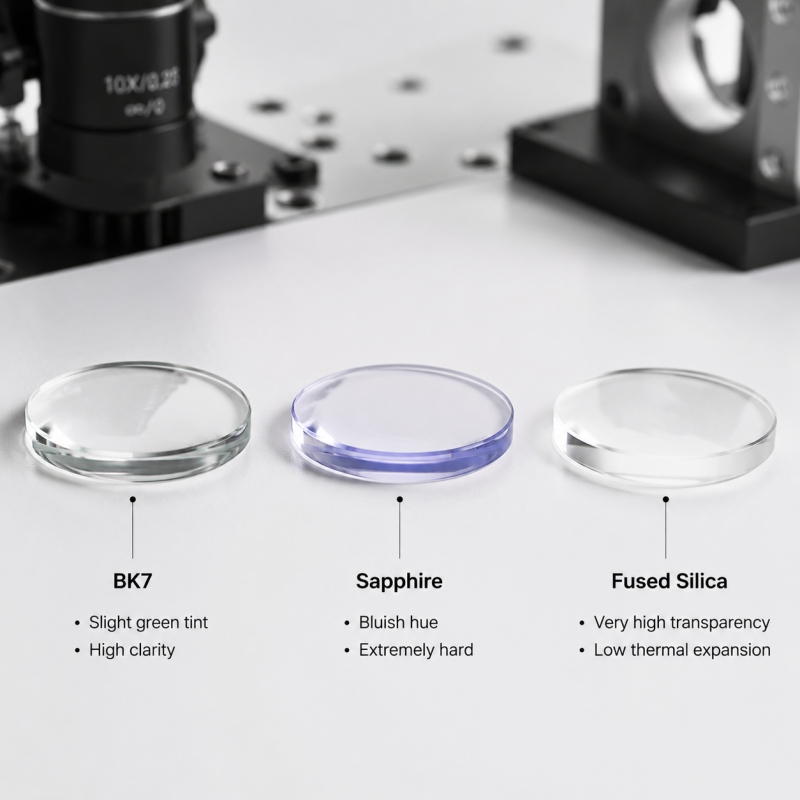
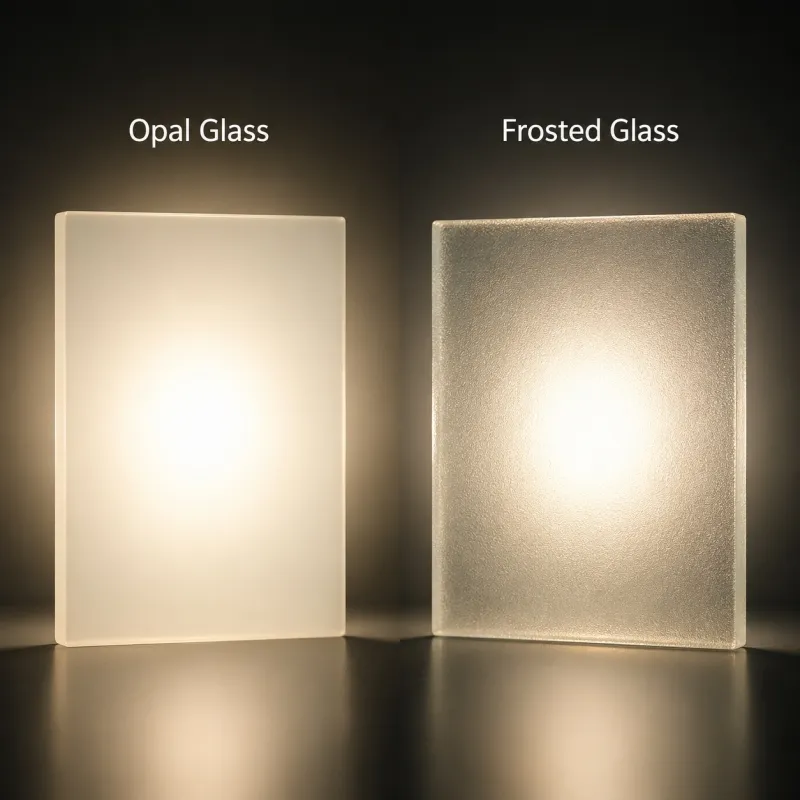
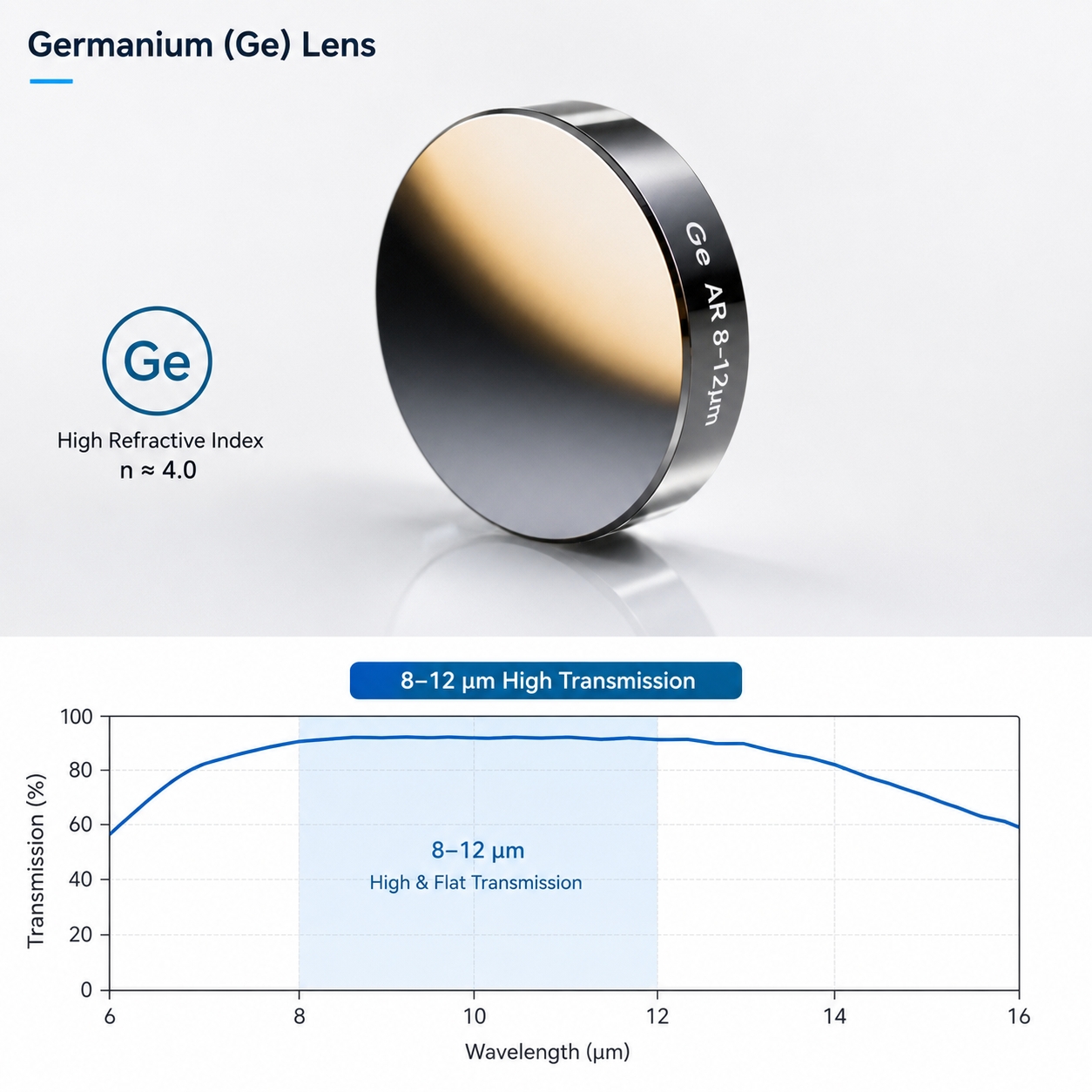
Uncontrolled light often suffers from large divergence angles and uneven energy distribution, leading to under-exposure in some areas and over-exposure in others. Therefore, in medical systems, visible light must be modulated using optical components. For example, diffusers can make the light spot more uniform, collimating lenses can control divergence angles, and aspherical lenses can help improve energy efficiency. In applications requiring access to tight spaces, optical fibers can precisely deliver light to the target location.
The role of these components directly determines the effectiveness of the treatment. Even with the same wavelength, a system without good optical design can produce completely different results.
Dosage and Application Methods
In many discussions, light therapy dosage is often simplified to “power × time,” but the reality is much more complex. Effective dosage depends not only on total energy but also on how it is distributed in space. Changes in distance cause rapid attenuation of light intensity, while different incident angles affect the ratio of reflection and absorption.
Limitations and Practical Challenges
Although light therapy has shown promise in many areas, it is not a cure-all. For example, it often struggles to play a decisive role in deep tissue issues or severe inflammation. Additionally, light therapy has a clear dose-dependent characteristic—too little energy produces no effect, while too much may suppress cellular activity.
In terms of safety, while the overall risk is low, the effects of long-term use are still being studied. The potential oxidative stress caused by short-wavelength light, in particular, remains a concern.
Future Directions
Future developments are likely to focus less on “stronger light sources” and more on “more precise control.” Multi-wavelength combination systems, intelligent dose adjustment, and wearable devices are gradually changing how this technology is used. At the same time, optical design will move from simple uniform illumination to more complex spatial control, such as structured light fields or feedback-regulated systems.
It is foreseeable that the role of visible light in medicine will gradually shift from an auxiliary tool to a highly engineered treatment platform.
Conclusion
LED light therapy is just an entry point, it makes the technology accessible, but it does not guarantee treatment outcomes. What truly matters are wavelength selection, dosage control, and optical system design. Only when visible light is precisely controlled and applied to the target tissue in the right way does it truly possess medical value.