Rainbows have long captivated our imagination with their vibrant arcs of color. While natural rainbows form in the sky under specific meteorological conditions, you can recreate this spectacle on a tabletop using a simple optical device: a prism. In this guide, we’ll show you how to use a prism to make a rainbow, explain the science behind it, and provide tips to achieve the most striking results.
II. Materials and Tools
Triangular Prism
A triangular prism—typically made of optical glass—is the heart of this experiment. Each prism has three rectangular faces and two triangular bases. Its geometry causes light entering one face to refract, disperse into a spectrum, and exit through another face.
Light Source
- Sunlight: Provides a broad, natural white-light spectrum.
- Incandescent or LED Lamp: Must produce full-spectrum white light. Position the lamp so its beam is narrow and directed.
White Screen or Wall
A plain white surface maximizes contrast for the dispersed colors, allowing you to see a clear rainbow projection.


III. Experimental Steps
1. Preparation
- Secure the prism on a stable platform or holder to prevent movement.
- Place your light source so its beam strikes one of the prism’s rectangular faces.
2. Adjusting the Light Source
- Using Sunlight: Position near a window or outside on a bright day. Use a small aperture or slit to narrow the beam for a sharper spectrum.
- Using a Lamp: Ensure the bulb emits true white light. Shield surrounding areas to concentrate the beam through the prism.
3. Observation and Fine-Tuning
- Observe where the dispersed beam strikes the white screen. You should see distinct bands of red, orange, yellow, green, blue, indigo, and violet.
- Rotate and tilt the prism slightly to optimize the angle—this is your Rainbow Prism in action. Adjust the distance between prism and screen to refine focus and size.
IV. Scientific Explanation
1. Dispersion of Light
White light comprises multiple wavelengths. When this light passes through the prism, each wavelength refracts at a slightly different angle due to the material’s dispersion. Shorter wavelengths (blue/violet) bend more than longer wavelengths (red), separating the beam into its constituent colors and creating the characteristic rainbow pattern.
2. Refraction and Internal Reflection
A beam entering the prism first refracts at the air–glass interface. Inside, it traverses the triangular body and encounters the second interface, refracting again as it exits. These two refractions magnify the dispersion effect. Some light may internally reflect off the prism’s surfaces, but the dominant outcome is the external rainbow projection.
V. Prism Fundamentals
1. Structure and Optical Properties
A prism is a transparent optical element with flat surfaces that refract light. The two triangular bases and three rectangular faces define paths for incoming and exiting rays. The precise angle between faces determines how much spectral separation occurs—key to producing a vivid Rainbow Prism projection.
2. Laboratory Applications
In optics labs, prisms serve to analyze spectral lines, calibrate spectrometers, and demonstrate fundamental principles like Snell’s Law. By measuring the angles at which different wavelengths emerge, scientists determine refractive indices for materials across a spectrum.
3. Natural Rainbow vs. Rainbow Prism
Natural rainbows form when sunlight refracts and reflects within water droplets, each droplet acting as a tiny spherical prism. In your indoor experiment, the triangular prism substitutes for water droplets, offering a controlled way to observe dispersion without waiting for rain and sunlight.
VI. Frequently Asked Questions
1. Why use sunlight or an incandescent lamp?
These sources approximate a continuous white-light spectrum, essential for displaying all rainbow colors without gaps.
2. Does prismmaterial affect the result?
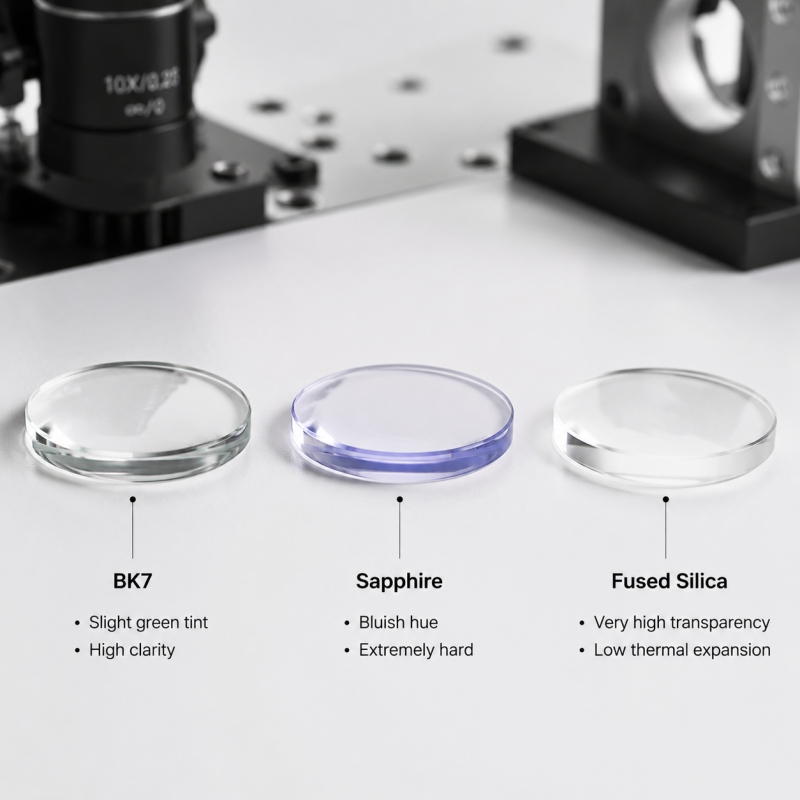
Optical glass prisms (e.g., BK7) provide sharper dispersion than plastic. For ultraviolet or infrared experiments, specialized materials like fused silica or fluorite are preferred.
3. How can I sharpen the rainbow edges?
Narrow your light beam using an aperture or slit. Increase the distance between the prismand screen for finer spectral lines.
VII. Conclusion
Creating a rainbow with a prism offers both a visually stunning demonstration and a hands on lesson in optics. By understanding how dispersion and refraction work together, you can control and optimize your Rainbow Prism display for educational demonstrations or simply to delight friends and family. Next time you want to explore light’s hidden colors, reach for a triangular prism—you’ll be amazed at the spectrum you can reveal.