Visible Light (400–700 nm)
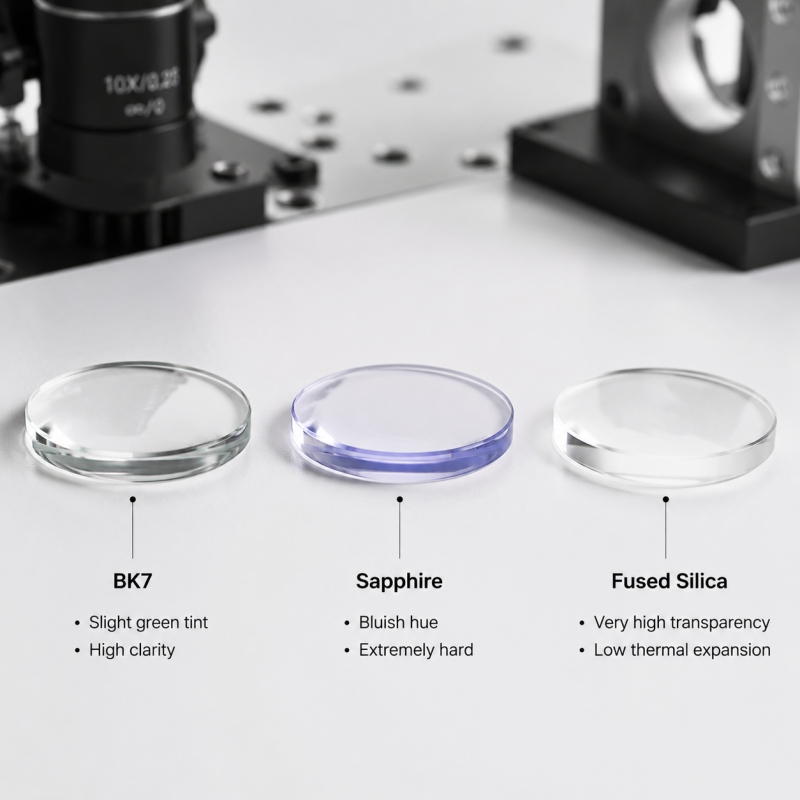
This wavelength range, spanning approximately 400 to 700 nanometers, constitutes the portion of the electromagnetic spectrum detectable by the human eye. Its paramount application across illumination, consumer displays, and conventional photography stems directly from this biological compatibility. The selection is not based on superior transmission or energy efficiency compared to other bands, but rather on the fundamental constraint of serving human vision. Consequently, any system designed for direct human observation is inherently bound to this spectral window.

Blue to Green Light (450–550 nm)
Within the broader visible spectrum, the narrower wavelength range from 450 to 550 nanometers is critically important for high-fidelity imaging applications, particularly microscopy. The shorter wavelengths in this blue-to-green band provide a higher theoretical diffraction-limited resolution compared to longer wavelengths like red light. This physical principle makes it the preferred choice for resolving ultra-fine details in biological specimens, semiconductor structures, and precision metrology, where maximizing spatial detail is the primary objective.
Ultraviolet to Blue Light (350–480 nm)
The wavelength range extending from the ultraviolet (350 nm) into the blue visible region (480 nm) is essential for fluorescence-based techniques. The core requirement here is photon energy, not visual perception. Light within this range possesses sufficient energy to excite electrons in specific fluorescent molecules or markers, prompting them to emit light at a longer, detectable wavelength. This principle underpins foundational tools in biochemistry, medical diagnostics, and molecular biology, enabling the visualization of structures and processes invisible under standard illumination.
Red to Near-Infrared (630–900 nm)
Industrial machine vision and surveillance systems frequently leverage the wavelength range from 630 nm (deep red) to 900 nm (near-infrared). This band offers significant operational advantages, primarily reduced susceptibility to interference from variable ambient visible lighting (e.g., sunlight or factory lights flickering at mains frequency). The resulting stable and consistent image contrast is indispensable for reliable automated inspection, robotic guidance, and 24/7 monitoring, where repeatability under changing environmental conditions is paramount.
Near-Infrared (800–1000 nm)
The wavelength range between 800 and 1000 nanometers represents a key domain for active night vision and low-light imaging technologies. While invisible to the unaided eye, this radiation is readily detectable by silicon-based sensors. Systems can actively illuminate a scene with discreet NIR light or leverage ambient “night glow” (starlight, skyglow) within this range to generate clear imagery without revealing their presence with a visible beam, making it vital for security, wildlife observation, and military applications.
Short-Wave Infrared (1100–2500 nm)
Beyond the standard NIR lies the short-wave infrared (SWIR) wavelength range from 1100 to 2500 nm. Imaging in this band reveals unique material properties based on molecular vibrations and water absorption characteristics. Different plastics, chemicals, and moisture levels exhibit distinct SWIR signatures. This enables powerful applications in industrial sorting (e.g., separating polymer types), agricultural monitoring (crop health, water stress), and quality control (pharmaceutical blend homogeneity), where contrast is derived from chemical composition rather than color or surface texture.
Mid-Wave Infrared (3–5 μm)
The mid-wave infrared (MWIR) wavelength range of 3 to 5 micrometers is strategically important for thermal imaging of high-temperature sources. According to Planck’s radiation law, objects such as aircraft engines, industrial furnaces, or vehicle exhausts emit peak radiative power within this band at typical operational temperatures. Imaging within this range, therefore, captures the strongest thermal signal, optimizing sensitivity and clarity for applications in predictive maintenance, aerospace tracking, and industrial process monitoring focused on intense heat sources.
Long-Wave Infrared (8–14 μm)
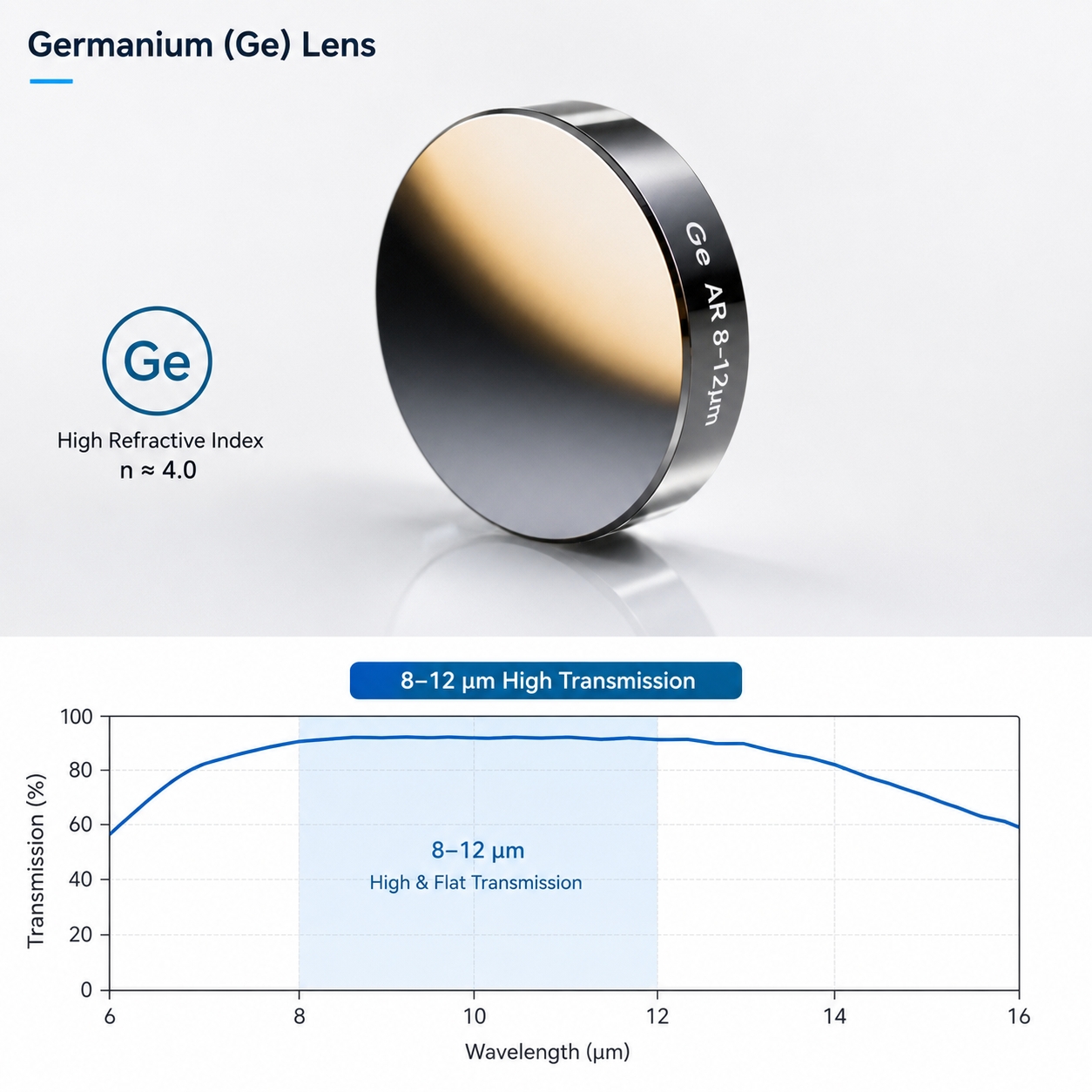
The long-wave infrared (LWIR) wavelength range, specifically 8 to 14 micrometers, is often termed the “atmospheric window” for thermal radiation. Objects at or near ambient temperature, including humans, animals, and buildings, radiate most powerfully here. Crucially, LWIR cameras are passive sensors; they detect the intrinsic thermal emissions from objects, requiring no external illumination. This allows them to “see” in total darkness, through smoke, and in most weather conditions, forming the basis for security perimeter monitoring, building heat loss surveys, and firefighting thermal imagers.
UVC (200–280 nm)
Occupying the shortest and most energetic wavelength range discussed here, UVC light (200-280 nm) is employed exclusively for its potent germicidal properties. Photons in this band are absorbed by the nucleic acids (DNA/RNA) of microorganisms, causing fatal damage to their genetic material and preventing replication. This non-thermal, chemical-free disinfection mechanism is harnessed in water purification systems, air sterilization in healthcare settings, and surface decontamination protocols, serving a purely functional role distinct from imaging or sensing.
Terahertz & Microwave (Millimeter Wave and Beyond)
Extending into the realm of millimeter and centimeter waves, this category encompasses very long wavelength ranges characterized by exceptional penetration through non-conductive, non-metallic materials. Unlike optical waves, terahertz and microwave radiation can pass through clothing, cardboard, plastics, clouds, and atmospheric haze. This property is exploited in applications where seeing through an obstruction is the goal, such as full-body security scanners, all-weather radar, satellite-based Earth observation, and deep-space radio astronomy.
Summary
In conclusion, the selection of a specific operational wavelength range is never arbitrary. It is a direct and calculated response to the fundamental physics that govern light-matter interaction—be it the resonance of retinal photoreceptors, the energy thresholds for electronic excitation, the blackbody emission spectra of objects, or the scattering and absorption properties of materials and the atmosphere. Each application, from enabling human sight to classifying materials or detecting heat, defines a unique set of requirements that points to an optimal spectral band. Therefore, understanding the intended function is the essential first step in the photonic design process, dictating the wavelength range that will form the foundation of the entire system.