When Glare and Reflections Interfere
Ever tried photographing a lake or a glass building only to find reflections ruining the shot? Or noticed how your LCD screen looks washed out under bright sunlight? These problems occur because uncontrolled light creates glare, uneven brightness, or low contrast, affecting both imaging and measurement quality.
A polarizer is a simple but powerful optical component that helps control light direction, reduce reflections, and enhance visual clarity. Whether you are capturing stunning photographs, improving display contrast, or conducting precise optical measurements, they offer a reliable solution.
What Is a Polarizer?
A polarizer selectively transmits light with a specific polarization while blocking other orientations. Filtering light in this way helps eliminate glare, improve contrast, and maintain consistent illumination in optical systems.
Common types include:
- Linear Polarizer– Allows only one polarization direction to pass, commonly used in scientific instruments and LCD displays.
- Circular Polarizer– Converts linearly polarized light into circularly polarized light, ideal for reducing glare in photography.
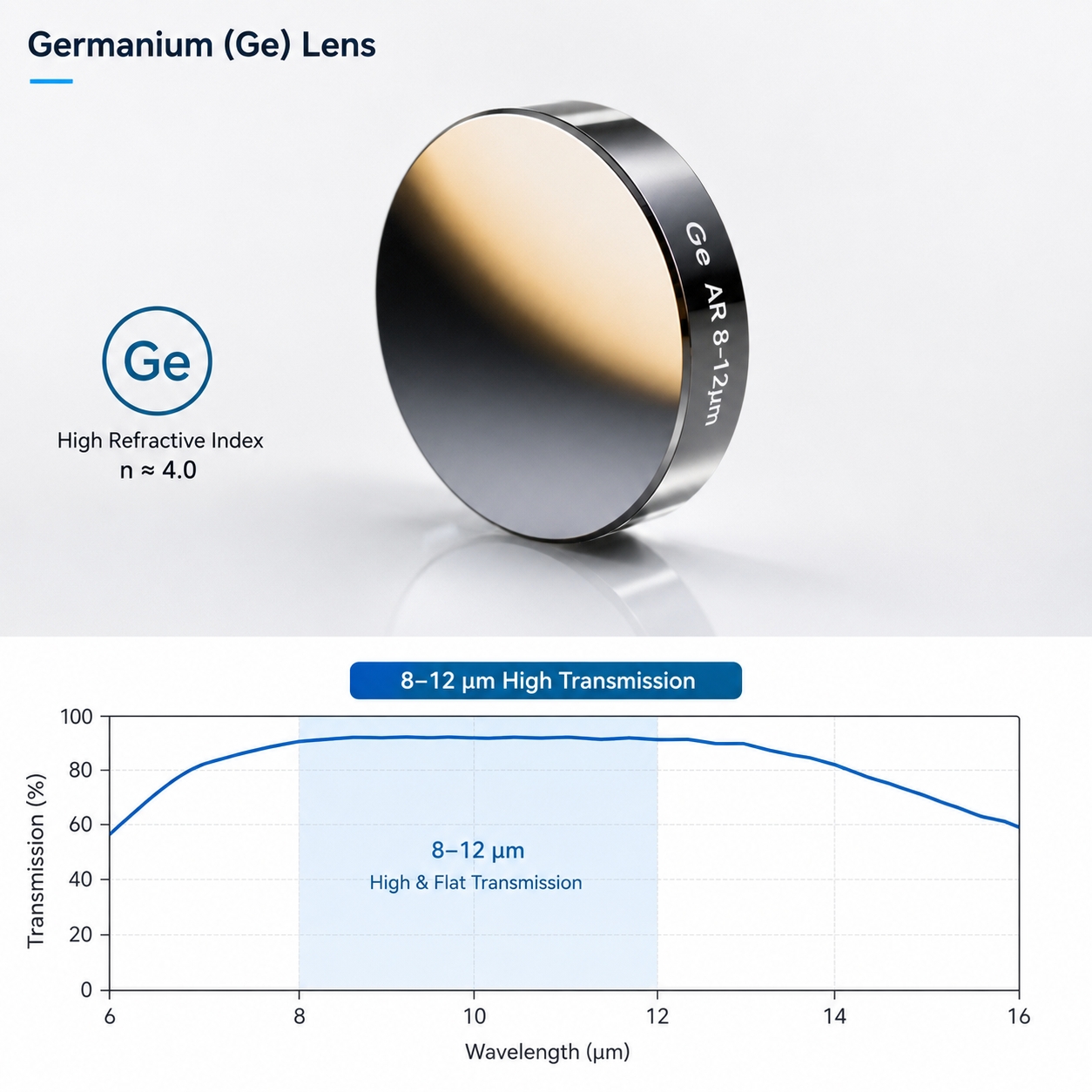
- Wire-Grid Polarizer– Typically used in infrared or microwave applications, where standard film polarizers are less effective.
They are made from materials such as glass, plastic, thin films, or liquid crystal. High-quality polarizers can achieve 90–95% transmittance and extinction ratios exceeding 1000:1, providing excellent control over light without significant loss.

How Polarizers Work
Light waves oscillate in multiple directions as they travel. A polarizer filters these waves so that only one orientation passes through, effectively reducing glare and enhancing image or measurement clarity.
For instance:
- In photography, a circular polarizer can eliminate reflections on water or glass, making colors more vivid and details sharper.
- In displays, a linear polarizer improves LCD contrast by reducing stray light, increasing perceived brightness by up to 30%.
- In laser systems, polarizers stabilize the beam’s polarization, improving measurement precision.
By shaping light in these ways, they transform uncontrolled, scattered light into a uniform, predictable beam.
Applications of Polarizers
Photography & Videography
Circular polarizers are essential for capturing glare-free images on reflective surfaces such as water, glass, or metal. They enhance sky contrast and color saturation, improving overall image quality.
Displays & Screens
Polarizers in LCD and OLED screens control transmitted light, boosting contrast and brightness for sharper, more readable displays even under bright ambient light.
Laser Systems & Optical Instruments
Linear or wire-grid polarizers help maintain stable polarization in laser measurements, interferometry, and spectroscopy, improving precision by around 15%.
Scientific Research
They are widely used in polarization microscopy, spectroscopy, and other experiments requiring controlled light orientation.
Industrial & Automotive Applications
Polarizers improve visibility in anti-glare displays, optical sensors, and laser cutting systems, ensuring consistent performance in demanding environments.
In each of these scenarios, high-quality polarizers—such as those provided by Hobbite—can be customized to fit specific wavelengths, sizes, and performance requirements, ensuring reliable results across applications.
Choosing the Right Polarizer
Selecting the correct polarizer depends on your application. Here’s a simple guide:
| Application | Recommended Type | Material | Wavelength | Notes |
| Photography & Video | Circular | Plastic/Film | Visible | Reduces glare, enhances reflections and colors |
| Displays | Linear | Glass/Film | Visible | Improves contrast, maintains brightness |
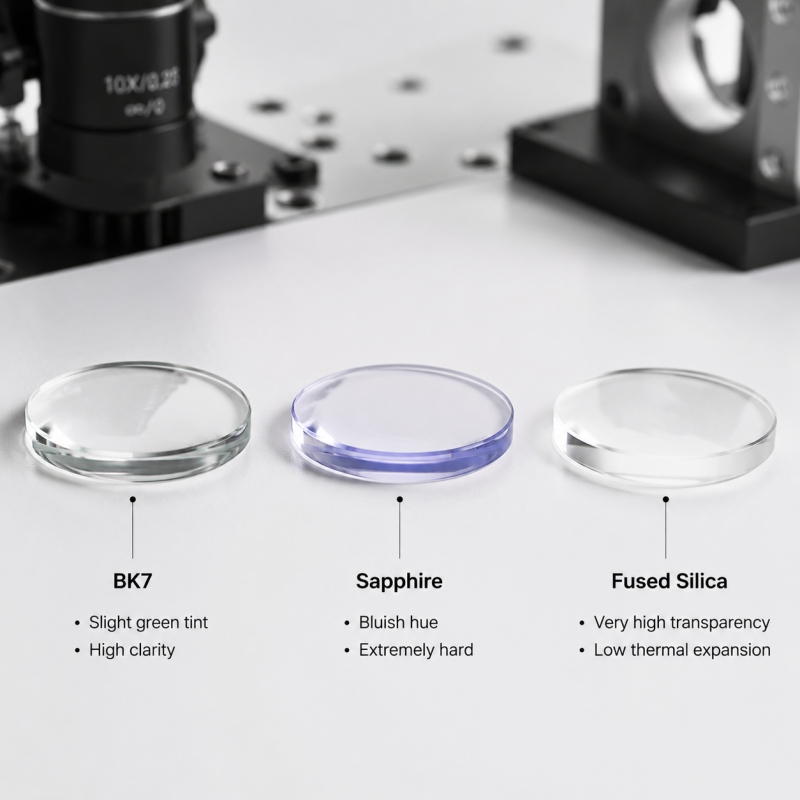
| Laser & Scientific | Linear / Wire-Grid | BK7 / Fused Silica | Visible–IR | High extinction ratio, handles high power |
Other factors to consider include operating temperature, durability, and the need for custom coatings. By consulting with experts, you can ensure the polarizer meets both performance and environmental requirements.
Advantages of Polarizers
- Reduce glare and reflections, improving visual clarity and imaging accuracy
- Control light polarization, enhancing performance in laser systems and measurements
- Adaptable across multiple industries, from photography to high-precision instruments
- High transmittance and extinction ratio (e.g., 90–95% transmission, 1000:1+ contrast)
- Customizable size, material, and coatings for specific applications
By addressing common light control issues, polarizers enhance both the efficiency and reliability of optical systems.
Future Trends in Polarizer Technology
- Advanced thin-film and liquid crystal polarizers for higher performance and compact designs
- Nanostructured polarizers expanding into infrared and microwave applications
- Growing use in VR/AR devices, optical communication, and precision instruments
- Increased customization for high-power, miniaturized, and specialized applications
These developments suggest that polarizers will remain essential in improving optical performance across industries.
Practical Solutions for Better Light Control
In many optical systems, controlling glare, reflections, and polarization is critical for achieving reliable performance. A polarizer serves as a key component in laser instruments, measurement systems, display modules, and other precision optical assemblies.
For these applications, consistent optical properties, precise dimensions, and stable polarization performance are essential. At Hobbite, we specialize in manufacturing high-quality polarizers with strict process control, precision coatings, and customizable specifications to meet diverse industrial requirements. Our production capabilities ensure that each component integrates seamlessly into your optical system, supporting both standard and custom designs with reliable delivery.
By focusing on precision, repeatability, and tailored solutions, our polarizers help industrial and scientific users maintain system performance without compromise.