Optical windows are essential optical components in many systems, providing a transparent barrier while protecting internal elements from environmental and mechanical damage. Two primary types—laser windows and infrared windows—serve distinct purposes depending on wavelength, power, and application requirements. This guide explains the differences, manufacturing processes, and key considerations for both.
Why the Right Window Matters
Choosing the correct window type is crucial to maintaining system performance and preventing damage. Laser windows are designed for high-energy visible to near-infrared light, while infrared windows transmit mid-IR to far-IR light with minimal distortion. Selecting the wrong type can result in reduced transmission, surface damage, or even system failure.

Material Selection and Coating Requirements
Laser Windows
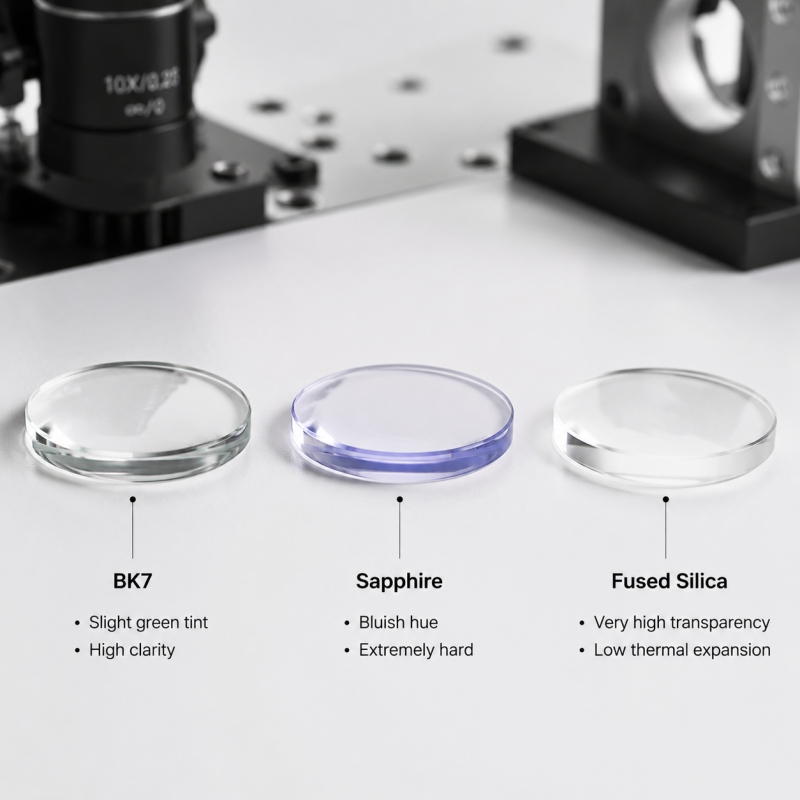
- Common Materials: ZnSe, BK7, Sapphire
- Properties: High transmission in the visible to NIR range, low absorption to prevent hot spots.
- Coatings: High-power AR or protective coatings applied via vacuum deposition or sputtering to enhance transmission and resist laser-induced damage (LIDT).
Infrared Windows
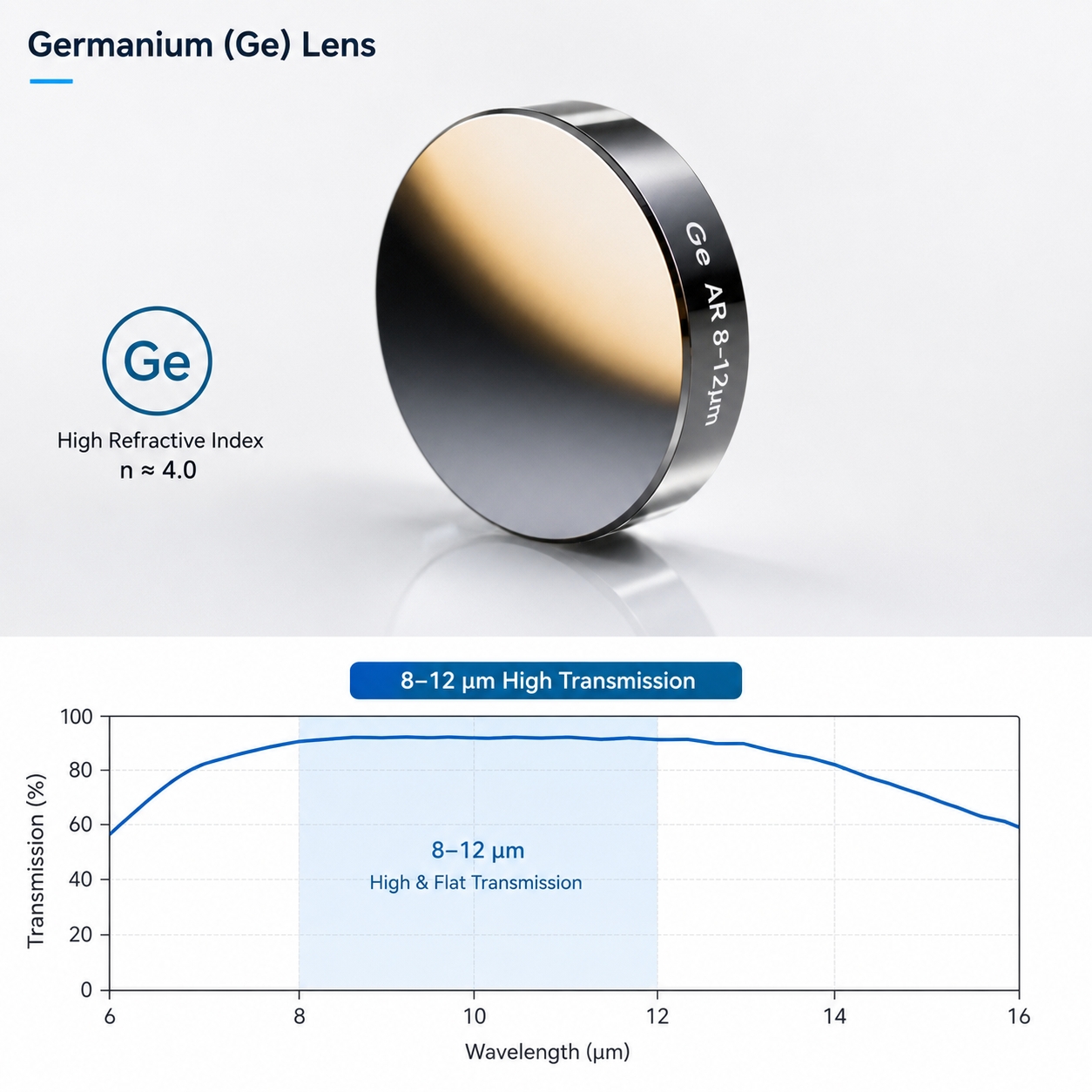
- Common Materials: Ge, Si, CaF₂
- Properties: High IR transmission, excellent thermal stability.
- Coatings: AR coatings optimized for IR wavelengths; sometimes protective coatings for environmental durability.
Note: Both coated and uncoated optics products require careful handling to avoid scratches or contamination. Coatings improve performance but increase surface sensitivity.
Optical Performance Comparison
Feature | Laser Windows | Infrared Windows |
Wavelength Range | 400–2500 nm (Visible to NIR) | 2–20 µm (Mid to Far IR) |
Transmission | Optimized for laser wavelength | Optimized for IR range |
Laser-Induced Damage Threshold (LIDT) | Critical | Generally not critical |
Coating Requirements | High-power AR, protective coatings | IR-specific AR coatings, optional protective layers |
Thermal Stability | Moderate | High, resistant to thermal expansion |
Environmental Sensitivity | Sensitive to dust, scratches, humidity | Sensitive to temperature and moisture |
Common Applications | Laser machining, optical sensors, LIDAR | IR imaging, thermal cameras, spectroscopy |
This table highlights the differences in performance requirements between the two window types.
Handling and Environmental Considerations
Laser Windows: Must withstand high-energy beams; coatings are delicate.
Infrared Windows: Sensitive to thermal changes and moisture; some materials are hygroscopic.
Storage Recommendations(Comprehensive Guide to Handling and Storing Optical Components):
- Temperature-controlled, low-humidity (<40–50% RH), dust-free environment
- Wrap in lens tissue and store in dedicated optical boxes
Handling Tips: Always wear gloves or finger cots, avoid touching optical surfaces, and hold by edges or non-optical surfaces.
Manufacturing Processes
Laser Windows Production
- Material Preparation: Cut ZnSe, BK7, or Sapphire to precise dimensions.
- Grinding and Polishing: Coarse grinding, fine grinding, and precision polishing to nanometer surface roughness.
- Coating Application: Apply AR or protective coatings using vacuum deposition or sputtering.
- Inspection & Testing: Transmission, flatness, surface defects, and LIDT evaluation.
- Packaging: Wrap in lens tissue and store in anti-static, moisture-resistant containers.
Infrared Windows Production
- Material Preparation: Cut Ge, Si, or CaF₂ to size.
- Precision Polishing: Chemical-mechanical polishing (CMP) ensures low wavefront error and high surface quality.
- Optional Coating: IR AR coatings applied to reduce reflection and enhance transmission.
- Inspection & Testing: Measure IR transmission, wavefront quality, thermal stability, and environmental resistance.
- Packaging: Store in low-humidity, dust-free environments; ensure thermal stability during storage.
- Key Difference: Laser windows emphasize high LIDT and coating robustness, while infrared windows emphasize thermal stability and IR transmission.
Maintenance, Lifetime, and Cost Considerations
- Laser Windows: Higher cost due to material and coating requirements; sensitive to scratches. Cleaning should use inert gas blowers or optical-grade wipes, following precise techniques like Drop-and-Drag.
- Infrared Windows: Material cost varies; thermal and environmental durability are priorities. Same cleaning protocols apply, with extra care for hygroscopic or thermally sensitive materials.
- Storage Lifespan: Properly stored windows can last years; incorrect storage (high humidity, temperature swings, dust) can lead to coating degradation, moisture absorption, or surface scratches.
Choosing the Right Window
The choice between laser windows and infrared windows depends on:
- Wavelength range
- Power density and thermal load
- Environmental conditions
- Optical performance requirements (transmission, LIDT, wavefront error)
- Laser windows: Ideal for high-power visible/NIR systems where LIDT and coatings are critical.
- Infrared windows: Suited for IR imaging, thermal detection, and spectroscopy where thermal stability and IR transmission are essential.
By understanding these differences in materials, coatings, performance, and manufacturing, you can select the right optics product for your optical system, ensuring reliability and longevity.