Light, a fundamental form of energy, brightens our lives every day—from the sun’s warmth to artificial light sources. But among them, lasers stand out with their extraordinary properties, becoming indispensable tools in modern tech. Today, we’ll dive deep into the world of lasers: what they are, their unique characteristics, how they’re made, and what sets them apart from ordinary light. We’ll also highlight Hobbite’s crucial role in advancing optical technology through our expertise in optical component manufacturing.
Laser Definition and Core Characteristics
LASER, short for “Light Amplification by Stimulated Emission of Radiation,” is a special kind of light. Unlike regular light, lasers boast these remarkable traits:
1. High Brightness
Lasers can pack an immense amount of light energy into a tiny space, resulting in exceptionally high brightness. Imagine focusing all the light from a powerful floodlight onto a single pinpoint—that’s the essence of laser brightness. This makes lasers ideal for precision applications such as cutting, welding, and material processing, where concentrated energy is crucial.
2. High Directionality
A laser beam is incredibly focused, with very little divergence. This means its light waves travel almost perfectly parallel over long distances, appearing as a tight, narrow beam rather than scattering like a flashlight. This property allows lasers to transmit data thousands of kilometers with minimal intensity loss, making them vital for long-distance communication, precise alignment, and rangefinding.
3. High Monochromaticity
Unlike white light, which contains many different colors (wavelengths), laser light is highly monochromatic. It’s made up of a single, very pure color or wavelength. This purity comes from every photon in a laser beam being generated from specific atomic energy transitions, leading to an extremely narrow spectral width. This feature is crucial for users requiring exact wavelength control, such as spectroscopy, optical data storage, and medical treatments.
4. High Coherence
High coherence in lasers is their unique and powerful property. Coherence means that all the light waves in the beam are synchronized, maintaining a constant phase relationship in time and space. This enables lasers to create clear interference patterns and diffraction, which are fundamental to technologies like holography, interferometry (for ultra-precise measurements), and advanced optical communications, where information is encoded in the light’s phase.

How Lasers are Generated
Laser generation is based on Albert Einstein’s groundbreaking theory of stimulated emission, a quantum mechanical process where light interacts with matter to amplify light. A typical laser fundamentally consists of three essential components working together:
1. Gain Medium (Active Medium)
The gain medium, or active medium, is the heart of the laser. This material (solid, liquid, gas, or semiconductor) contains atoms or molecules that get excited to a higher energy state. When an excited atom encounters a photon of a specific energy, it’s “stimulated” to emit another photon that’s identical to the first (same wavelength, phase, and direction). This process amplifies the light. The type of gain medium directly determines the laser’s wavelength and its operating characteristics.
2. Pump Source
The pump source provides the energy needed to excite the atoms or molecules in the gain medium. This process is called “pumping”. The following are common pumping methods:
- Optical Pumping: Using intense light (like flashlamps or other lasers/LEDs) to excite the gain medium, common in solid-state lasers.
- Electrical Pumping: Using an electrical current or discharge to excite gas atoms or semiconductor materials, typical for gas lasers and laser diodes.
- Chemical Pumping: Involving chemical reactions that release energy to excite the gain medium.
The pump source’s main role is to achieve a population inversion, meaning more atoms are in an excited state than in a lower energy state—a necessary condition for stimulated emission to become dominant.
3. Optical Resonator (Resonator Cavity)
The optical resonator, also known as a resonator cavity, usually consists of two mirrors positioned at either end of the gain medium. One mirror is highly reflective (nearly 100%), while the other is partially reflective (e.g., 5-99% reflective), allowing some light to exit as the laser beam.
Photons generated by stimulated emission bounce back and forth between these mirrors.
As the light repeatedly passes through the gain medium, it stimulates more excited atoms to emit photons, creating a cascading amplification.
The resonator acts as a “feedback loop,” ensuring that only light traveling precisely along the cavity axis and at specific wavelengths (resonant frequencies) is significantly amplified. This enhances both directionality and monochromaticity. The partially reflective output mirror then lets a portion of this highly amplified, coherent light escape as the laser beam.
Laser vs. Ordinary Light: Key Differences
Lasers and ordinary light (like from a light bulb or the sun) have fundamental differences stemming from how they’re generated:
1. Light Source Characteristics Comparison
- Brightness: Lasers are extremely bright due to their concentrated energy and directionality. Ordinary light, in contrast, spreads energy over a wide area, resulting in much lower brightness.
- Directionality: Lasers are highly directional, emitting a narrow, parallel beam with minimal spread. Ordinary light, originating from many uncorrelated sources within the lamp, scatters in all directions.
- Monochromaticity: With a high degree of monochromaticity, lasers produce light of a single pure color (wavelength). Ordinary light sources typically emit a broad spectrum of wavelengths, appearing as white or mixed colors.
- Coherence: Have a high degree of coherence, meaning their light waves are synchronized in phase and frequency. Ordinary light is incoherent; its waves are random and unsynchronized, limiting its ability to produce stable interference patterns.
2. Application Field Variations
Because of their unique combination of high brightness, directionality, monochromaticity, and coherence, lasers are used in a vast range of sophisticated fields, far beyond what ordinary light can do:
- Industrial Processing: Precision cutting, welding, drilling, and marking.
- Medical Applications: Surgical procedures (e.g., eye surgery, skin treatments), diagnostics.
- Telecommunications: High-bandwidth optical fiber communication.
- Scientific Research: Spectroscopy, interferometry, atomic cooling, fundamental physics experiments.
- Consumer Electronics: Barcode scanners, Blu-ray players, laser printers.
- Advanced sensing: LiDAR, a type of radar used in cars for autonomous driving and mapping.
Hobbite and Optical Components
Hobbite specializes in designing and manufacturing high-precision optical components and assemblies, playing a vital role in enabling and optimizing optical systems, especially those involving lasers.
1. Products and Services
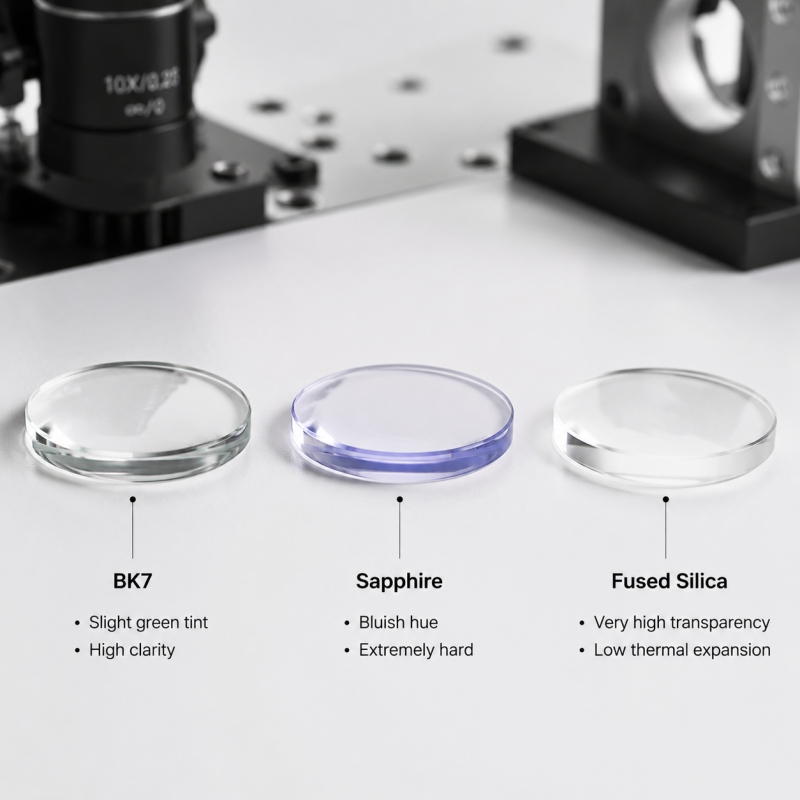
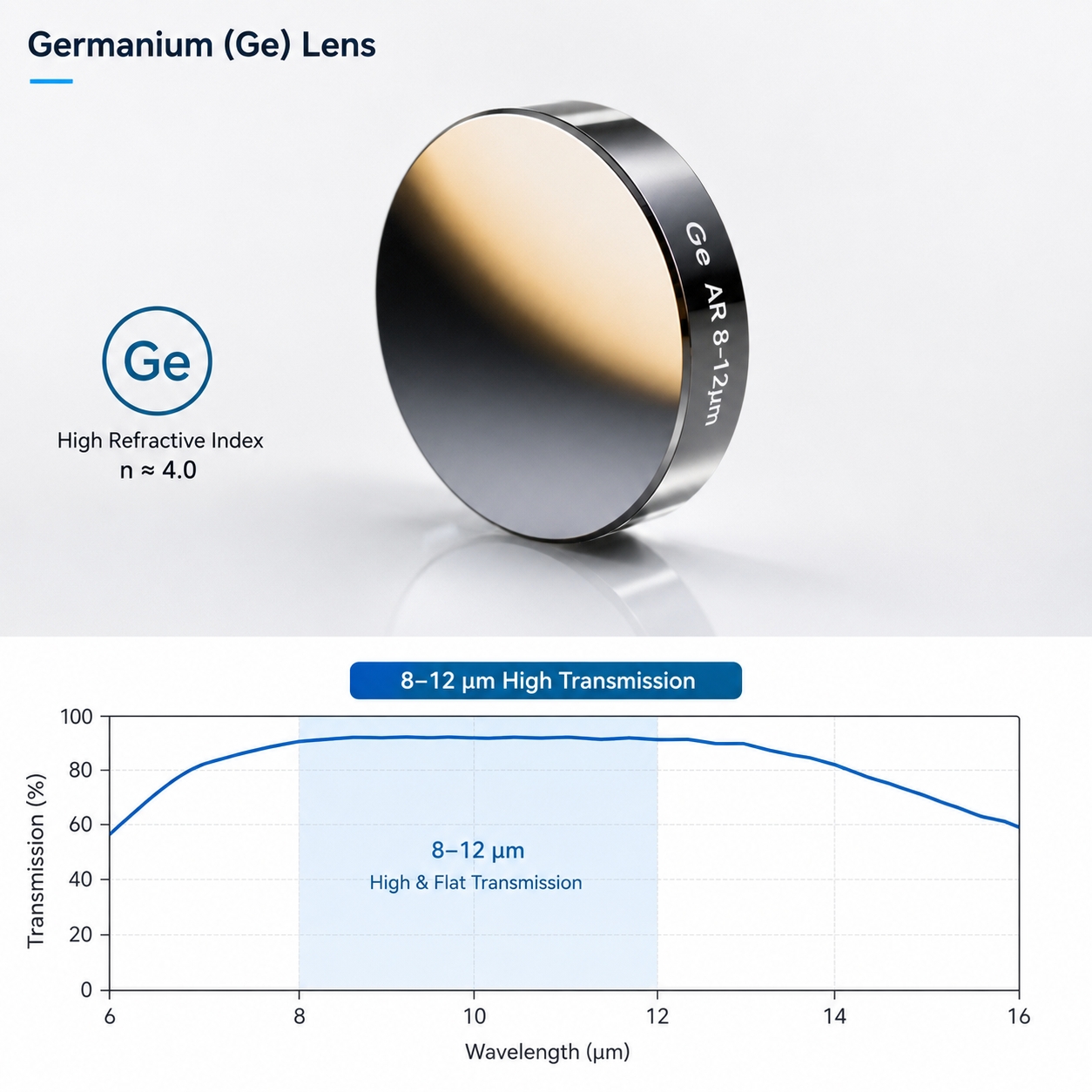
- Optical Components: Hobbite offers a comprehensive range of high-quality optical components, including spherical lenses, aspherical lenses, prisms, waveplates, windows, and filters. These are the essential building blocks for any laser system, performing critical functions like focusing, collimation, beam steering, and splitting. For example, in demanding high-power laser systems, Hobbite’s components are rigorously engineered and fabricated to withstand high energy densities while maintaining optimal beam transmission and stability, minimizing losses, and ensuring system longevity.
- Optical Modules: We also provide customized optical modules, which integrate multiple individual optical components into pre-aligned, application-specific systems. Examples include laser collimation modules that ensure a tightly parallel output beam, and laser focusing modules designed for precise energy delivery. These modules simplify integration for users, reduce assembly time, and guarantee optimized performance within complex optical setups.
- Crystals and Coatings: Hobbite boasts extensive experience in crystal growth and advanced optical coating technologies. This allows us to provide high-quality crystal materials (often used as gain media or non-linear optical elements in lasers) and offer customized optical coating services. Our coatings are designed to achieve specific reflectance or transmittance properties at precise wavelengths, significantly enhancing the performance of laser components by, for example, maximizing laser light throughput or enhancing critical reflections within a laser cavity.
2. Technical Support and Customization
Hobbite’s dedicated team of optical engineers and specialists provides comprehensive technical support and customized solutions. Whether clients need standard optical products or unique custom designs for cutting-edge laser applications, we offer end-to-end services from initial concept and optical design to precision manufacturing and rigorous testing. In the demanding field of lasers, Hobbite’s ability to produce tailored optical components and modules helps clients overcome complex optical design challenges, ensuring superior system performance, stability, and reliability for diverse and demanding laser applications.
Conclusion
Lasers, with their unique combination of high brightness, directionality, monochromaticity, and coherence, have revolutionized countless aspects of modern technology and scientific exploration. By understanding their precise definition, fundamental characteristics, and the intricate principles of their generation, we can truly appreciate their widespread impact across various fields.
As a leading manufacturer of high-quality optical components and assemblies, Hobbite provides robust support for the advancement of laser technology through our deep expertise in optical design, material selection, advanced manufacturing processes, and customized solutions. We’re committed to delivering top-tier optical components and solutions, contributing to the continuous innovation and development of optical technology worldwide.