Optical prisms are a class of critical optical components that combine geometric precision with materials science. The familiar “white light turns into a rainbow” is just one of its most classic demonstrations. In modern optical systems, prisms achieve high-precision control of light direction and wavelength band through refraction, reflection, polarization, dispersion, and spectroscopy, and are widely used in laser processing, spectral analysis, medical imaging, and space navigation.
Historical Traceability and Scientific Significance
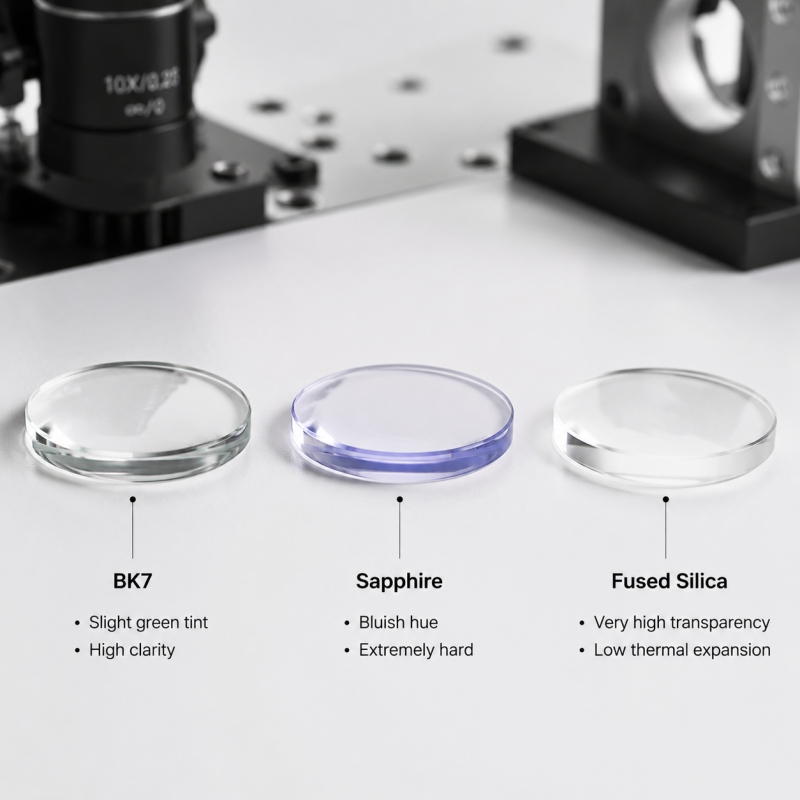
The scientific study of prisms can be traced back to Newton’s triangular prism experiment in the 17th century – the beam of sunlight passing through the glass revealed the wavelength composition of white light, which also ushered in the era of spectroscopy. Since then, humans have begun to systematically design the “path of light”. Today’s prisms are no longer simple blocks of glass, but a high-precision component that combines geometric design, material optics, and thin film processes. Common materials include:
- BK7 optical glass: stable refractive index and high transmittance, suitable for visible light and near-infrared bands.
- Fused silica: Low coefficient of thermal expansion, strong chemical stability, covering a wide spectral range from ultraviolet to infrared.
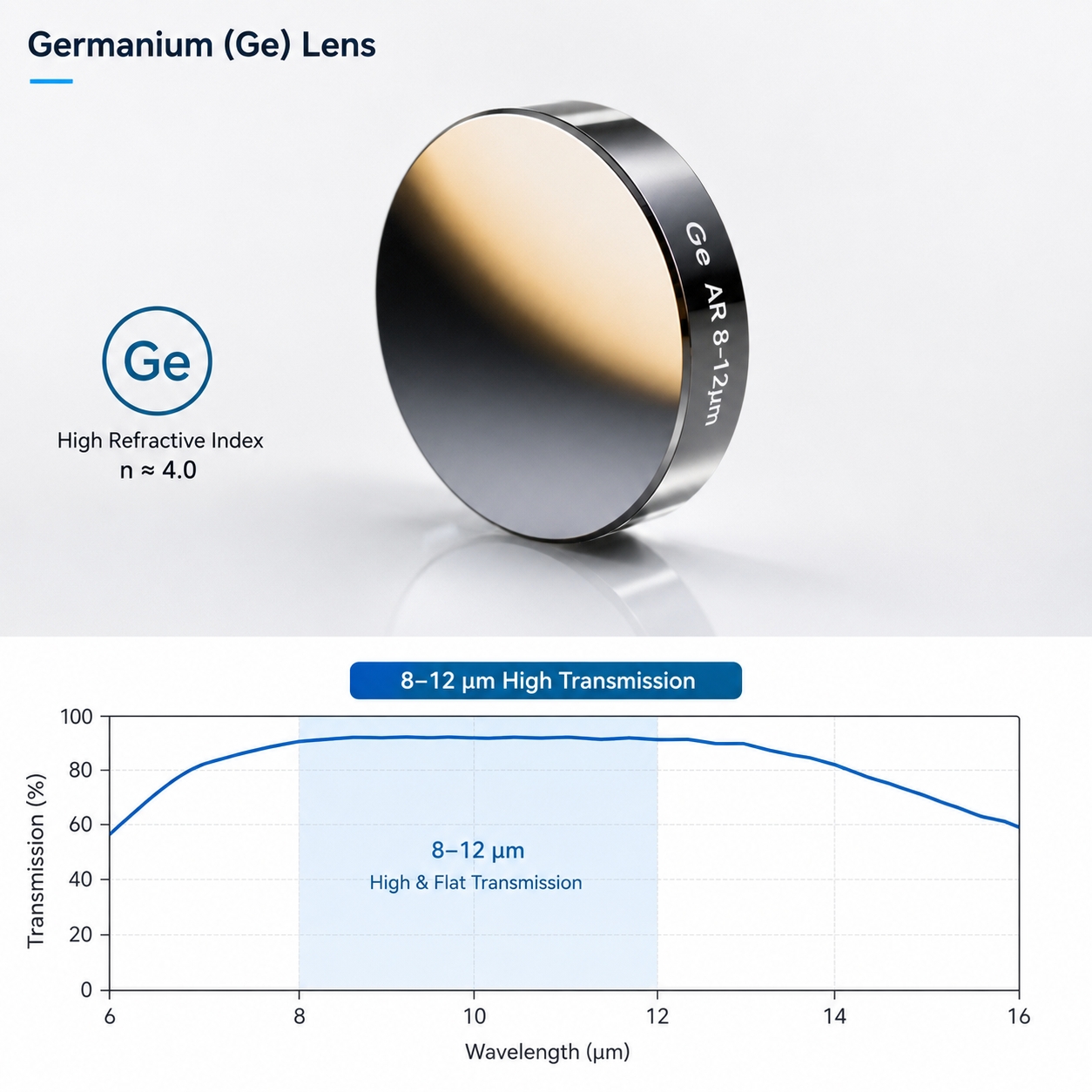
- Calcium fluoride (CaF₂): It has excellent infrared transmission properties and is often used in thermal imaging and infrared monitoring systems.
With the improvement of optical manufacturing precision, prisms have become a core component of high-end equipment such as laser interferometers, microscopic imaging systems, and aerospace optical instruments.
Definition and Key Components
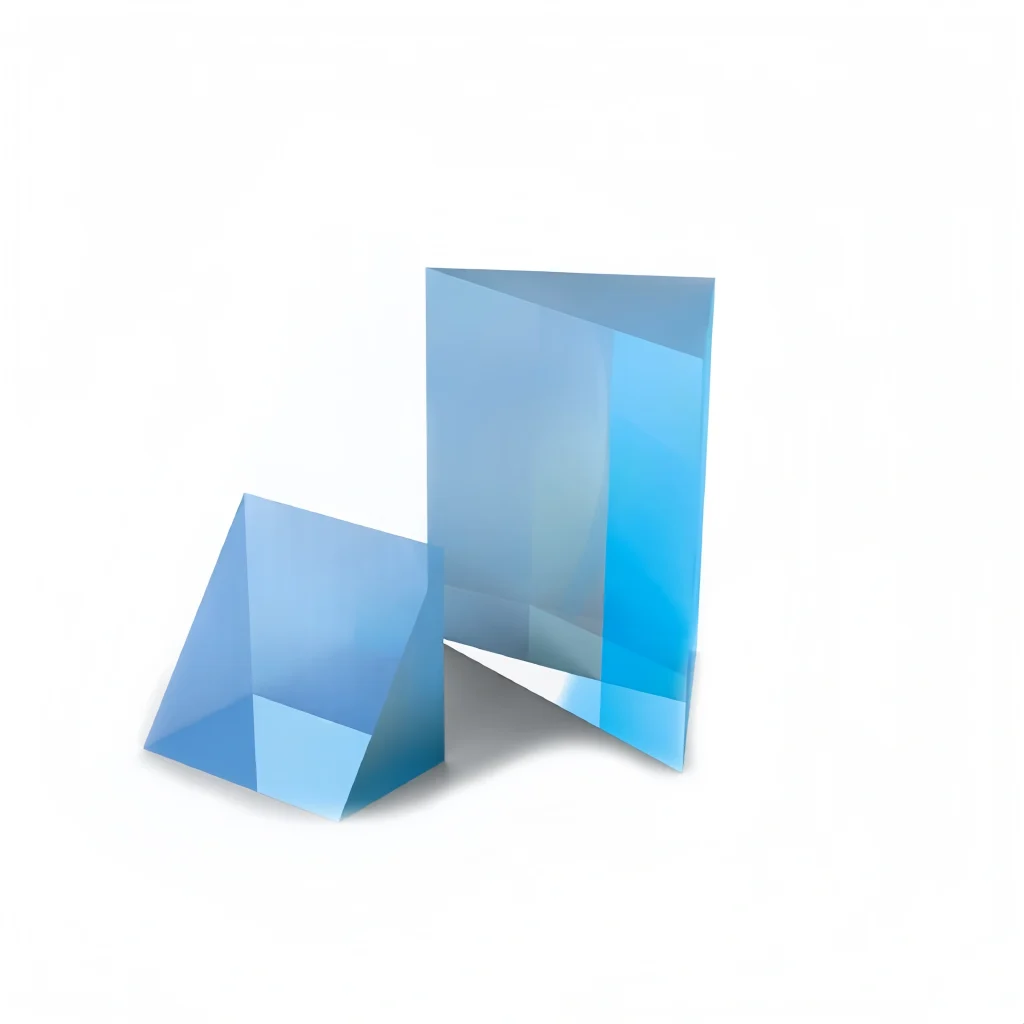
A prism is a transparent polyhedron formed by high-precision cutting and polishing, which is used to control the direction, phase, and spectral characteristics of light. Its performance depends on three main factors:
Geometry
The angular accuracy of the prism determines the refraction and reflection path of the light. Even an error of 0.01° can cause the spot to shift significantly in a long-path system. For example, the 90° angle of a right-angle prism must be controlled within ±30″ to ensure accurate laser beam orientation.
Material Properties
Refractive index, transmission band, and thermal stability are the most important parameters in the design. UV systems favor quartz materials, while infrared systems employ CaF₂ or ZnSe to avoid band absorption.
Surface Quality & Coating
The optical surface usually needs to achieve λ/10 flatness and 10-5 scratch/pockmark grade.
- AR reflection enhancement film: Reduce reflection loss and improve transmittance.
- Dielectric spectroscopic film: To achieve beam separation or beam combination.
- Metal reflective film: Used for reflection enhancement and optical path retraction.
The performance of prisms reflects the limits of optical manufacturing – both a symbol of geometric precision and the result of coating processes.

The Working Principle of Optical Prisms
The core of the prism lies in the three physical effects of refraction, dispersion, and reflection.
Refraction
When light passes through the interface of the medium, the propagation speed changes, and the light is deflected. By precisely controlling the angle of incidence and refractive index, prisms can be bent, collimated, or corrected in the path of the beam. For example, in microscopic systems, right-angle prisms can accurately direct light in confined spaces, achieving efficient light guidance.
Dispersion
Different wavelengths of light have different refractive indices in the same material, with short-wave (blue light) having a large deflection angle and long-wave (red light) having a small deflection angle. The triangular prism uses this law to decompose the compound light into continuous spectra, which is the core component of the spectrometer and calibration system.
Total Internal Reflection (TIR)
When the angle of incidence exceeds the critical angle, the light is reflected completely inside the prism without transmission. TIR reflection loss is extremely low and is not affected by oxidation, so it is widely used in telescopes, laser reflectors, and periscopes.
Polarization & Coatings
By depositing polarized or multilayer dielectric films at the interface, prisms can separate or merge s-light and p-light. This allows it to precisely regulate the polarization state and phase relationship of light in lasers, interferometers, and optical communication modules.
Taken together, every face of the prism is involved in the process of “reshaping” light – refraction, reflection, spectroscopy, rotation, and band filtering, and is the most malleable light control unit in the optical system.
Common Types and Typical Uses
Prism Type | Key Functions | Typical Applications |
Deflects light by 90° or 180° to alter or fold the optical path | Imaging systems, projectors, laser collimation modules | |
Dispersive Prism | Decomposes white light into a continuous spectrum through wavelength-dependent refraction | Spectrometers, light source calibration, optical teaching demonstrations |
Beam-Splitting Prism | Combines reflection and transmission to split or recombine optical beams | Interferometers, microscopy systems, precision measurement instruments |
Rotates the image without inversion when the prism is rotated around its optical axis | Telescopes, optical scanning systems, attitude adjustment modules | |
Provides a fixed 90° deviation while maintaining the original image orientation | Camera viewfinder systems, surveying and mapping instruments | |
Equilateral Prism | Produces uniform dispersion for clear and evenly distributed spectral separation | Laboratory spectrometers, wavelength calibration equipment |
Main Application Fields
Research and testing: spectroscopy, interferometry, laser calibration, and transmittance testing;
- Medical optics: optical path retraction in microscopes, endoscopes, and ophthalmic imaging systems;
- Laser processing: used for beam splitting, focusing, and angle correction;
- Aerospace & Defense: Navigation, Target Positioning & Optoelectronic Detection Systems;
- Consumer electronics: Imaging control in cameras, projectors, and AR/VR display modules.
Key Points of Prism Selection
Choosing the right prism requires comprehensive considerations:
- The wavelength range (UV/VIS/IR) is matched to the system light source.
- angular accuracy and assembly tolerance (the laser system needs to be less than 30″).
- surface quality and coating durability.
- Balance cost and performance.
Proper sizing not only improves imaging quality but also significantly optimizes the light efficiency and long-term stability of the system.
Conclusion
Optical prisms use refraction, reflection, and dispersion as core mechanisms to turn the path design of light into a controllable engineering behavior. From scientific research to industrial manufacturing, it has always been a key device that “makes light obey precision”. In the future, with the development of quantum optics and adaptive imaging, prisms will continue to be the irreplaceable structural core of optical systems.