What is Laser Lighting?
Laser lighting refers to a class of technological solutions that use lasers as light sources, controlling and modulating the beam via precision optical systems to achieve specific illumination effects or functions. It is an optical technology capable of transmitting and distributing light energy in a highly controllable manner. Compared to traditional lighting systems (such as LED or halogen lamps), laser lighting possesses a unique advantage. The principle of lasers is based on Stimulated Emission. When atoms or molecules are excited by external energy, they release coherent photons. These photons are identical: a highly concentrated beam, strong directionality, high brightness, and the ability to maintain a stable beam profile over long distances.
The core principle in frequency, phase, and direction of the incident light results in a beam with high monochromaticity, high coherence, and a low divergence angle. This characteristic allows laser lighting not only to provide intense brightness but also to achieve precise, long-range illumination, playing a vital role in scenarios requiring high energy density.
Working Principle and System Architecture of Laser Lighting
The operation of a laser lighting system essentially involves using optical lenses to exercise finite control over the highly ordered light energy generated by stimulated emission. At the physical level, the core mechanism of a laser is Stimulated Emission Amplification. When external energy excites atoms or electrons to undergo a quantum transition, they emit photons that perfectly match the incident light in frequency, phase, and direction of propagation.
This replication-style amplification gives the output beam immense consistency, establishing three distinct characteristics that separate it from traditional light sources:
- Monochromaticity(concentrated wavelength)
- Coherence(synchronized phase)
- Directionality(minimal divergence angle)
These features allow lasers to maintain high energy density and minimal spot expansion even during long-distance propagation.

However, these physical properties alone are not enough to satisfy practical illumination or engineering application needs directly. In a real-world system, the laser must be engineered, which introduces the architecture design of laser lighting. From a systemic perspective, a complete laser lighting system generally consists of three core components, each possessing distinct functional divisions and collaborative relationships:
- Laser Source: The energy starting point of the entire system, responsible for generating a laser with a specific wavelength, power, and beam quality. Different types of lasers (such as semiconductor/diode lasers, solid-state lasers, or gas lasers) exhibit noticeable differences in beam divergence angle, spot morphology, and stability, which directly impact the complexity of subsequent optical design.
- Optical Elements: This segment bridges physical principles and practical applications. By utilizing foundational components such as collimating lenses, cylindrical lenses, beam shapers, and optical filters, the original laser beam—which typically follows a Gaussian distribution and may be asymmetric—can be reshaped into parallel light, line light, or a uniform light spot to meet varying illumination or detection demands.
- Control and Heat Dissipation: Because lasers possess high energy density, they generate significant heat during operation. If left unmanaged, this heat will compromise output stability and drastically shorten device lifespan. Consequently, power regulation, current control, and thermal management designs (such as heat sinks or active cooling) are indispensable.
Ultimately, laser lighting relies on the seamless cooperation of these three elements. The low divergence of the laser maintains high energy density over long distances, while the optical components provide precise downstream control.
The Relationship Between Coherence and Gaussian Beams
In laser lighting systems, Coherence and Gaussian Beams are terms that frequently appear together, yet they describe entirely different dimensions of optical characteristics.
- Coherence refers to the phase consistency of light waves. It originates from the stimulated emission mechanism, allowing the laser to maintain a stable wavefront structure during propagation.
- A Gaussian beam describes the spatial distribution of energy within the light beam, typically manifesting as a continuous distribution that is strongest at the center and decays toward the edges.
In practical lasers, the formation of a Gaussian beam is primarily tied to the mode selection of the optical resonant cavity rather than being directly determined by coherence. Most laser systems prefer operating in the fundamental mode (TEM₀₀), where the transverse intensity distribution naturally conforms to a Gaussian function. Therefore, typical laser outputs appear as Gaussian spots. This process demonstrates that while the Gaussian beam shape stems from the optical structure itself, coherence provides the necessary condition for this stable mode to exist.

From an application standpoint, combining high coherence with a Gaussian distribution grants lasers exceptional controllability. High coherence ensures that the beam resists random diffusion or phase perturbations during propagation, while the Gaussian distribution provides a predictable baseline for beam shaping, making it easier to collimate, expand, or homogenize through optical elements. Thus, coherence dictates whether the light waves share a stable, consistent phase structure, while a Gaussian beam is simply the most common spatial energy distribution within a laser cavity—the two are related but not identical.
Core Characteristics of Laser Lighting
Laser lighting distinguishes itself from traditional light sources and captures a vital role in high-end applications due to its distinct advantages in beam control, energy distribution, and propagation traits. Rather than existing in isolation, these characteristics form the core capabilities of laser lighting: highly efficient, controllable, and customizable.
1. High Brightness and Energy Density
Within a laser lighting system, light energy can be highly concentrated and projected efficiently onto a target area via optical design, achieving a brightness utilization efficiency far superior to traditional light sources. This high brightness goes beyond mere visual perception; it means delivering much higher effective illumination intensity under limited power conditions.
This trait is exceptionally critical for long-range illumination and demanding environments. For instance, in automotive high-beam systems or environmental perception lighting, lasers can maintain clear illumination over long distances without fast degradation from beam spreading. In contrast, LEDs act as surface or wide-angle divergent light sources; their energy disperses rapidly upon emission, making it incredibly difficult to maintain high-intensity, concentrated illumination at long range, even with secondary optics.
2. Superior Directional Control
Lasers possess an inherently low divergence angle, providing an ideal foundation for directionality right from the source. When paired with collimating lenses, cylindrical lenses, and beam shaping components, the beam can be precisely modulated to output various illumination forms, such as line light, uniform surface light, or customized spots.
This capability shifts laser lighting from traditional “passive illumination” to “actively engineered light.” Traditional light sources generally rely on reflectors or shading structures to correct light—essentially redistributing already scattered light. Lasers, however, define the beam morphology straight from the source, unlocking greater design freedom and control precision.
3. Long-Distance Propagation Capability
Due to the minimal divergence angle, a laser beam expands slowly during propagation, keeping energy attenuation highly manageable. This enables it to maintain a stable spot shape and sufficient illumination intensity across long distances.
This feature is paramount in searchlights, environmental sensing, and automotive systems. As distance increases, the brightness of traditional light sources drops off sharply, whereas laser lighting preserves an effective illumination zone over much greater ranges, enhancing overall system coverage and reliability.
4. High Spectral Purity
Lasers exhibit high spectral purity, meaning their output wavelengths are exceptionally concentrated and stable. This property delivers superior consistency and predictability in imaging, inspection, and sensor-based lighting systems.
Conversely, LEDs typically feature a broader spectral distribution. While beneficial for visual comfort in general lighting, a wide wavelength range can introduce unwanted uncertainties in systems demanding high-precision identification or signal stability. Therefore, high spectral purity not only elevates illumination quality but also lays a more dependable foundation for subsequent optical processing and signal analysis.
Optical Elements in Laser Lighting
A laser is rarely used directly raw; instead, it requires a suite of optical components to construct a complete beam control system. The ultimate performance of laser lighting depends heavily on how these optical elements optimize the beam. A typical laser lighting lens assembly can be broken down into several pivotal stages along the path of light propagation:
1. Collimating Lens
Upon emission, laser beams usually feature a large divergence angle and exhibit pronounced asymmetry between their fast and slow axes. The primary function of a collimating lens is to transform this divergent beam into an approximately parallel (collimated) beam, creating a foundation for subsequent beam manipulation.

Aspheric lenses or high numerical aperture (NA) lenses are standard during this stage to capture maximum light energy and minimize the divergence angle. If the collimation design is flawed, all downstream optical adjustments will be compromised, making this the most fundamental and critical step in the entire system.
Common Collimating Lenses: Aspheric lenses, spherical lenses, C-lenses, and Graded-Index (GRIN) lenses.
2. Cylindrical Lens
Even after collimation renders the beam generally parallel, its dimensions and divergence characteristics may still differ across different axes. This asymmetry is pervasive among laser sources—especially engineering-grade semiconductor lasers (laser diodes), whose output naturally takes the form of an elliptical spot with vastly different divergence angles along the fast and slow axes.

A cylindrical lens addresses this by manipulating the beam along a single axis, stretching or compressing the spot morphology. Configuring cylindrical lenses correctly resolves this asymmetric distribution, making the beam symmetrical or tailoring it to specific application needs.
3. Beam Shaping Optics
Even after collimation and axial correction, the laser beam typically retains a Gaussian distribution—meaning the energy peaks at the center and fades toward the edges. This distribution is often suboptimal for illumination, as it leaves the center of the illuminated zone overly bright while the edges are visibly dim, ruining uniformity. Therefore, laser lighting systems must deploy specialized beam shaping elements to redistribute energy. The primary categories of beam shaping components include:
- Powell Lens: A Powell lens is the classic choice for generating highly uniform line light. Unlike standard cylindrical lenses that merely alter geometric shapes, a Powell lens utilizes a specialized roof profile to redistribute the energy of a Gaussian beam along a line, achieving an approximately uniform linear intensity profile.

Typical Applications: Laser scanning, machine vision line lights, and industrial inspection illumination.
- Microlens Array (MLA): Composed of a massive grid of tiny, microscopic lens units, an MLA splits and overlays the incident light to achieve spatial energy homogenization. Compared to a single lens, an MLA effectively breaks down the Gaussian distribution, driving the output much closer to a uniform “top-hat” profile.

Typical Applications: Surface illumination, projection systems, uniform backlighting.
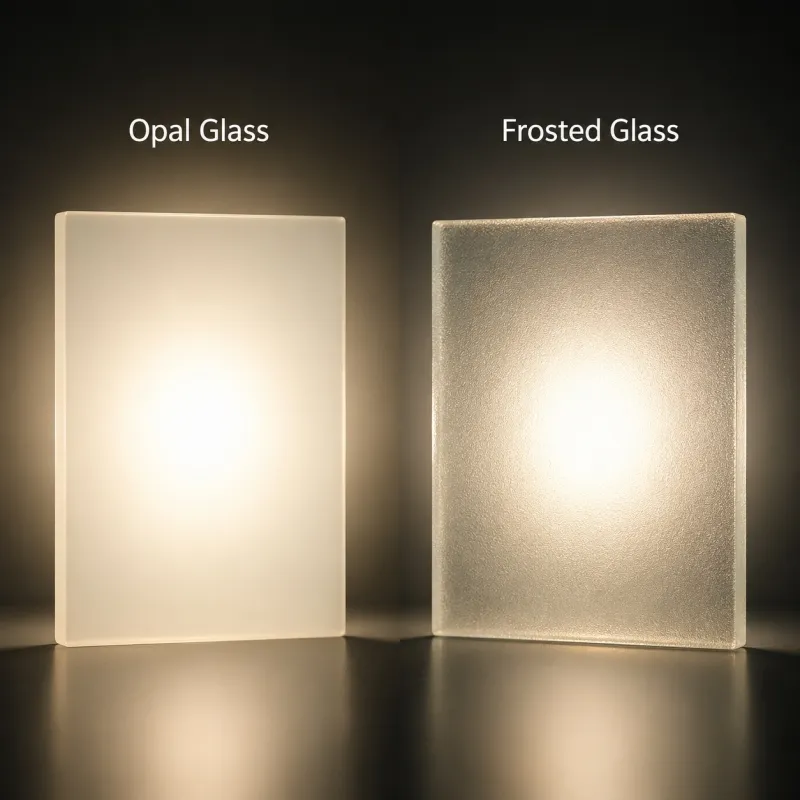
- Optical Diffuser: An optical diffuser uses scattering to scramble the spatial distribution of light, establishing uniform illumination to a certain degree. It offers structural simplicity and low cost but suffers from lower energy efficiency and introduces larger angular diffusion.

Typical Applications: Low-precision lighting, non-directional uniform light requirements.
- Aspheric Lenses: Utilizing freeform surfaces or complex aspheric designs allows for the precise reconfiguration of beam energy distribution—such as converting a Gaussian beam directly into a top-hat profile or a custom illumination pattern. These solutions usually require bespoke design and precision manufacturing.
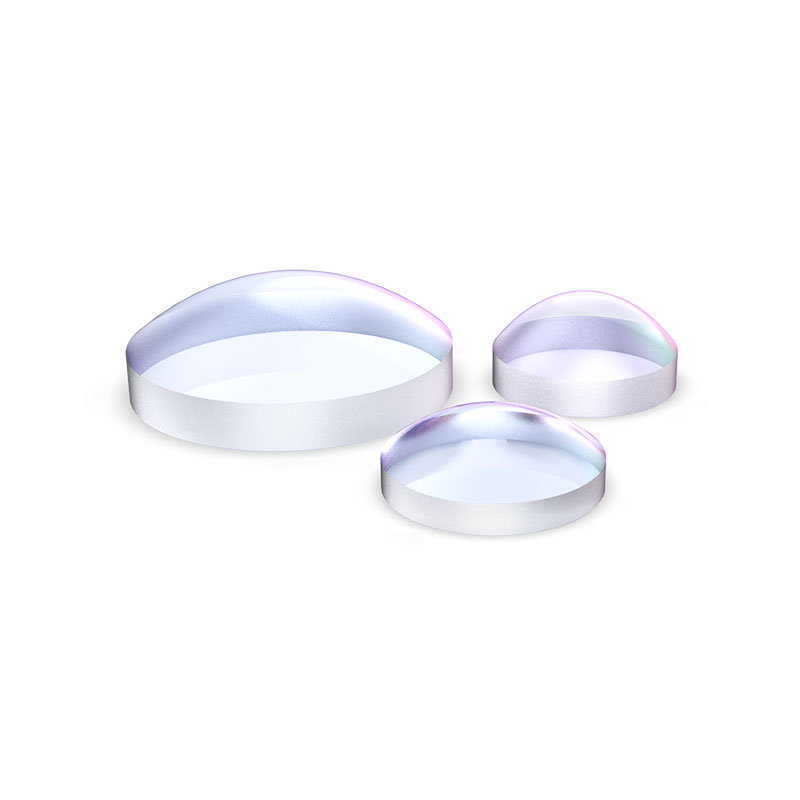
Typical Applications: High-end projection, automotive lighting, precision optical systems.
Why can’t standard lenses achieve uniform illumination?
It is vital to emphasize that conventional lenses (including spherical or simple cylindrical lenses) can only alter the propagation direction and focal position of light; they cannot redistribute the internal energy of the beam. Consequently, they can deform the light, but they cannot make it uniform.
4. Optical Filters
Once the beam morphology is locked in, the system usually filters the spectrum to optimize it further. For instance, using a bandpass filter to isolate a specific wavelength suppresses ambient light interference and significantly boosts the system’s signal-to-noise ratio (SNR).
This step is exceptionally critical in imaging or sensor-based laser lighting systems. It influences both the final light output quality and the overall stability and detection accuracy of the system.
Bottlenecks Facing Laser Lighting
While laser lighting delivers compelling advantages in brightness, directionality, and controllability, its performance cannot scale infinitely in practical applications. System designs are bound by physical limitations and engineering constraints, which combine to form the core bottlenecks of laser lighting.
1. Focusing Capability and the Diffraction Limit
Although lasers can focus into an incredibly tiny spot, this ability is constrained by fundamental physics. The ultimate barrier stems from the wave diffraction nature of light; even within an ideal optical system, a spot’s size cannot shrink indefinitely, as its absolute lower bound is tied directly to the wavelength of light.
Furthermore, real-world systems are hindered by:
- Beam Quality (M²): Deviations from an ideal Gaussian mode degrade focusing performance.
- Optical Aberrations: Imperfections in lens design and fabrication enlarge the focal spot.
- Incident Beam Diameter: Directly limits the ultimate focusing threshold.
2. Beam Quality and Consistency
The performance of a laser lighting system hinges heavily on beam quality, which frequently fluctuates in real-world scenarios. For example, variance in divergence angles, mode structures, or power distributions across different manufacturing batches of lasers can directly skew beam shaping outcomes.
Even when utilizing identical optical elements, a variation in the input beam will produce a noticeably different output. This means:
- Optical designs must be optimized around the actual, real-world light source rather than idealized mathematical models.
- System calibration and tuning carry high complexity.
- Controlling batch consistency presents a major challenge.
This bottleneck is particularly acute in high-precision illumination and sensing applications.
3. Thermal Management and Stability
While providing massive brightness, laser lighting systems inevitably generate immense heat. Under high-power or prolonged operational conditions, thermal effects degrade the system across multiple fronts:
- Causing performance drift in the laser itself (shifts in wavelength and power output).
- Inducing thermal deformation in optical components, leading to beam shifting or defocusing.
- Shortening the overall lifespan of the system.
Consequently, thermal management is far more than a basic “cooling issue”—it is a critical factor governing optical stability and long-term reliability. Proper thermal layout (such as optimized heat-sinking structures and material selection) is just as critical as the optical design itself.
4. System Complexity and Costs
Compared to traditional LED setups, laser lighting demands far more precision optical components (such as specialized collimation, shaping, and filtering modules) and requires exceptionally high alignment tolerances. This inflates both system complexity and manufacturing costs.
This complexity manifests in:
- Longer optical paths, which complicate design iterations.
- Strict assembly tolerances (exacting demands on alignment, angles, and positioning).
- Rigorous standards for component quality (surface profile accuracy and coating durability).
This represents a major reason why laser lighting remains concentrated in high-end domains and has yet to see widespread, wholesale replacement of traditional lighting.
5. The Difficulty of Uniform Illumination
Lasers naturally emit a Gaussian distribution, which is usually undesirable for standard illumination. Converting this into a perfectly uniform spot (like a line or surface light) is not a simple geometric transformation; it is a complex process of energy redistribution.
The core challenges of this process involve:
- The strict necessity of specialized beam shaping components (like Powell lenses or microlens arrays).
- The continuous engineering trade-off between optical efficiency and uniformity among different shaping methods.
- The high sensitivity of the final shaping performance to any subtle shift in input beam conditions.
As a result, achieving uniform illumination stands as one of the most persistent bottlenecks in laser lighting system engineering.
Conclusion
Laser lighting is not merely a drop-in replacement for traditional light sources; rather, it is a specialized optical pathway engineered to meet precise application challenges. Its core value is anchored by three pillars: higher energy density that maintains effective intensity across long distances or miniature areas, superior directional control that allows beams to be precisely guided and mapped, and exceptionally high optical scalability.