Laser optics are fundamental components in modern optical systems, enabling precise control and manipulation of laser beams. From scientific research to industrial manufacturing, laser optics play an essential role in ensuring beam quality and system performance. As laser technologies evolve, understanding what laser optics are and how they function becomes increasingly important for engineers and researchers alike.
I. What Are Laser Optics?
Laser optics refers to a specialized category of optical components designed specifically for handling laser beams. Unlike general optics, laser optics must withstand high power densities and maintain beam integrity with minimal distortion. Key properties of laser optics include high laser damage thresholds, precise surface quality, and coatings tailored to specific wavelengths.
II. Common Types of Laser Optics Components
The field of laser optics encompasses a wide range of components, each serving unique functions:
- Laser Lenses: Including plano-convex, aspheric, and cylindrical lenses, these are used to collimate, focus, or shape laser beams with high precision.
- Mirrors: High-reflective coatings enable efficient beam steering and direction control.
- Beam Splitters: These divide or combine laser beams in complex optical setups.
- Windows: Flat optical elements protect sensitive components without altering beam properties.
- Filters and Coatings: Specialized coatings manage wavelength selectivity and minimize reflection losses.


III. Practical Insights on Laser Optics Components
Laser optics components are critical for the precise control of laser beams in various applications. Understanding the material properties, problems, and maintenance requirements between them is essential to ensure optimal performance.
1. Material Selection Matters
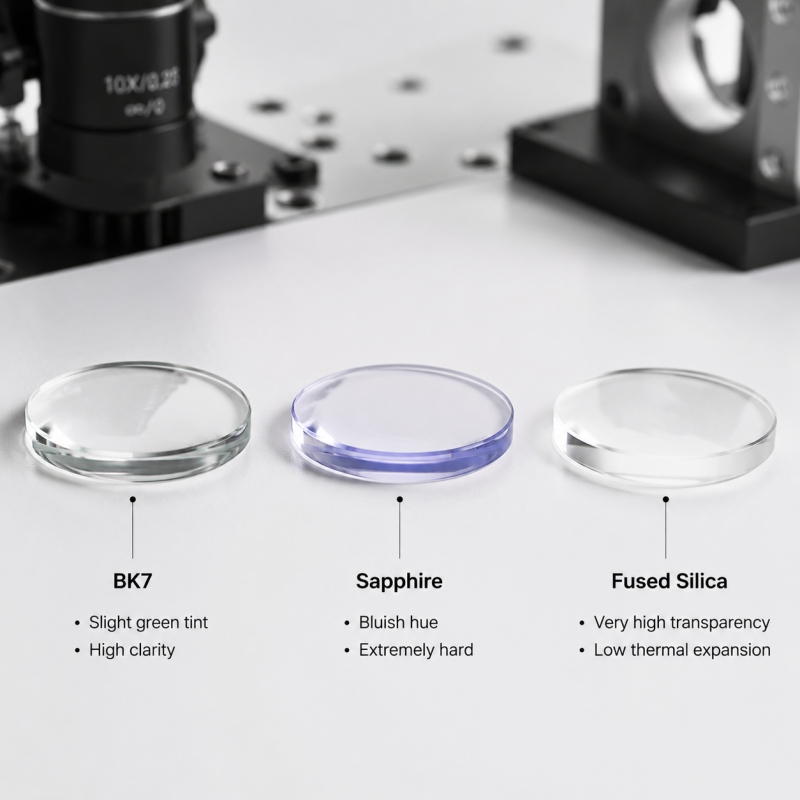
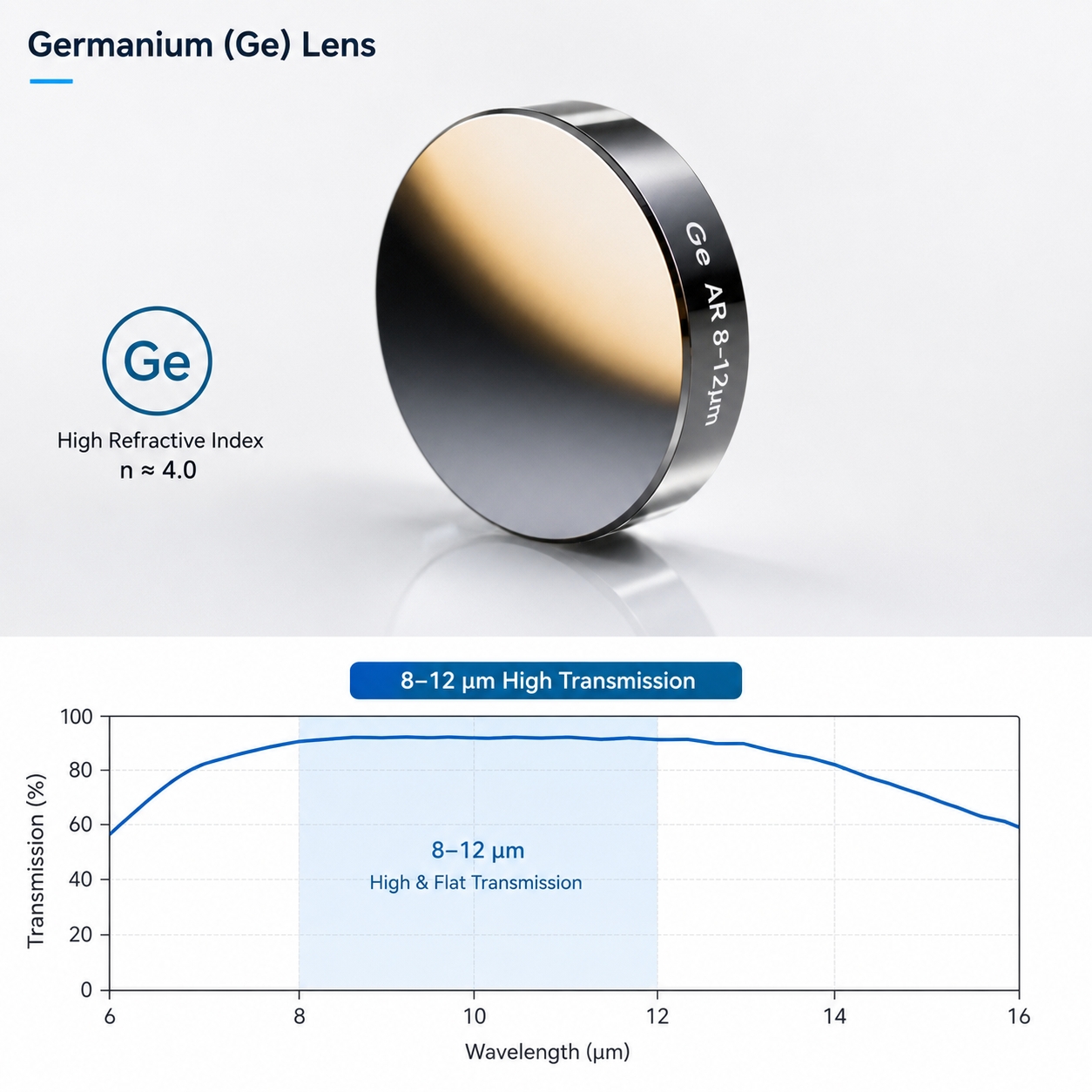
Materials like fused silica, sapphire, and zinc selenide are widely used in laser optics due to their high laser damage thresholds and excellent transmission in specific wavelength ranges. Choosing the right substrate depends on the laser type and operating conditions.
2. Coating Quality is Crucial
Coatings enhance transmission or reflection but are also the most vulnerable parts of laser optics. High-quality anti-reflective (AR) and high-reflective (HR) coatings tailored to the laser wavelength and angle of incidence improve efficiency and protect the optic.
3. Thermal Effects Can Degrade Performance
Even a tiny amount of absorbed laser energy can cause heating of optical components, resulting in thermal lensing or stress-induced birefringence, so choosing the right material is critical for high-power laser systems.
4. Surface Flatness and Quality Influence Beam Shape
Surface irregularities cause wavefront distortion, reducing beam quality. Specifications like surface flatness (e.g., λ/10) and scratch-dig (e.g., 10-5) define optical quality and directly impact performance.
5. Alignment and Mounting Precision
Mechanical stress from improper mounting can warp optics or cause decentering, leading to beam misalignment or aberrations. Using precision mounts and minimizing mounting stress preserves beam quality.
6. Maintenance Extends Optic Lifespan
Regular cleaning with appropriate optical solvents and careful handling prevents contamination and coating damage. Avoid touching coated surfaces and store optics in clean, dry environments.
7. Common Challenges in Laser Optics
- Laser-induced damage: Occurs when laser intensity exceeds the optic’s damage threshold.
- Coating degradation: Exposure to high energy or environmental factors can deteriorate coatings.
- Ghost reflections: Can interfere with beam quality and cause feedback.
By understanding these aspects of laser optics components, users can select suitable optics, maintain them properly, and anticipate potential issues before they impact system performance.
IV. Material and Design Considerations
Selecting appropriate materials is vital in laser optics design. Common materials include fused silica, BK7, sapphire, and zinc selenide (ZnSe), each offering distinct advantages in transmission range, damage threshold, and thermal stability. Design must balance size, wavefront quality, and durability. Moreover, mounting methods and thermal management significantly impact long-term performance.
V. Laser Optics vs. Traditional Optics
Feature | Laser Optics | Traditional Optics |
Wavelength Range | Narrow, specific | Broad |
Power Handling | High | Moderate to low |
Precision Requirements | Extremely high | Moderate |
Application Scope | Specialized (laser-based) | General imaging or illumination |
Laser optics are distinguished by their ability to handle high-power, monochromatic beams with exceptional precision, unlike traditional optics that serve broader but less demanding applications.
VI. Key Considerations for Designing with Laser Optics
Laser optics are highly specialized components, and their performance depends not only on materials and coatings but also on how they are integrated into a complete system. Here are the most critical factors to consider when designing with laser optics:
1. Beam Quality and Shape
Laser beams often have a Gaussian profile, which needs to be manipulated—collimated, expanded, focused or reshaped—based on the application. Poor matching of optical elements can lead to beam clipping, mode distortion, or power loss.
- Design Tip: Choose optics that support the correct beam diameter, divergence, and profile (e.g., flat-top, line).
2. Optical Coating Compatibility
Laser optics require coatings that match not only the wavelength but also the angle of incidence and polarization. Misaligned coatings can cause reflection loss or even optical damage.
- Check: Ravg >99.8% for HR coatings, Tavg >98% for AR coatings in laser-specific ranges.
3. Mounting and Mechanical Tolerances
Misalignment caused by mounting stress or poor centration can significantly degrade beam quality.
- Good Practice: Use precision mounts, avoid overtightening, and allow thermal expansion where necessary.
4. Thermal Management
High-power laser beams can heat optics even with minimal absorption. Without proper thermal design, this causes wavefront distortion or long-term degradation.
- Tip: Use thermally conductive mounts, water cooling (if needed), and materials with low thermal expansion.
5. Cleanliness and Environmental Control
Contaminants such as dust, oil, or moisture on the optical surface can absorb laser energy and cause coating failure, especially in pulsed or UV laser systems.
- Protocol: Always handle with gloves, clean in ISO-class environments, and store with protective caps.
6. Avoiding Ghost Reflections and Feedback
Internal reflections in planar optical components such as optical windows and filters can cause light to appear as ghost images or be back-reflected into the laser cavity.
- Solution: Use wedged optics or angle-polished surfaces to direct unwanted reflections away from the beam path.
By carefully addressing these considerations during system design, engineers can ensure that laser optics deliver consistent, safe, and high-precision performance across the entire operational lifespan.
VII. Conclusion
Laser optics form the backbone of numerous advanced technologies by enabling precise control of laser beams. Their specialized design, high-quality materials, and careful integration distinguish them from traditional optics. Awareness of common challenges and design considerations helps maintain optimal system performance. As laser applications continue to expand, mastery of laser optics principles remains essential.
VIII. Why Choose Hobbite for Laser Optics?
Hobbite specializes in custom laser optics manufacturing, offering high-precision polishing, advanced coating technologies, and robust quality assurance. Our expertise ensures components with high damage thresholds and excellent wavefront quality tailored to customer needs. Partner with Hobbite to achieve superior laser system performance and reliability.