From mobile phone lenses, video cameras, and microscopes to laser processing and optical communication systems, optical elements make imaging, measurement, or illumination possible by changing, controlling, and guiding the propagation of light. Understanding the various types and functions of these elements enables you to select the right optical component to enhance system performance and results in applications. The following article will comprehensively analyze common optical components and their derivatives, followed by the introduction of their advantages and application scenarios.
Overview of Optical Component Classification
According to functionality and materials, optical components could be divided into several categories. In terms of function, it can be divided into lenses, mirrors, prisms, polarizations, optical filters, diffraction elements, and derivative optical components. According to the material, it can be divided into glass, plastic, crystal (such as sapphire), ceramics, etc. When selecting optical components, factors such as material properties, size, waveband, accuracy, and system requirements need to be considered to ensure the best results in imaging or optical transmission.
Analysis of Common Optical Components and Functions
1. Lens
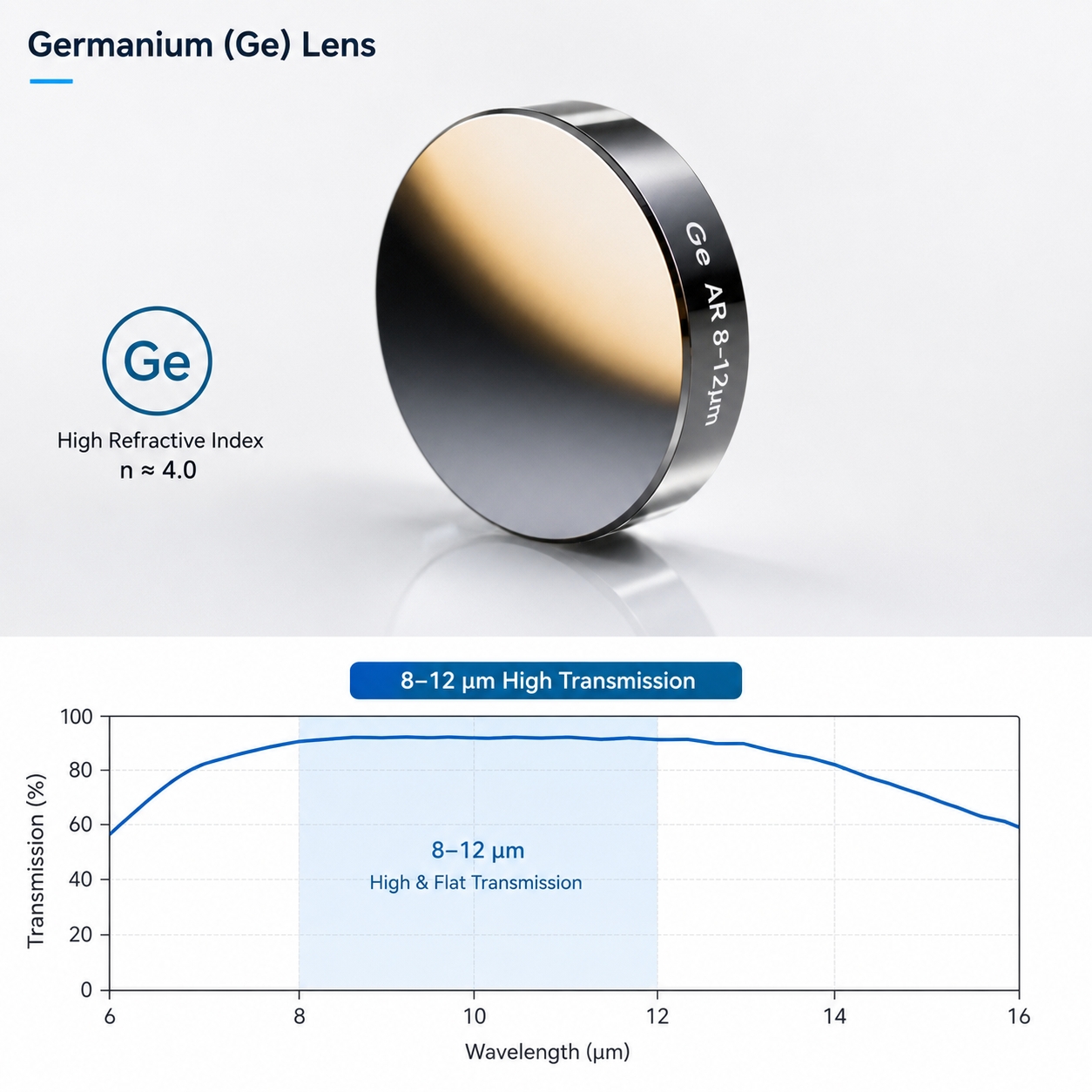
Lenses are the most basic optical components used for concentrating, diverging, collimating, or imaging. Common lens types include spherical, aspheric, cylindrical, and Fresnel lenses. The lens solves the problems of inaccurate beam focusing and undesirable divergence control, while simplifying the optical system and greatly improving image clarity. They find broad applications in camera lenses, laser collimation, and projection systems, among many others.

2. Optical Window
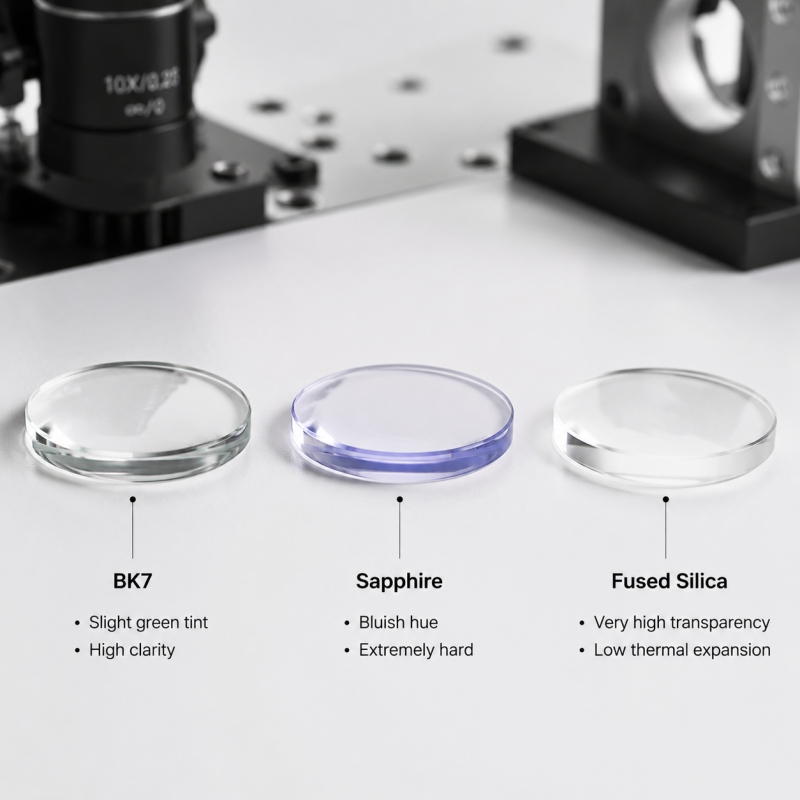
Optical windows protect the optical system while allowing high light transmission. Common materials used include glass, sapphire, and quartz. The optical window resolves the risk of contamination, scratches, or compression of optics in harsh conditions with a stable path for light transmission. They can also be found in laser outlet windows and industrial measuring instruments.

3. Prism
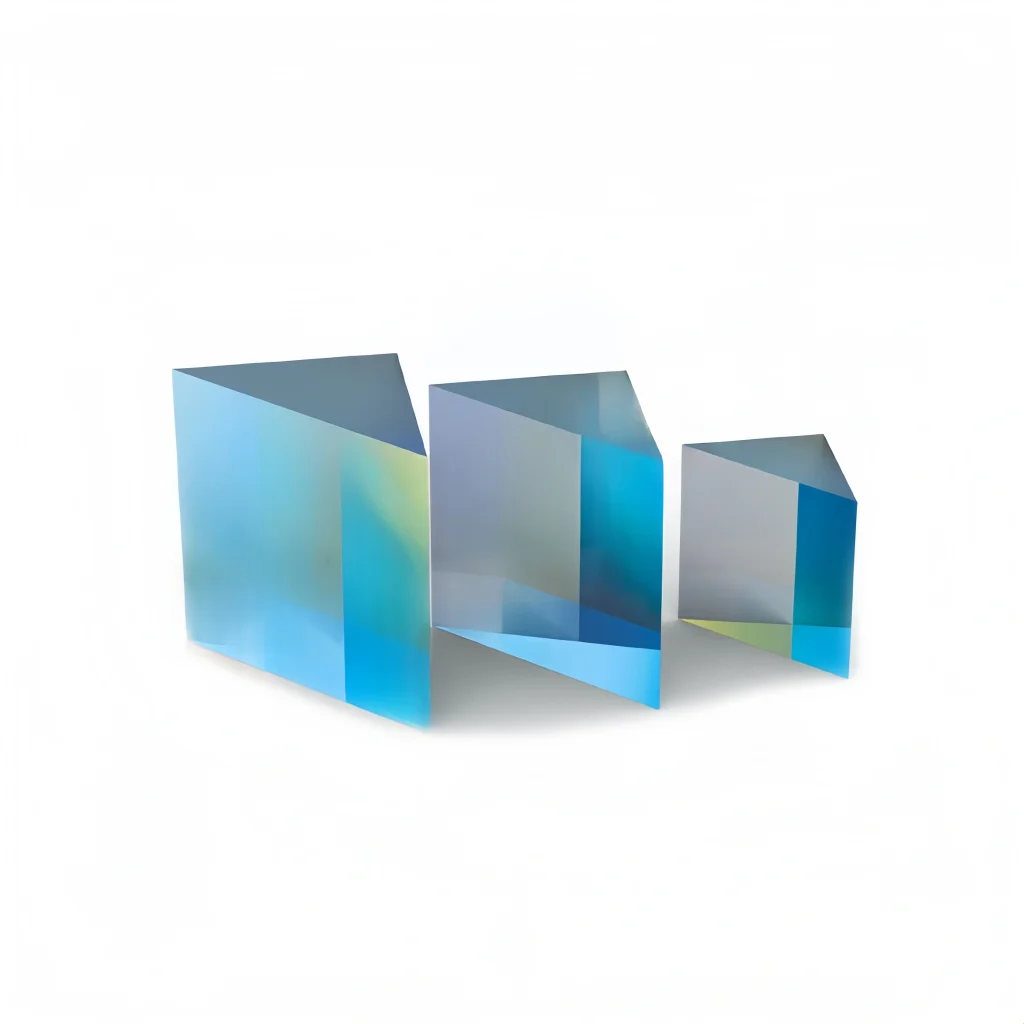
Prisms are used to change the light path, deflection, splitting, or composite light. Common types include triangular prisms, bundle-splitting prisms, and polarizing prisms. Prisms can precisely adjust the direction of the optical path, separate or merge beams, addressing scenarios where optical paths are complex or require polarization control. It is used in telescopes, optical instruments, and optical communication modules.
4. Optical Mirror
Optical mirrors reflect light, change the path of light, and increase light intensity. The most commonly used types are planar, concave, convex, and dielectric mirrors. Reflecting functions can well solve the problem of optical path offset and insufficient light intensity, so today optical mirrors are often used in laser systems, projectors, scientific research equipment, and other places.

5. PBS Polarized Beamsplitter
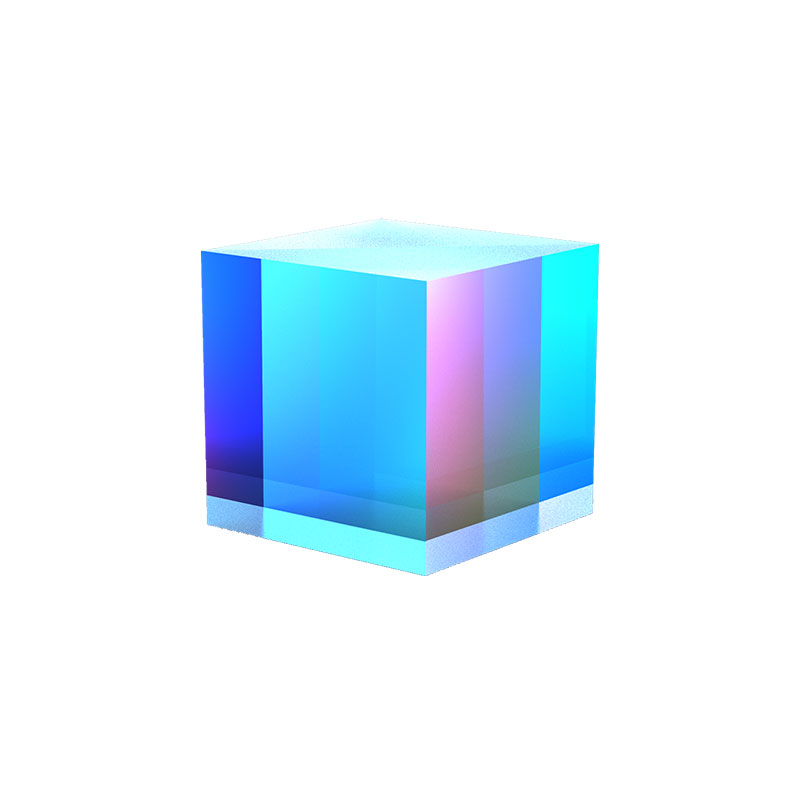
The polarized beamsplitter (PBS) divides or combines beams of different polarization states. It can solve the problems of polarized light interference and signal noise reduction in optical paths, and can be applied to laser systems, optical measurements, and microscopic imaging to realize high-precision optical control.
6. Polarizer & Waveplate
The polarized state of light can be controlled by using polarizers and waveplates, including linear polarizers, circular polarizers, λ/2, and λ/4 wafers. The polarized light interference problem and low contrast in imaging when measuring optically can be overcome, and they are now widely used in optical measurement, microscopy, and laser systems.

7. Other Derived Optical Components
In addition to conventional optics, some derivatives play a significant role in modern optical systems. Cap Lens is normally used in the collimation and focusing of beams, improving the output beam quality of a fiber or laser, reducing light loss, and facilitating the integration and installation of small optical systems.
Their main usage is the protection of fiber end faces from contamination and scratches, ensuring a stable optical path in optical communication or laser transmission. It extends the life of fiber, improves system reliability, and simplifies the alignment and maintenance of optical interfaces.

Capillary and optical arrays serve for directing beams, splitting light, or accomplishing multi-point beam distribution. Capillary tubes are normally used for micro-optical guidance and laser power homogenization, while micro-optical arrays can accomplish beam shaping, multi-point sampling, or sensor array applications that tend to improve the general performance and efficiency of optical systems.
Optical Component Selection and Hobbite Advantages
The selection of optics has to meet a combination of function, material precision, and system requirements. Taking the lens for instance, it has to meet the focusing or collimation requirement; prisms and PBS have to meet optical path adjustment and polarization control needs. Optical windows and derivative components should be wear-resistant, heat-resistant, and have low loss. In practical application, Hobbite provides customers with the following:
- Material Optimization: Glass, Sapphire, or Other High-Performance Materials Selected Based on Band Requirements
- Precision Machining: Ensuring surface flatness, wavefront error, and optical loss meet industry standards
- Customization Capabilities: Support customization of derivative products like cap lenses, fiber end caps, capillaries, and micro optical arrays
- System Adaptation: Provide the most suitable solution according to the optical function and size requirements
Hobbite’s optical components and derivatives combine high-performance materials with advanced processing techniques, offering remarkably improved stability, efficiency, and reliability for optical systems to meet diverse needs from scientific instruments to industrial applications.
Conclusion
Optics are essential in today’s technology, each with their feature set and advantages. By mastering common optical components and derivatives, combining professional selection principles and the strengths of Hobbite, one will be able to design and optimize optical systems for high-quality imaging, stable light transmission, and lifelong performance.